L.A. Woman Dragon Fruit: The Pollination Catch
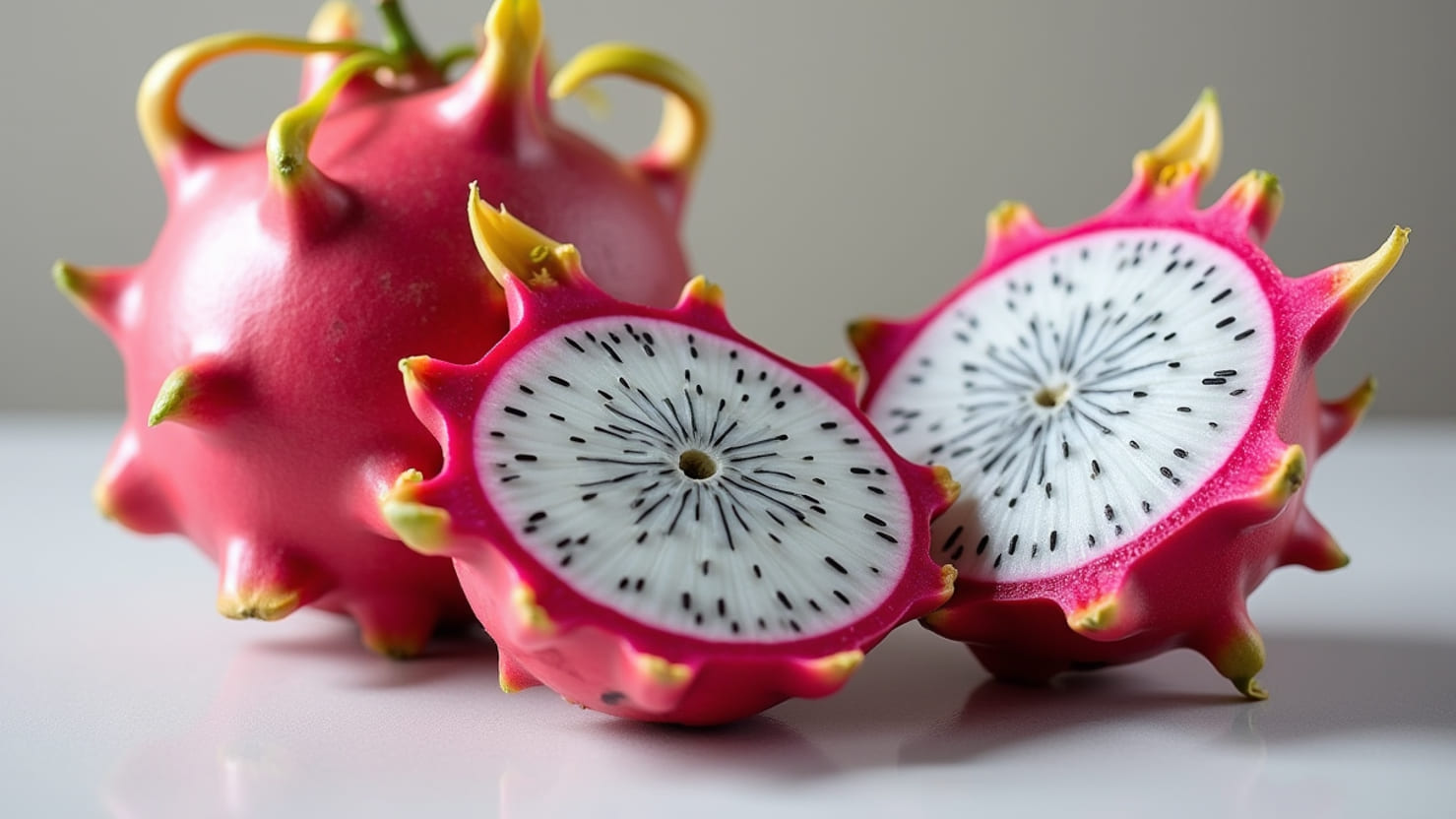
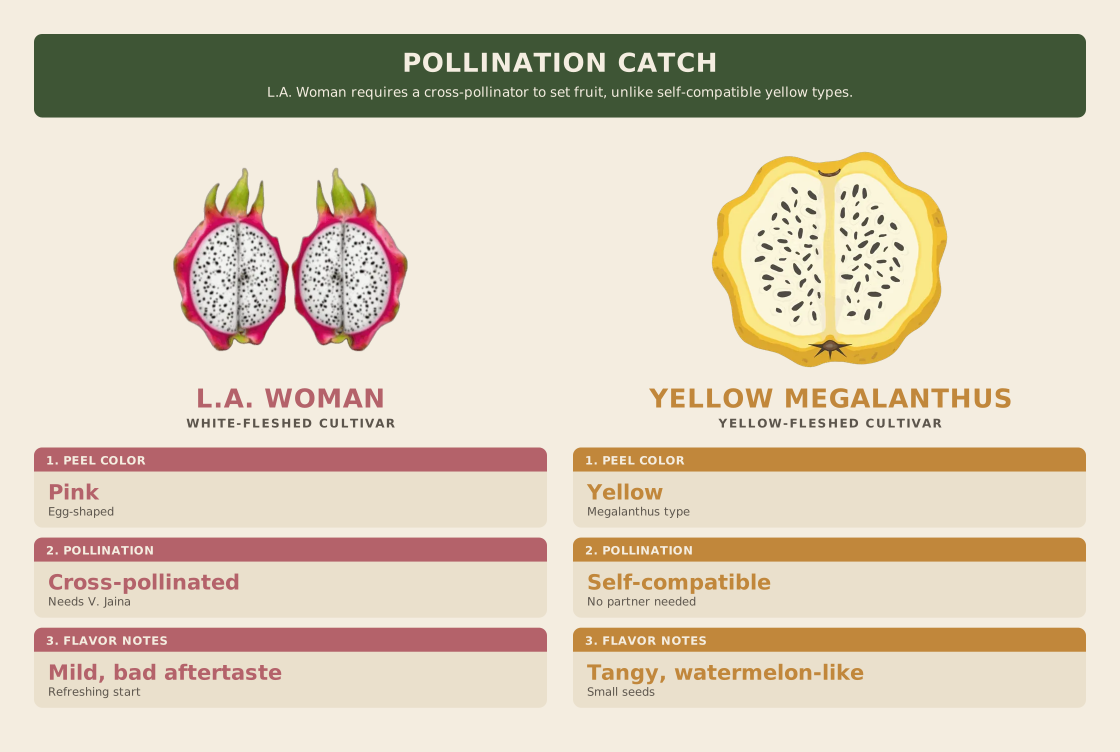
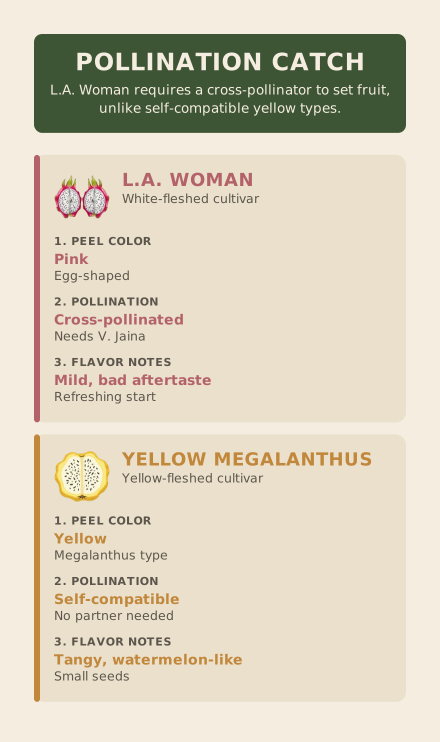
Growers asking what to expect from L.A. Woman dragon fruit need to know this upfront: it is a vigorous, showy-skinned white-fleshed cultivar chosen for its appearance and hardiness rather than top-tier eating quality. You will get medium-to-large fruit, typically weighing 0.75 to 1.5 lb, with a mild sweet flavor that some find leaves a lingering off-note. The catch is that L.A. Woman is strictly self-incompatible. It will not set fruit on its own. You must plant a genetically different partner, such as V. Jaina, to ensure pollination. Without this companion, you are growing a decorative cactus with no harvest.
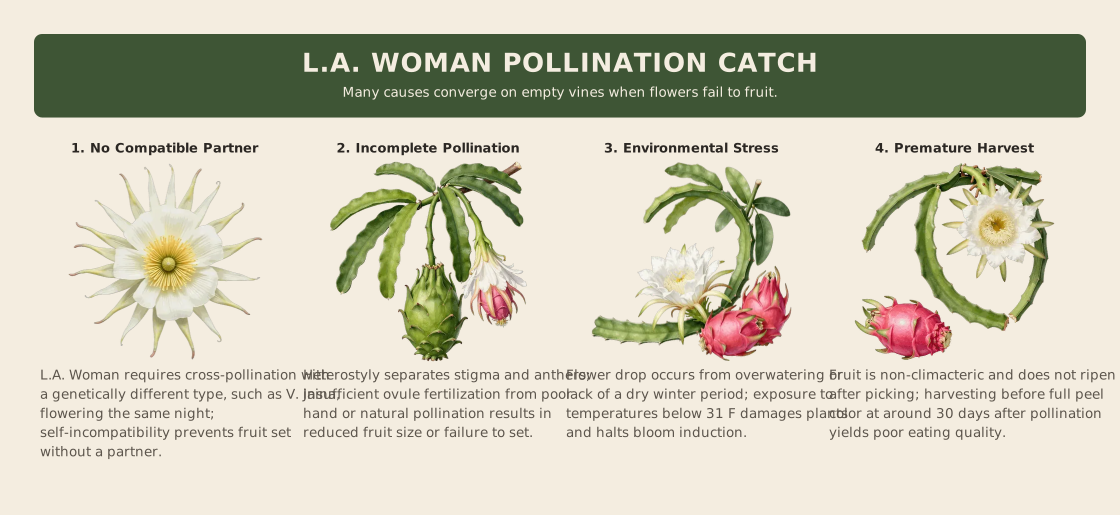
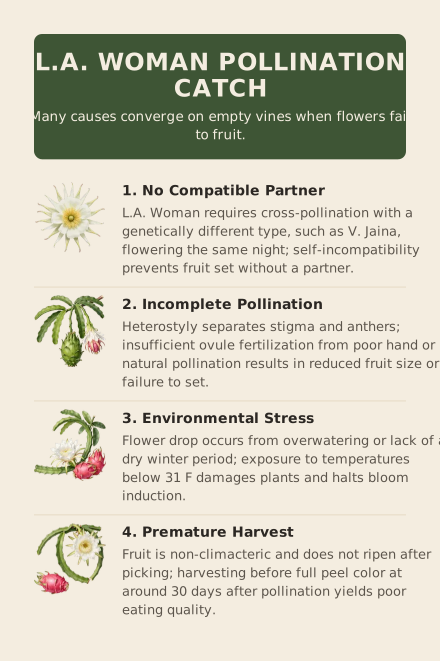
Because all L.A. Woman plants are clones, two cuttings of this variety cannot pollinate each other. They need a distinct genetic type flowering at the same time to serve as the pollen parent. We stock compatible partners to help you avoid the frustration of empty flowers. See our pollination guide for matching varieties.
What L.A. Woman actually is
Before you plant, you need to understand the label. In the nursery trade, L.A. Woman is sold under the species name Hylocereus undatus. This is the old classification. Modern taxonomy has moved this species to the genus Selenicereus, so the correct scientific name is Selenicereus undatus. If you see Hylocereus on a tag, it is simply outdated nomenclature, not a different plant. The plant itself is a climbing cactus with CAM photosynthesis, adapted to heat and drought.[3]
The confusion deepens when you look across different markets. Florida nurseries, including Pine Island, consistently list L.A. Woman as H. undatus (now S. undatus). They describe a medium-to-large fruit with white flesh. However, South African trade vendors often list the same variety name as Hylocereus megalanthus. This creates a direct conflict in species attribution. The South African description highlights a tangy white-flesh fruit with a watermelon-like texture, small edible seeds, and night-blooming fragrant flowers appearing around November to December. They also describe the fruit as egg-shaped and pink, typically small at 200 to 400 g.[5]
Why does this discrepancy exist? Scientific literature offers little help. Most peer-reviewed research on pitahaya focuses on red-fleshed cultivars. Knowledge of yellow pitahaya (Selenicereus megalanthus) is very scarce. Consequently, trade claims about megalanthus-type white-flesh selections are backed by little published data. You are often relying on vendor descriptions rather than verified botanical studies.
| Feature | Florida Trade Listings | South African Trade Listings |
|---|---|---|
| Species Name | Hylocereus undatus (now Selenicereus undatus) | Hylocereus megalanthus |
| Fruit Size | Medium to large (0.75-1.5 lb) | Small (200-400 g) |
| Fruit Shape | Standard pitaya shape | Egg-shaped, pink |
| Texture/Flavor | Mild, sweet | Tangy, watermelon-like texture |
When you buy L.A. Woman from Sky Botanicals, you are getting the vigorous, showy-skinned white-fleshed cultivar that matches the Florida description. We stock it as a clone. This ensures consistency in growth habit and fruit appearance. It does not guarantee a specific flavor profile if you compare it to a megalanthus listing, because those listings may refer to a different plant entirely. Stick to the known traits: hardy, attractive, and dependent on cross-pollination for a harvest.
The pollination catch: why it will not fruit alone
Self-incompatibility in dragon fruit is not a quirk. It is a structural barrier built into the flower. Most cultivated pitaya species exhibit heterostyly, a physical separation between the stigma and the anthers that forces cross-pollination.[3] In L.A. Woman, this separation is pronounced. The pollen from its own flowers cannot effectively reach or fertilize its own stigma. Even if you shake a branch or brush the flower with your finger, the genetic mismatch prevents fruit set. This plant is biologically locked to a partner.
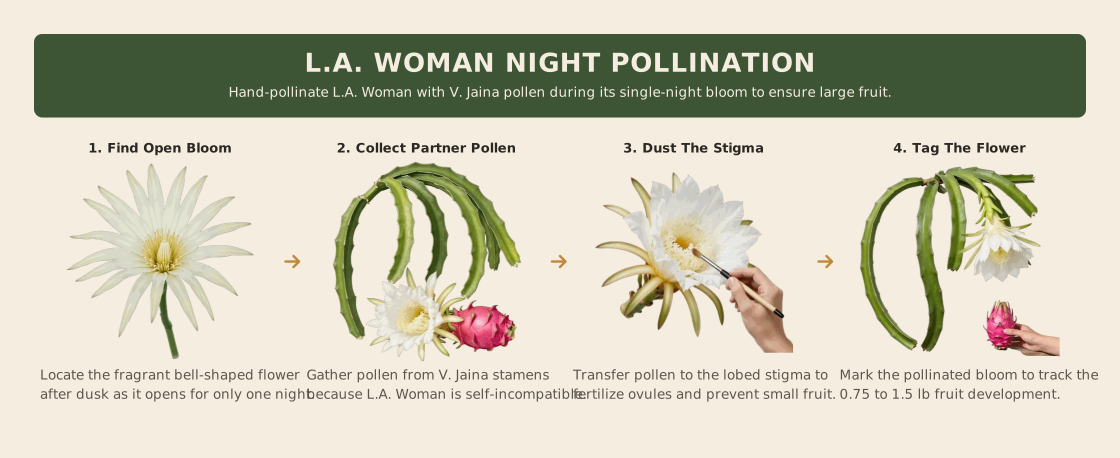
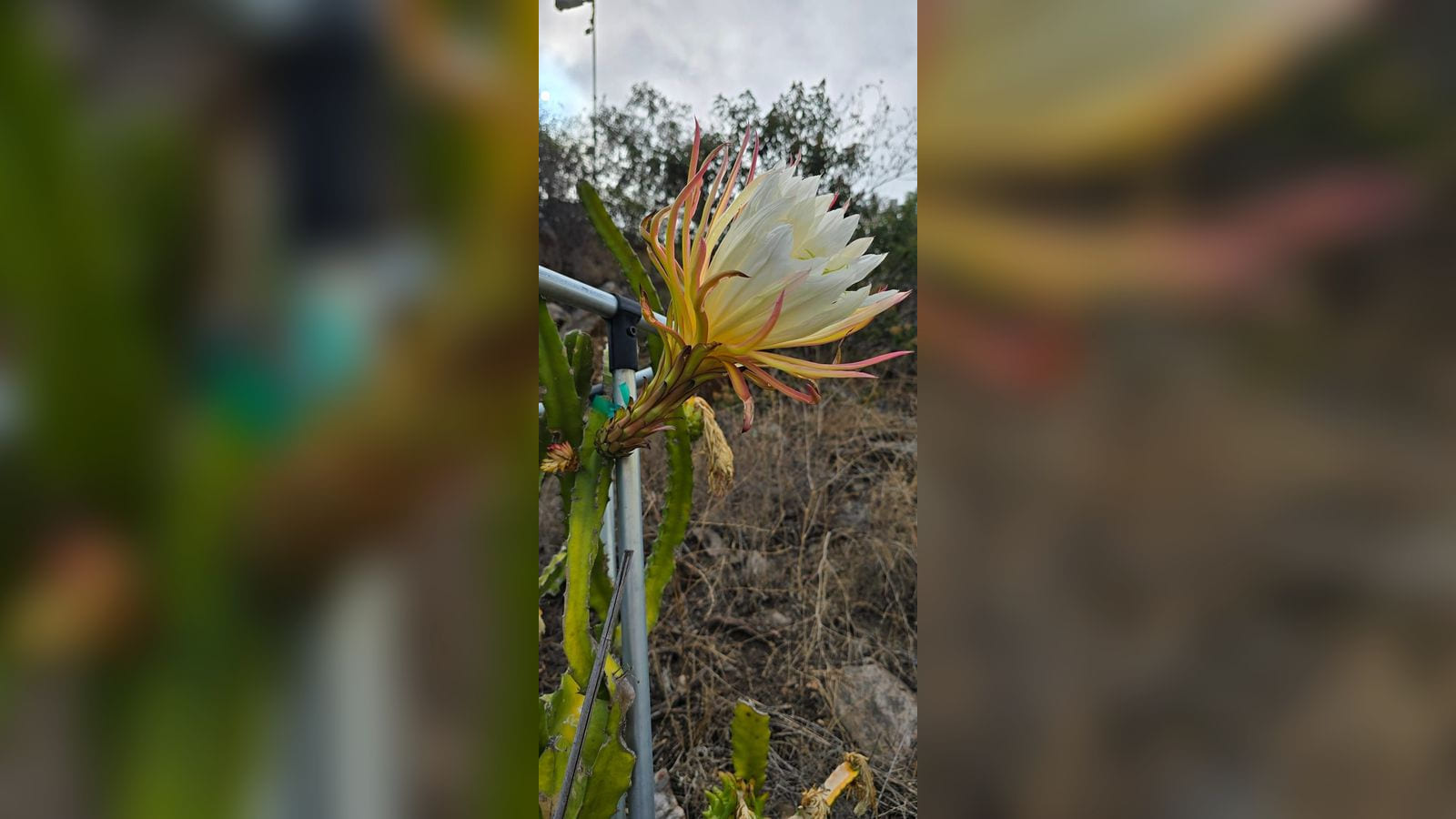
The flowers themselves are dramatic, nocturnal events. They open at night, releasing a heavy fragrance to attract bats and moths, the natural pollinators for this genus.[2] These blooms are large, bell-shaped structures that can reach up to 14 inches long and 9 inches wide.[2] If you are growing L.A. Woman in an urban setting or a region with low bat populations, you cannot rely on nature to do the work. The window for pollination is short. The flowers typically last only one night. If a bat does not visit, or if the visit is incomplete, the flower closes and dies without setting fruit.
Even when fruit does set, incomplete pollination leads to poor quality. Dragon fruit development relies on the number of ovules successfully fertilized. If a bat or moth only partially dusts the stigma, the plant will still produce a fruit, but it will be small and misshapen. You might see a fruit that looks promising for a week, then shrivels or stops growing because the internal seed development stalled. This is a common frustration for growers who assume that seeing a flower equals a harvest.
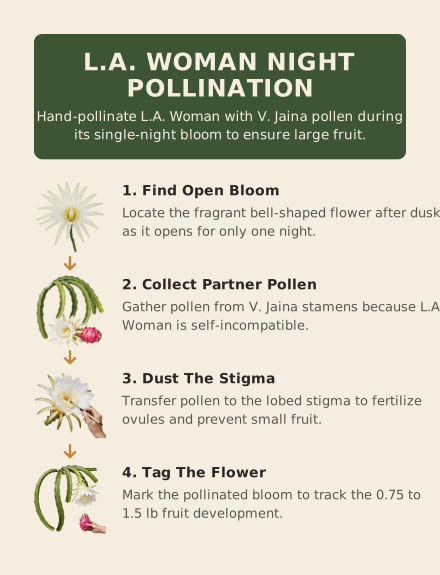
The fix is straightforward but requires planning. You must interplant a compatible partner. Pine Island Nursery and other growers recommend V. Jaina as a reliable pollinator for white-fleshed varieties like L.A. Woman.[1] UF/IFAS suggests planting two or three genetically different types to ensure that at least one partner flowers at the same time as your main crop.[2] If you cannot plant a partner nearby, hand-pollination is a viable substitute. You can transfer pollen from a compatible variety’s stamens onto the L.A. Woman stigma during the night or early morning.[2] This method is labor-intensive but guarantees fertilization. For a deeper look at matching bloom times and selecting partners, see our guide to dragon fruit pollination.
Growing L.A. Woman: climate, cuttings, timeline, yields
L.A. Woman thrives in tropical and subtropical climates that stay mostly free of frost. The plant tolerates heat well, withstanding temperatures up to 100 F, but it prefers a moderate range of 65 to 77 F for optimal growth.[2] Long exposure to freezing temperatures at 31 F causes damage, though the cactus recovers quickly from light injury.[2]
Propagation is straightforward. While you can grow from seed, those plants take up to 7 years to fruit and show variable traits.[2] Instead, use stem cuttings between 6 and 15 inches long.[2] Cure them for 7 to 8 days before planting to prevent rot.[2] These cuttings often produce fruit within 6 to 9 months of planting.[2]
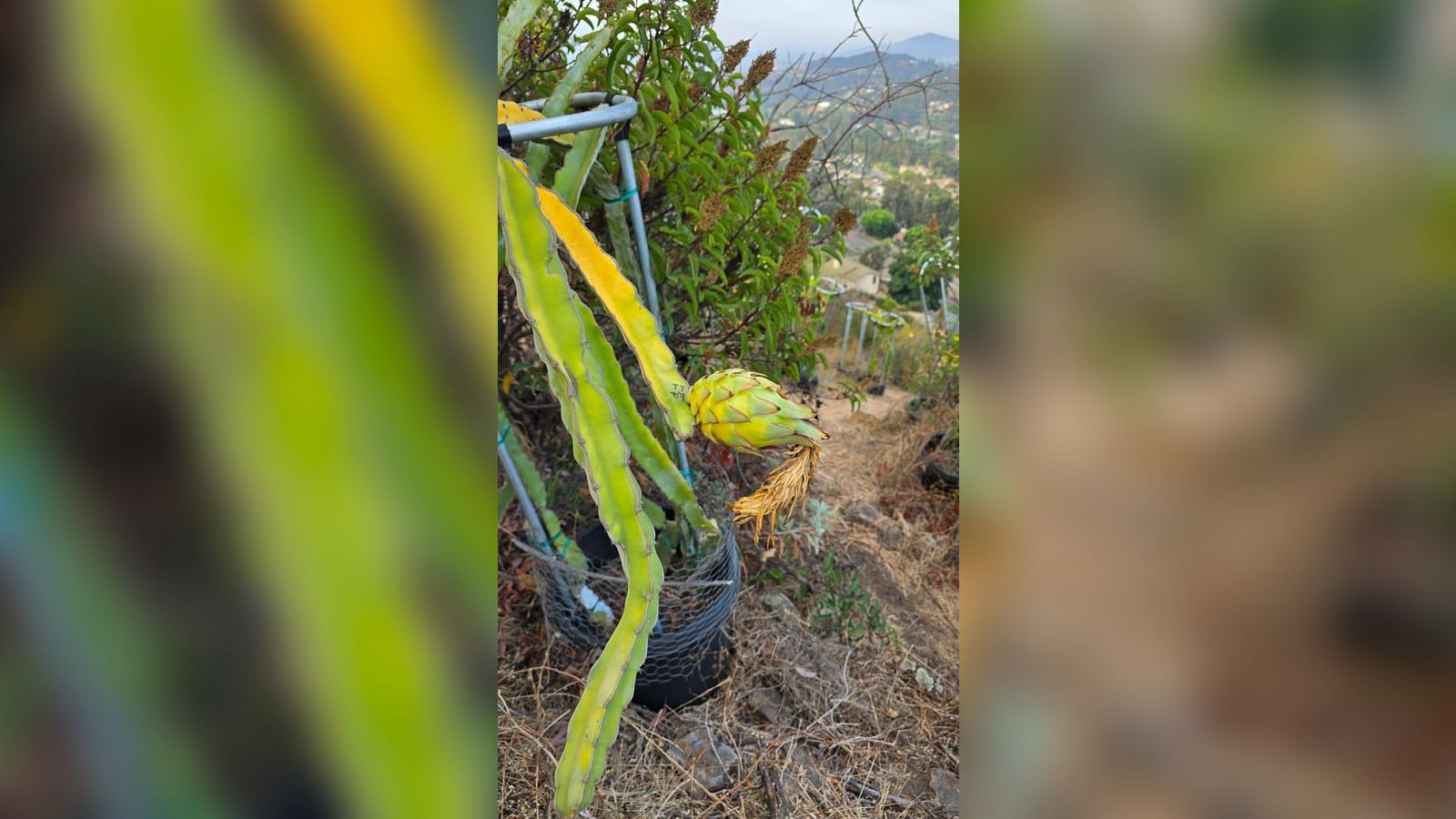
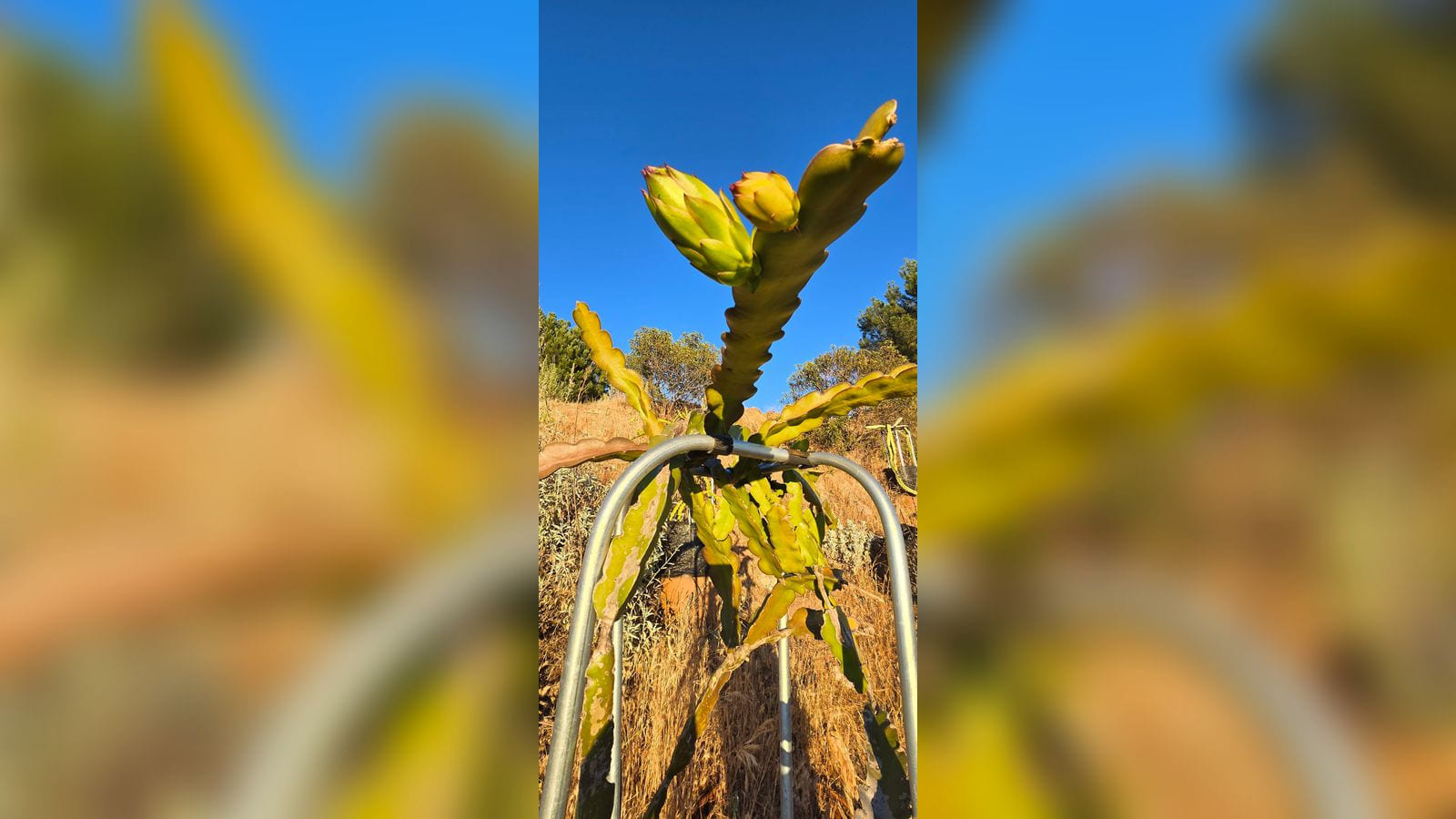
Flowering initiation typically occurs 2 to 3 years from the cutting.[4] A dry period during winter and early spring is essential to trigger abundant blooms.[2] Once buds form, they develop over 12 to 31 days before opening.[4] In Florida, the ripening window for this type of pitaya generally runs from June to November.[2]
A mature planting, three to four years old, can yield about 220 lb of fruit annually.[2] The productive life of the plant is estimated at 20 years.[2]
| Spec | Requirement |
|---|---|
| Optimum Temp | 65-77 F |
| Max Temp | 100 F |
| Damage Threshold | 31 F (long duration) |
| Cutting Size | 6-15 inches |
| Curing Time | 7-8 days |
| First Fruit | 6-9 months (from cutting) |
| Full Bearing | 2-3 years |
| Annual Yield | ~220 lb (at 3-4 years) |
| Bloom Trigger | Dry period in winter/early spring |
| Harvest Window | June, November (FL) |
Note on Pollination: Since L.A. Woman is a clone, two cuttings of this variety cannot pollinate each other. You need a distinct genetic type, such as V. Jaina, to serve as the pollen parent.
What the fruit tastes like and how to use it
The eating experience is mixed. Pine Island Nursery’s variety sheet describes L.A. Woman as highly attractive but relatively useless in the eating. The initial bite offers a smooth, mild, and refreshing sweetness, but that pleasant start is often followed by a lingering bad taste in the mouth. This off-note is the primary reason many growers plant it for its vigor and showy appearance rather than for its culinary merit. It is not a top-tier dessert fruit.
Harvest timing is critical. Dragon fruit are non-climacteric. This means they do not ripen further after being picked. You cannot wait for the flavor to improve on the counter. Harvest timing at full peel color determines eating quality. If you pick early, the fruit will remain bland. If you wait too long, it may spoil.
Peel color develops around 30 days after pollination. This is your visual cue. Once the skin reaches its full, vibrant hue, the fruit is ready. There is no waiting period for sugar development off the plant. You must judge ripeness by the color and the slight give of the skin. Because the fruit does not improve after harvest, picking at the precise moment of full color is the only way to get the best possible flavor from L.A. Woman.
Once harvested, the clock starts ticking immediately. L.A. Woman fruit has a short shelf life of 4 to 5 days at room temperature. After this window, the texture degrades and the off-flavors can become more pronounced. If you are not eating the fruit within a few days, you need to refrigerate it or process it. This short window makes it a poor choice for sharing with neighbors or taking to market unless you have a very quick turnover.
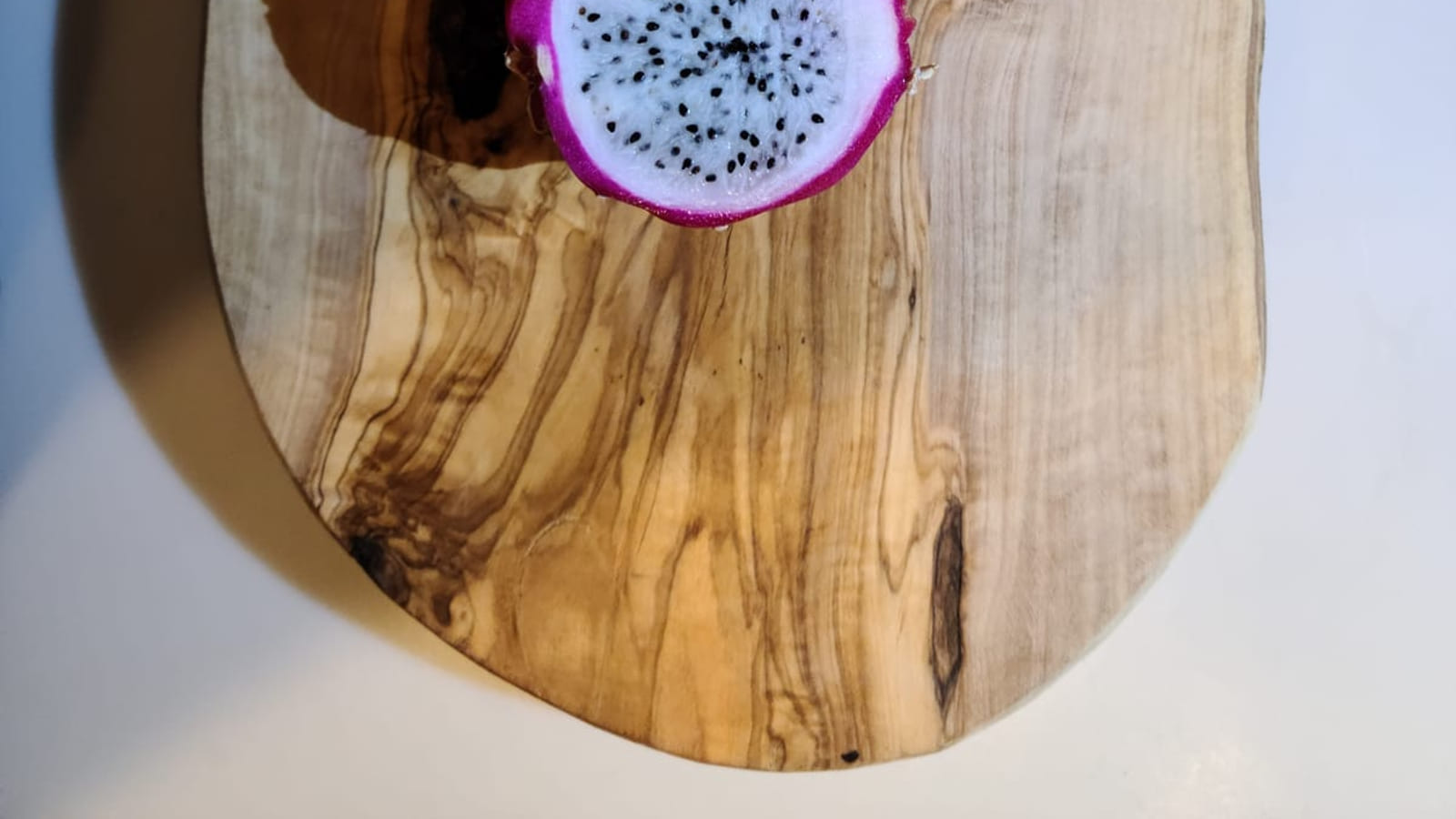
Given the flavor limitations and short shelf life, how should you use L.A. Woman? Treat it as a functional ingredient rather than a star. The mild sweetness and watery texture work well in smoothies where other strong flavors mask the off-note. It adds volume and hydration to fruit salads without dominating the dish. Some growers use the flesh in salsas or as a garnish where the visual appeal of the skin and white flesh outweighs the subtle taste flaws. If you find the aftertaste unpleasant, try pairing it with lime juice or mint to cut through the lingering flavor.
This variety rarely wins taste tests. It is a reliable producer of medium-to-large fruit. The eating quality is secondary to its hardiness and growth habit. If you are growing L.A. Woman primarily for its fruit, manage your expectations. It is a decorative cactus that happens to produce edible fruit, not a premium eating cultivar. Use the fruit in smoothies or salads to mask the aftertaste.
Should you buy it? Alternatives we stock
Add L.A. Woman if you value ornamental appeal over eating quality. If you are chasing a high-yield harvest of premium eating fruit, this is not your best first choice. The flavor profile, while initially refreshing, often leaves a lingering off-note that many growers find disappointing. It offers vigorous growth, striking skin, and the ornamental appeal of massive night-blooming flowers. L.A. Woman is a standout performer. It serves best as a pollinator partner or a decorative specimen rather than a primary cropper.
We stock several alternatives that either complement L.A. Woman or offer superior eating quality on their own. The table below compares L.A. Woman with V. Jaina, a variety we recommend as a partner.
| Variety | Pollination Need | Flavor Profile | Fruit Size |
|---|---|---|---|
| L.A. Woman | Self-incompatible; needs partner | Mild, sweet, lingering off-note | Medium to large (0.75-1.5 lb) |
| V. Jaina | Self-incompatible; excellent partner | Not specified in source | Medium to large |
V. Jaina is our top recommendation for pairing with L.A. Woman. Pine Island Nursery explicitly lists it as a preferred pollinator for white-fleshed cultivars[1]. Planting these two together solves the pollination issue while giving you two distinct plants. If you want a single-variety solution, consider other white-fleshed varieties we carry, though they also require cross-pollination partners to maximize yield and size.
Pro Tip: Incomplete pollination often leads to smaller fruit, even if the plant sets fruit[3]. Hand-pollinating your L.A. Woman flowers with pollen from V. Jaina or another compatible partner ensures larger, better-formed fruit. The flowers are nocturnal and fragrant, so plan your hand-pollination for the evening or early morning[2].
For those who want immediate eating quality without the hassle of managing multiple varieties, we also stock fresh boxes of premium dragon fruit. These are harvested at peak ripeness, ensuring the best possible flavor profile. However, growing your own remains the most rewarding path. L.A. Woman offers a unique combination of hardiness and visual drama. It thrives in heat and drought-prone conditions, making it a resilient choice for challenging climates[3].
Frequently Asked Questions
L.A. Woman tolerates heat up to 100 F but suffers damage below 31 F. Dragon fruit thrives in tropical and subtropical zones that are mostly free of frost. While plants can recover from light freezing injury, sustained frost will kill the stems. [2]
Start from cuttings, not seeds. Growing dragon fruit from seed is a gamble. Seedlings exhibit significant variability in fruit and stem characteristics. You have no guarantee that the plant will produce fruit resembling the parent. Seeds take up to 7 years to fruit and vary widely. In contrast, a stem cutting typically fruits within 6 to 9 months. If you want a predictable harvest and a known flavor profile, buy a cutting.
Quick Check: If flowers drop, you likely lack a compatible pollen parent. Hand-pollinate using pollen from a different white-fleshed variety during the night or early morning when the flowers are open. [2]
References
- L.A. Woman - Dragon Fruit variety sheet (Hylocereus undatus), Pine Island Nursery (2026).
- Pitaya (Dragonfruit) Growing in the Florida Home Landscape (HS1068, rev. Dec 2019; Crane & Balerdi), UF/IFAS Extension, University of Florida (2019).
- Floral and pollination biology of dragon fruit reveals strategies for enhancing productivity through pollination management and reproductive window extension, Scientific Reports (Nature Portfolio) (2025).
- Flower Biology, Pollination, and Agrotechniques Involved in Flowering of Dragon Fruit - A Review, Erwerbs-Obstbau (Springer) (2025).
- Hylocereus megalanthus (Dragon fruit - LA Woman) product listing, Lifestyle Seeds (2026).