Harpua Dragon Fruit: Self-Pollinating White Pitaya
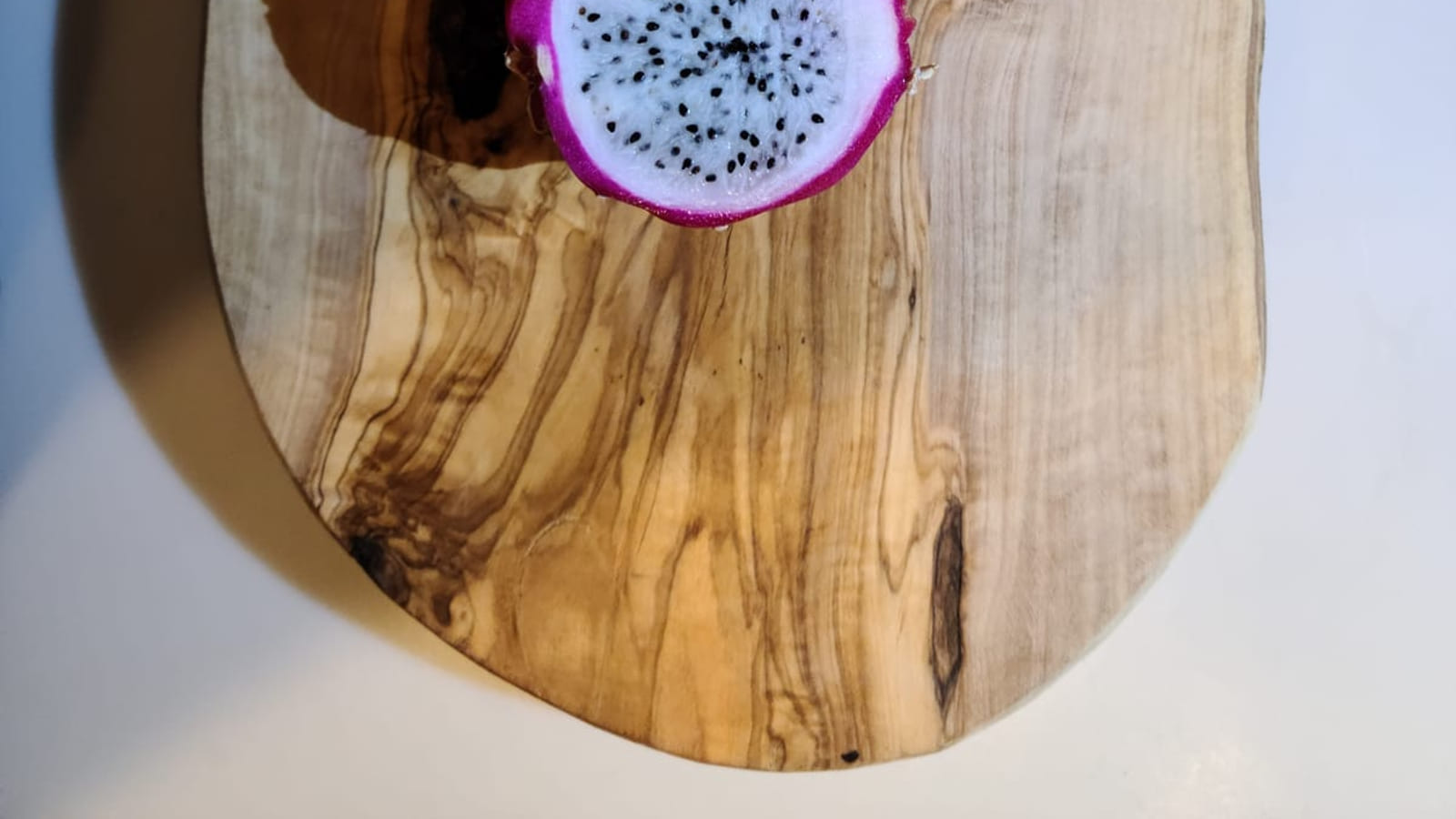
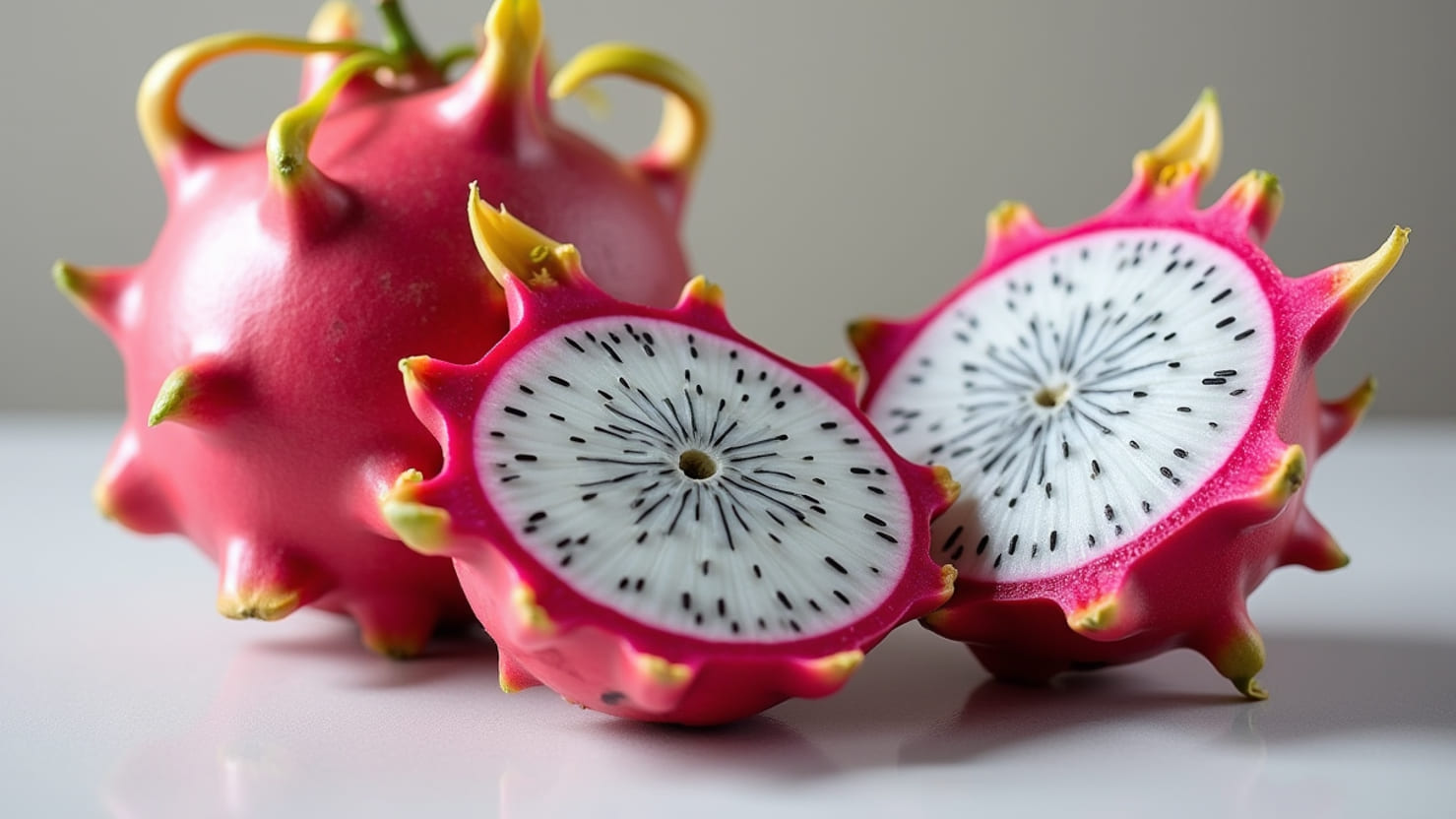
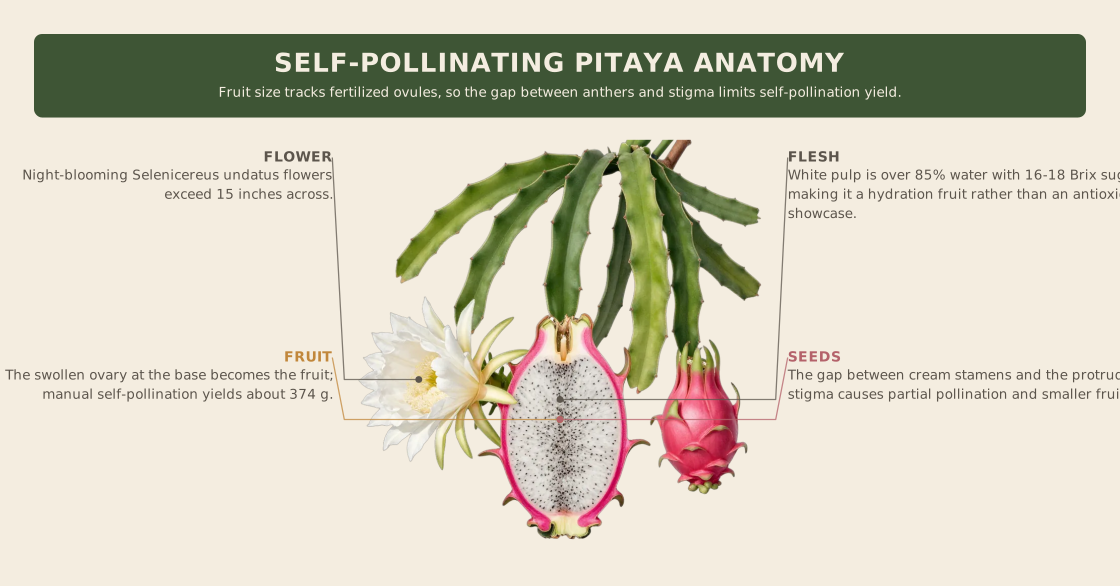
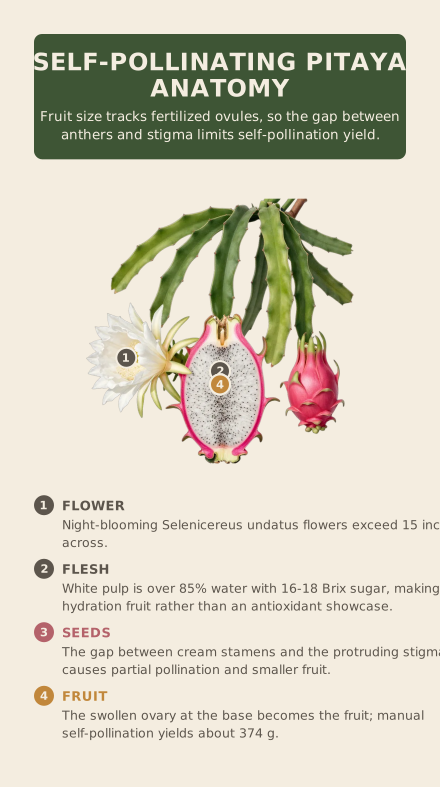
Harpua is a reliable, self-pollinating white-fleshed pitaya. This clone of Selenicereus undatus (often still labeled Hylocereus undatus) produces bright pink fruit with green scales and medium-to-large fruit. The snowy white flesh has a mild, melon-like flavor with a grower-reported sweetness of 16 to 18 Brix. It sets fruit easily because it does not require a second variety to produce fruit. It offers vigorous vine growth and good disease resistance, though it may sprawl without pruning.
We stock Harpua cuttings and plants in our nursery. You can also find this variety at our in-stock partners, including Spicy Exotics and Pine Island Nursery. For more on growing this cactus, see our guide on dragon fruit pollination and care.
Harpua at a glance
Here is the quick reference sheet for this clone. Note that weight data varies by source, and some traits are reported by growers rather than measured in controlled trials.
| Attribute | Details |
|---|---|
| Species | Selenicereus undatus (formerly Hylocereus undatus) [6] |
| Flesh Colour | White [5] |
| Skin | Bright pink with green scales [8] |
| Fruit Weight | Reported weights vary by source [8] |
| Brix | 16-18 (grower-reported) [3] |
| Pollination | Self-fertile [5] |
| Flowering Window | Late spring through early fall [5] |
| Bud to Flower | ~25 days [5] |
| Harvest Timing | 30-35 days after flowering [5] |
| Stems | Very thick, three-sided, small thorns [6] |
| Chill Tolerance | Damaged by long freezing exposure; recovers from light frost [2] |
| Home Landscape | Maybe (M) [8] |
| Origin | Trade-sourced; no documented breeder or patent [8] |
Where Harpua came from, and what nobody can prove
Dragon fruit history is often murky, and Harpua is no exception. The only official origin record comes from a named-variety table that was removed from the UF/IFAS Florida home-landscape publication. That table lists Harpua’s origin simply as "Central America." It does not name a breeder, a selection year, or a plant patent. There is no variety trial data to back up its specific performance claims. The name itself appears to be a nod to a song by the band Phish, according to the Dragon Fruit Directory, which classifies it as a collector’s variety rather than a commercial staple.[5]
Commercial sourcing adds another layer of ambiguity. Spicy Exotics, a major nursery, states that their breeding stock was acquired from a tropical nursery in California. This means the clone has moved through multiple hands without a documented lineage. We do not know who first selected it or where it was originally found in the wild. The lack of a formal registry entry means we are relying on trade descriptions rather than academic verification.
The UF/IFAS table grades Harpua as "M" for home landscapes. This stands for "Maybe." It is not a "Y" for "Yes." This rating is an honest signal. It suggests the plant is a good backyard clone but not a guaranteed commercial pick. The same source notes that self-incompatibility data for named cultivars is poorly documented. This makes specific recommendations difficult and potentially unreliable.[8]
Why the "M" rating matters: A "Maybe" grade reflects uncertainty in the record, not necessarily poor performance. It tells you that while the plant grows well, its long-term commercial viability or specific regional adaptability hasn't been rigorously tested in the same way as established varieties like 'American Beauty' or 'Costa Rican.'
It is also worth noting the yield gap in dragon fruit production. Farmers in newly adopted regions often report yields of 8 to 10 tonnes per hectare per year. In contrast, established plantings in Vietnam and Southeast Asia reach 20 to 35 tonnes per hectare per year. The literature attributes this difference to region-specific management and pollination strategy, not just the clone itself.[1] Harpua is a self-fertile white-fleshed pitaya, which simplifies pollination, but it still requires skilled care to reach high yields. Do not expect commercial-scale production from a backyard clone without attention to trellis management and nutrient support.
Ultimately, Harpua is a plant defined by what it does in your garden, not by its paperwork. It produces white-fleshed fruit with a mild melon flavor. It sets fruit without a partner. It grows vigorously. The lack of a breeder’s name does not change its biology. It just means you are buying a proven performer with an anonymous past.
Naming: Hylocereus vs Selenicereus
You will see two different scientific names on the tags of the same Harpua cutting. This is not a labeling error. Both names refer to the same plant. It reflects a shift in botanical classification that happened decades ago but has not fully caught up with nursery inventory. The name Hylocereus undatus is the older combination that still dominates trade listings. The currently accepted scientific name is Selenicereus undatus. Both refer to the exact same climbing cactus, a member of the family Cactaceae native to tropical forests across Mexico, Central America, and South America.[6]
Genetic analysis led botanists to reclassify the genus Hylocereus into Selenicereus after showing the groups were more closely related than previously thought. However, the horticultural industry moves slowly. Most US nurseries, including those selling Harpua, continue to print Hylocereus on their labels because it is the name gardeners recognize. If you search for care guides or pollination tips, you will find resources under both names. They describe the same biology, the same flowering habits, and the same fruit development. Do not let the name change confuse your search for information or make you doubt the plant’s identity.
| Name on Label | Status | What It Means |
|---|---|---|
| Hylocereus undatus | Older combination | Still used by nearly all US trade listings; refers to the same plant.[6] |
| Selenicereus undatus (Haw.) D.R. Hunt | Accepted combination | The current scientific name used in academic literature and modern taxonomy. |
| Cactaceae | Family | A climbing CAM cactus native to tropical forests of Mexico, Central, and South America.[6] |
For practical growing purposes, the distinction is purely semantic. Care requirements are identical regardless of the label. The plant’s vigor, disease resistance, and self-fertility are traits of the clone itself, not of the name printed on the pot. When you buy Harpua, you are buying a verified white-fleshed pitaya with a known history of performance in home landscapes, regardless of which genus name the nursery chose to print.
What Harpua tastes like, measured against a real baseline
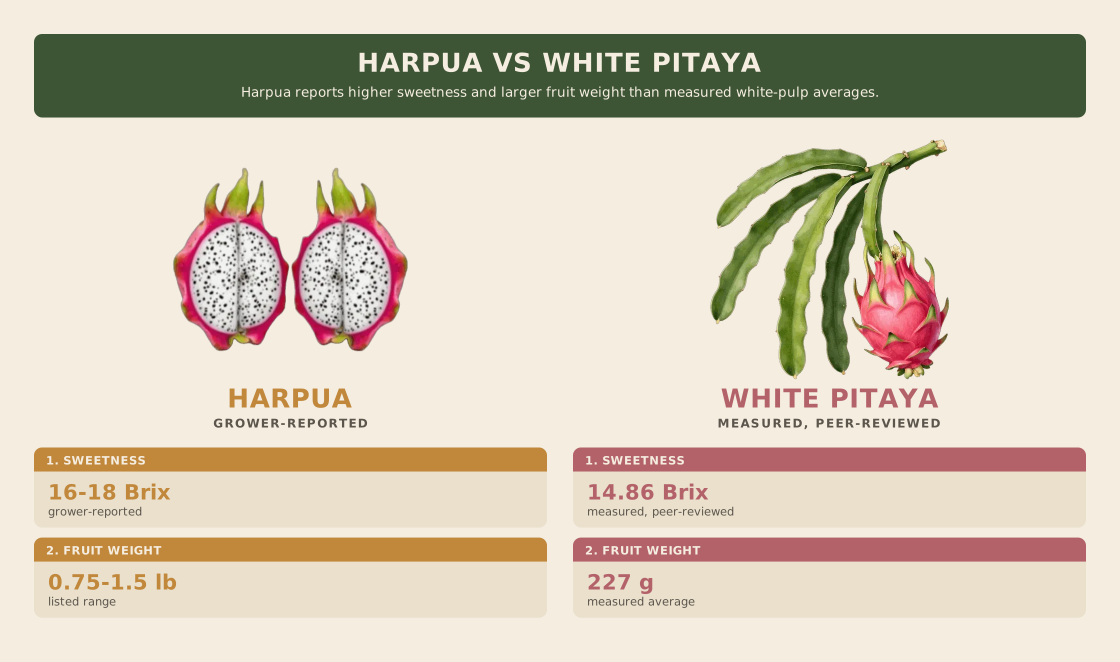
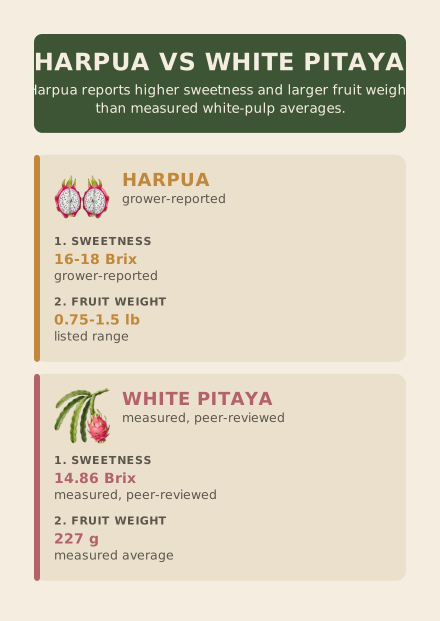
White-fleshed pitaya is a well-characterized fruit at the species level, which gives us a solid yardstick for judging Harpua. In a peer-reviewed comparison, red-peel, white-pulp Selenicereus undatus averaged 14.86 degrees Brix in soluble solids, with a pH of 4.37 and 0.41% citric acid.[3] The flesh itself is more than 85% water, which explains why the fruit reads as juicy rather than dense, and it carries about 2.19 g of dietary fibre per 100 g.[4] Published pulp pH generally sits between 4.5 and 5.0, making dragon fruit a low-acid food with malic acid as the predominant acid.[4]
Harpua’s grower-reported sweetness of 16 to 18 Brix places it above that species average.[3] This is the honest way to pitch its flavor: it is sweet for a white dragon fruit, but it remains a mild, melon-and-water profile rather than a berry bomb. The commercial weakness of the white-fleshed group is that its semisweet, low-acid character is a quieter eating experience than red-fleshed or yellow-skinned types, and measured white-pulp soluble solids typically cluster near 14 to 15 Brix.[3] Harpua clears that bar, but it does not rewrite the category.
Do not expect an antioxidant showcase. A three-cultivar nutrient comparison found white-fleshed H. undatus contained 122.7 mg/100 g of total soluble phenolics, while red-fleshed H. costaricensis contained 572.48 mg/100 g.[9] Red cultivars also led on calcium, iron, zinc, potassium, and magnesium.[9] A pale-fleshed clone like Harpua is a hydration-and-fibre fruit. The betalain and antioxidant story belongs to the red-fleshed types, and borrowing it here would be misleading.
Chill the fruit. Because the flesh is so watery and low in acid, Harpua tastes best when it is thoroughly chilled. The mild melon notes sharpen, and the texture feels crisper. If you serve it at room temperature, the sweetness can feel flat against the low acidity. Serve it cold, and the 16 to 18 Brix reading translates into a refreshing, clean finish.
Ignore stray "pink flesh" descriptions. You may see Harpua described as "pink flesh" in some directory prose. That is a contradiction within the source itself. Every nursery and cultivar table that lists Harpua classifies it as white-fleshed, and the fruit you will grow has snowy white pulp.[5] Judge the fruit by what is on the plate, not by a stray adjective in a product description.
One flowering wave, from bud to basket
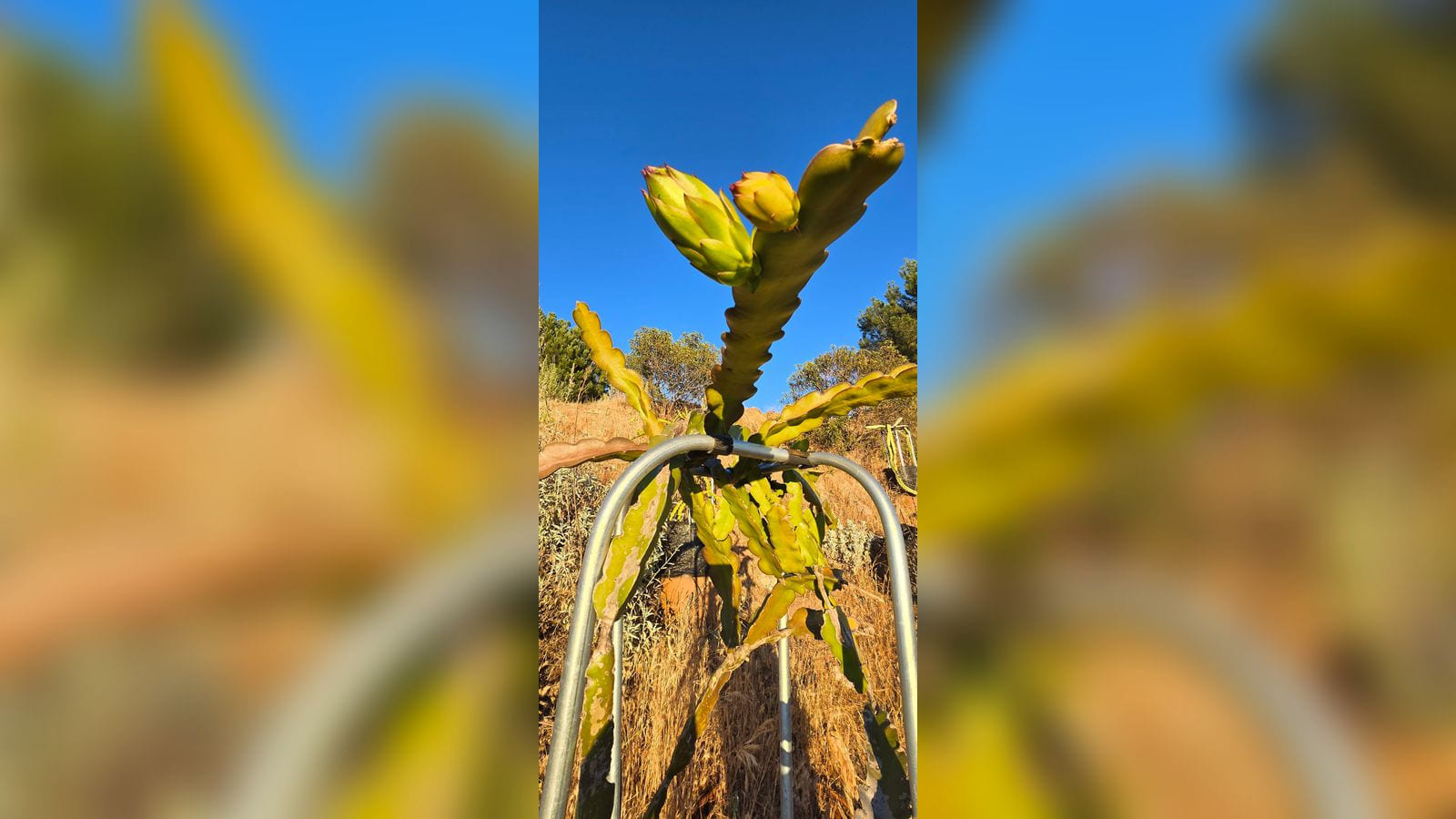
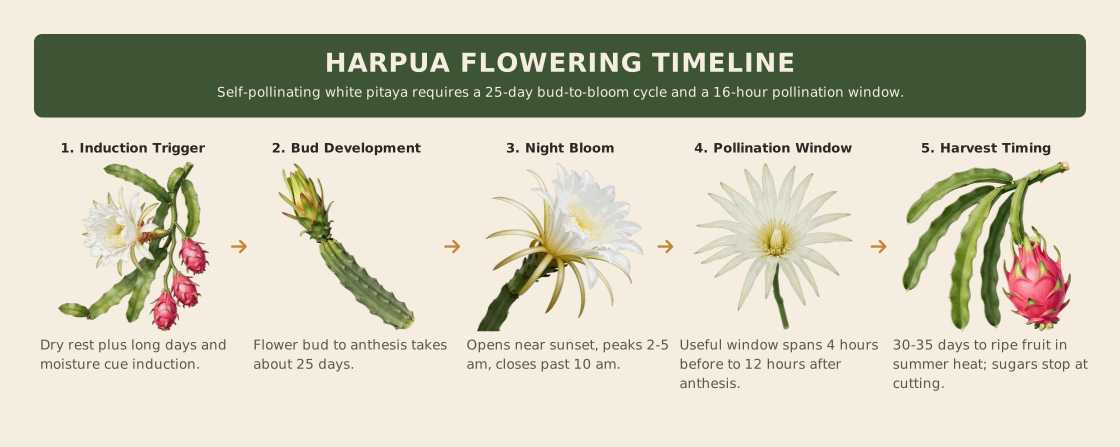
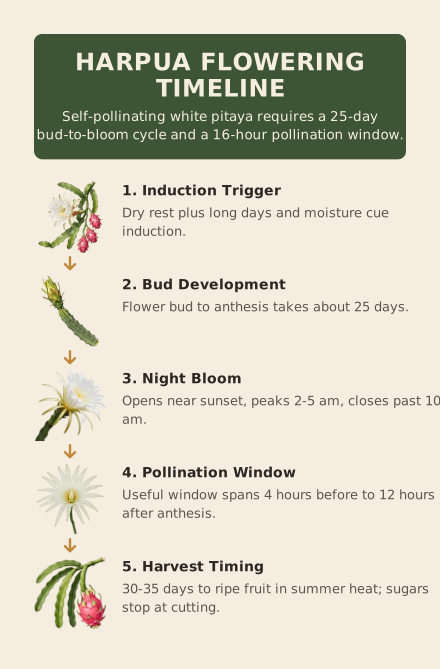
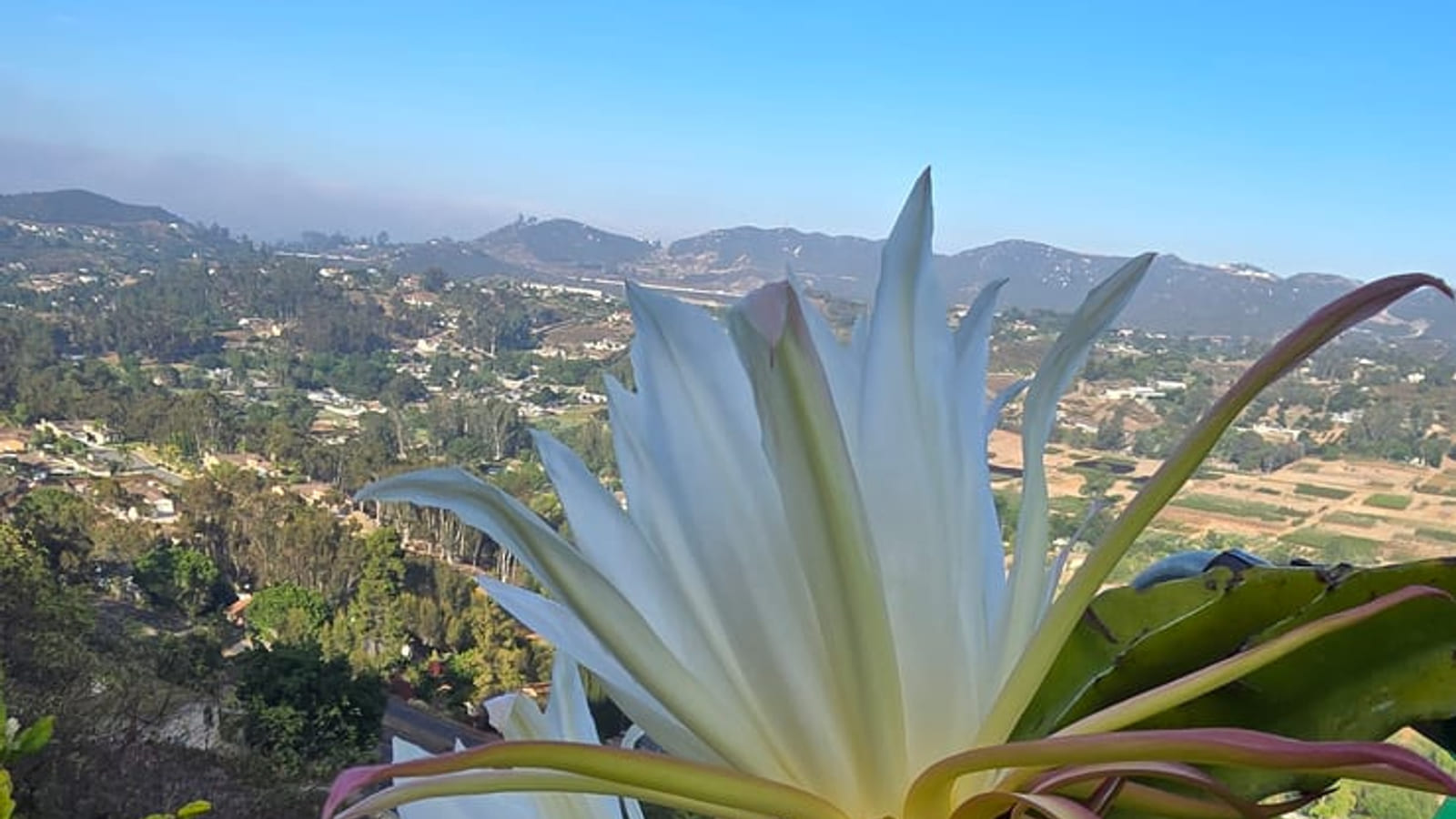
Dragon fruit does not run on an internal calendar. It waits for a signal. In the field, early summer rains act as floral inducers, switching the plant from vegetative growth to reproductive mode[1]. Because Harpua is a long-day plant, the natural window for this switch in the Northern Hemisphere is roughly April through November[1]. Growers looking to stretch that window often use microclimate manipulation, such as fogging, sprinklers, or rain guns, to mimic the moisture cue and trigger an extra cycle[1]. Once that switch flips, the clock starts ticking.
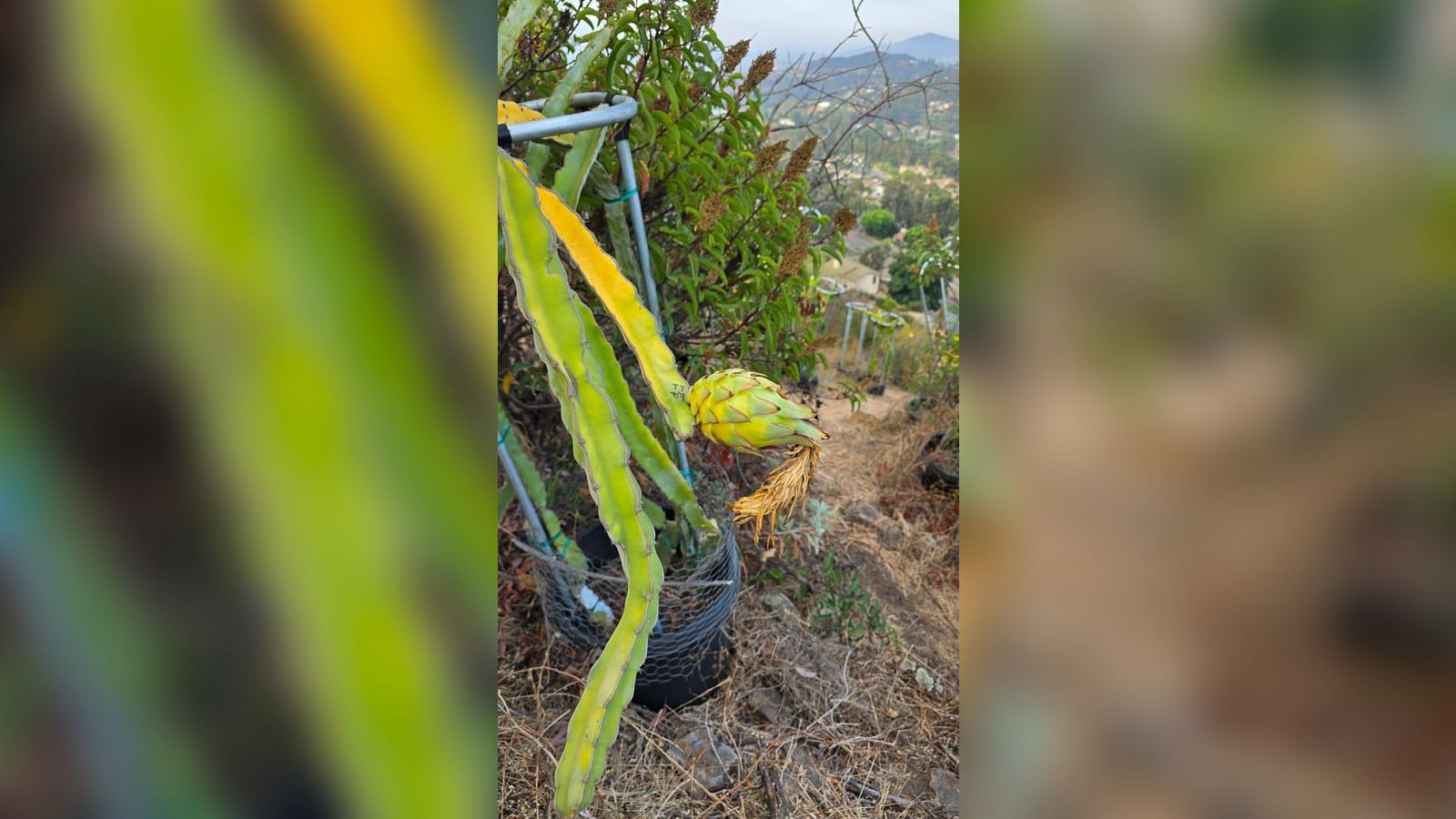
From the moment a bud is visible, you have about 25 days before the flower opens[5]. The timing of the bloom itself is unusually forgiving for a night-opening cactus. Anther dehiscence, the release of pollen, happens at about 4:30 to 5:00 pm, just before the flower fully opens[1]. Anthesis, the full opening of the bloom, begins around 6:00 to 6:30 pm, in step with local sunset[1]. The flower remains fully open through the night, running from about 8 pm to 6 am, with peak activity between 2:00 and 5:00 am[1]. Flowers may remain partly open until 10 am, but peak activity ends by dawn.
The Pollination Window
Pollen viability peaks above 98% at anthesis and stays above 90% from six hours before to six hours after the flower opens. Stigmas are fully receptive from twelve hours before to twelve hours after anthesis. This creates a validated pollination window running from about four hours before anthesis to about twelve hours after it[1].
In practice, this means you do not need to stay up all night. An early-evening pass just after the flowers open works. A morning pass before the flowers collapse also works. Trials showed that pollination at anthesis, at -4 hours, at +6 hours, and at +12 hours all resulted in 100% fruit set with comparable fruit weight and seed numbers[1]. However, much earlier collection at -18 hours and -6 hours dropped set to 55-65% or worse[1]. If you are hand-pollinating, wait for the sunset cue or the morning light. Do not try to pollinate in the middle of the afternoon.
While hand-pollination ensures maximum fruit size, Harpua is self-fertile and can set fruit without human intervention. The night-shift pollinators it evolved around are real workers. Research summarized by the US Fish and Wildlife Service shows that nocturnal pollinators such as bats, moths, and beetles do as much pollination as non-native honeybees in some systems, with moths visiting at rates that can exceed day-flying insects[10]. If you have a healthy population of these creatures, you may see good set without lifting a finger. But if you want to guarantee the medium-to-large fruit size Harpua is capable of, manual assistance during that -4 to +12 hour window is the most reliable method.
Once pollination is successful, the fruit develops over 30 to 35 days[5]. Timing varies. A cool autumn wave runs longer than 35 days, as lower temperatures slow metabolic processes. Do not count days. Watch the plant. Harvest when the skin shifts from bright green to a duller, more uniform color and the fruit gives slightly under gentle pressure. Do not wait for the fruit to fall off the stem. Dragon fruit does not ripen further after cutting. Sugars do not climb once the fruit is detached from the vine. If you pick it too early, you will have a mild, watery fruit. If you wait too long, the texture can become mealy. The sweet spot is when the scales begin to dry slightly at the tips and the fruit feels heavy for its size.
Expect 2 to 3 fruit per mature stem per year. This is a modest yield compared to commercial plantings in Southeast Asia, but it is consistent for a backyard clone. The key to maximizing this output is managing the moisture cue. If you want a second wave, simulate rain with overhead misting or heavy watering after a period of dry rest. If you miss the window, the plant will revert to vegetative growth, and you will wait another season for the next sunset bloom.
Self-fertile does not mean self-sufficient
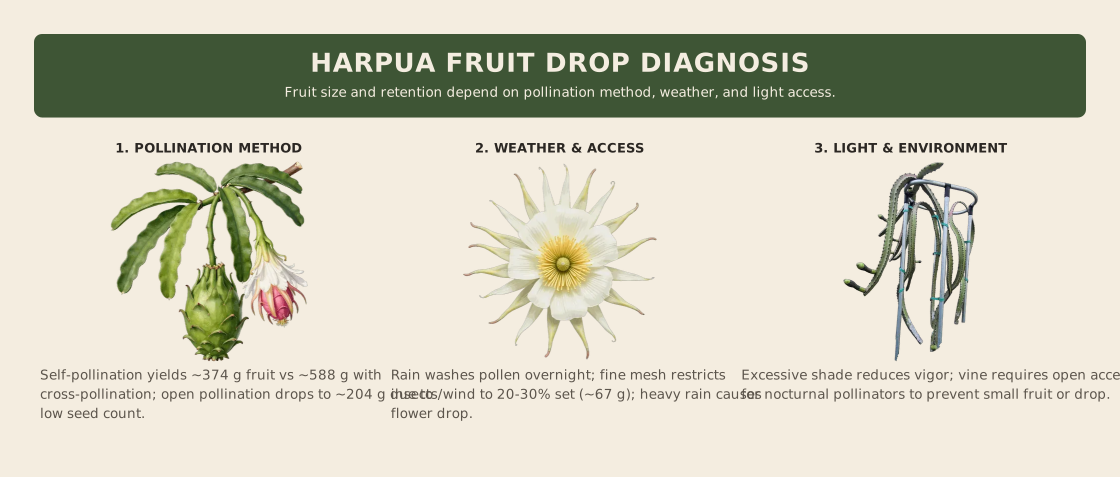
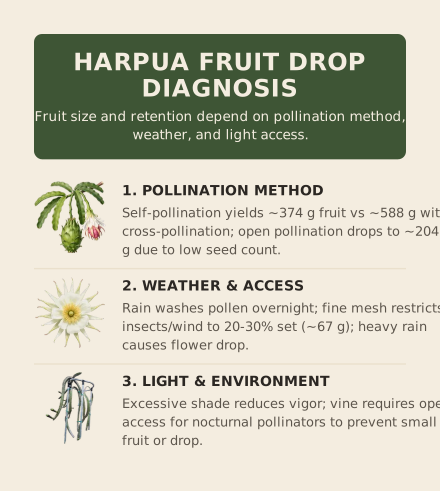
Harpua is self-fertile, which means it can set fruit without a partner. It does not mean the plant will reach its full potential on its own. A two-year peer-reviewed study of a commercially grown white-fleshed Selenicereus undatus variety demonstrated this gap clearly. The clone was self-compatible, achieving 100% fruit set under manual self-pollination, manual cross-pollination, and open pollination. However, the weight of the resulting fruit varied drastically by method. Manual cross-pollination produced fruit averaging about 588 g. Manual self-pollination yielded about 374 g. Open pollination, relying on natural vectors, resulted in fruit of only about 204 g.[1]
The mechanism behind this weight difference is seed count. Dragon fruit size tracks the number of fertilized ovules. In the same study, cross-pollinated fruit carried the highest seed counts, ranging from 1,304 to 1,355 seeds per fruit over two seasons. Self-pollinated fruit had fewer seeds, and open-pollinated fruit had the fewest. When pollen transfer was physically restricted, fruit set collapsed to 20-30% and fruit weight fell to about 67 g. Wind-only access set fruit of about 95 g. Fruit set alone is not the goal; seed count is what sizes the fruit.[1]
While Harpua sets fruit from its own pollen, cross-pollination is an upgrade rather than a requirement. Red-fleshed clones in the same trial were strictly self-incompatible and needed a different variety’s pollen to set anything at all. White-fleshed clones like Harpua have a genuine biological advantage here, but leaving them to chance leaves significant yield and size on the table. Rain washout and thin night-pollinator traffic are the primary reasons an unaided vine underperforms. Excessive rain washes out pollen, and declining populations of nocturnal pollinators like bats and moths reduce transfer rates. These factors are critical limiting factors for both fruit set and fruit size.[1]
The pollination window is forgiving. Refer to the timeline described above. An early-evening pass just after flowers open or a morning pass before they collapse both work. Pollination at anthesis and at -4 h, +6 h, and +12 h all gave 100% fruit set with comparable fruit weight and seed numbers.[1]
To maximize Harpua’s output, treat self-fertility as a safety net, not a strategy. Brush the anthers of one flower and dust the lobed stigma of a neighbor flower. Do this the evening the flower opens or the following morning. Tag the date so you can track harvest timing. This simple manual intervention bridges the gap between the 204 g open-pollinated baseline and the 588 g cross-pollinated potential. For more on managing this process across different varieties, see our ecom__dragon fruit pollination guide self fertile vs cross pollinating varieties.
Growing Harpua in Southern California
Southern California offers the dry heat and marginal soils that pitaya loves, but success depends on respecting the plant’s shallow biology. Harpua is a CAM photosynthesising climbing cactus with water-storing cladodes and a dense, shallow root system. This structure makes it drought-tolerant on poor ground, but it also means the plant hates wet feet. A well-established vine can produce for 20 to 30 years, provided you avoid waterlogging and never pile mulch directly against the stem.[1]
The climate here is generally forgiving, but extremes matter. UF/IFAS data suggests optimum growth occurs between 65 and 77 F. While the plant tolerates heat, it stalls or suffers damage above 100 F. On the cold end, long-duration exposure below 31 F causes injury, though Harpua recovers rapidly from light frost.[2]
Newly planted cuttings need protection from our intense sun. UF/IFAS recommends about 30% shade for the first three to four months after planting, or anytime insolation looks damaging. After that, move to full sun. Too much permanent shade leads to low production and poor fruit quality.[2]
University of Guam extension notes that plants grown from cuttings can fruit within one year. To manage this vigorous growth, space plants 9 to 15 feet apart. While the vine can sprawl on the ground, a trellis is strongly recommended for cleaner harvesting and easier management.[11]
| Care Factor | Target / Action | Source |
|---|---|---|
| Optimum Temp | 65-77 F | UF/IFAS[8] |
| Heat Stall | Above 100 F | UF/IFAS[8] |
| Cold Injury | Below 31 F (long duration) | UF/IFAS[8] |
| Initial Shade | ~30% for first 3-4 months | UF/IFAS[8] |
| Mature Light | Full sun | UF/IFAS[8] |
| Spacing | 9-15 ft between plants/rows | Univ. of Guam[11] |
| Support | Trellis recommended | Univ. of Guam[11] |
| Time to Fruit | Within 1 year (from cutting) | Univ. of Guam[11] |
| Productive Life | 20-30 years | Source S6[8] |
| Root Care | No waterlogging; no mulch volcano | Source S6[8] |
Where to buy Harpua cuttings, and questions people ask
Stock changes quickly. We stock Harpua cuttings and plants at Sky Botanicals, so you can order directly from us. If you are shopping around, know the current status of other major sellers. Spicy Exotics lists Harpua cuttings at $10 to $14 but currently marks the variety as out of stock[6]. Pine Island Nursery stocks it, making them a reliable alternative if you need a cutting right now[7]. Spicy Exotics notes that their breeding stock was acquired from a tropical nursery in California[6]. That provenance detail matters less than the plant’s actual performance, which we have verified on our own farm.
Common questions:
Is Harpua red or white? It is white. Some directories contain a typo listing pink flesh, but every reputable nursery and the removed UF/IFAS table confirm snowy white pulp[7][8]. The skin is bright pink with green scales, which is likely where the confusion started[6][8].
Is it self-pollinating? Yes. Harpua sets fruit from its own pollen, a genuine advantage of white-fleshed pitaya[1]. There is a size caveat. Self-pollinated fruit will be smaller than cross-pollinated fruit because seed count drives fruit weight[1]. You do not need a second variety to get a harvest, but you will get larger fruit if you hand-pollinate with pollen from another white-fleshed clone.
How sweet is it? Grower reports place Harpua at 16 to 18 Brix[3]. That is above the published white-flesh average of roughly 14.9 Brix[3]. It is sweet for a white dragon fruit, but it is still a mild melon flavor rather than a berry bomb. Spicy Exotics recommends serving it chilled to highlight that refreshing profile[6].
How long until you eat your first Harpua fruit? University of Guam extension guidance states that plants grown from cuttings can fruit within one year[11]. That timeline assumes you provide a trellis and proper care. The vine will grow on the ground unsupported, but a trellis yields cleaner fruit and easier management[11].
Can Harpua take a frost? Light, brief freezing causes damage, but the plant recovers rapidly[2]. UF/IFAS reports that prolonged exposure below 31 F injures pitayas[2]. Optimum growth sits between 65 and 77 F, and plants should not be pushed past 100 F[2]. If a light frost hits, prune the damaged tissue and let the cactus rebound. It is a resilient clone, not a delicate tropical.
References
- Floral and pollination biology of dragon fruit reveals strategies for enhancing productivity through pollination management and reproductive window extension (Sci Rep 2025, doi 10.1038/s41598-025-21168-2, PMC12552510), Scientific Reports (Nature Portfolio), peer-reviewed (2025).
- Pitaya (Dragonfruit) Growing in the Florida Home Landscape, HS1068/HS303 (Jonathan H. Crane and Carlos F. Balerdi), UF/IFAS Extension, University of Florida (2019).
- A Comparison of the Biometric Characteristics, Physicochemical Composition, Mineral Elements, Nutrients, and Bioactive Compounds of Hylocereus undatus and H. polyrhizus, 26(1):114, MDPI (open-access journal, peer-reviewed). Citation note: volume/issue as shown on the article page; writer should confirm the year on the page before printing the citation string. (2024).
- Nutritional Value and Therapeutic Benefits of Dragon Fruit: A Comprehensive Review with Implications for Establishing Australian Industry Standards, Molecules 29(23):5676, Molecules (MDPI), peer-reviewed review (2024).
- Harpua Cultivar, The Dragon Fruit Directory, Dragon Fruit Directory / Tendra (cultivar directory, grower-sourced) (2026).
- Harpua Dragon Fruit, white flesh variety (product listing), Spicy Exotics Nursery, Louisiana (2026).
- Harpua, dragon fruit variety card, Pine Island Nursery, Florida (2026).
- Pitaya Species and Named Varieties (reproduces the named-variety table removed from UF/IFAS HS1068), Growables (nonprofit educational org, after Crane et al., UF/IFAS Horticultural Sciences Dept.) (2021).
- Comparative analysis of nutrient composition and antioxidant activity in three dragon fruit cultivars (PMC11246028), PMC-indexed peer-reviewed article (2024).
- Nocturnal Pollinators, U.S. Fish and Wildlife Service (2026).
- Dragon Fruit, FS 5-21 (cooperative extension publication; cites Crane and Balerdi 2019 and Zee et al. 2004), University of Guam Extension, Cooperative Extension Service (2021).