Israeli Yellow Dragon Fruit: The Golden Clone
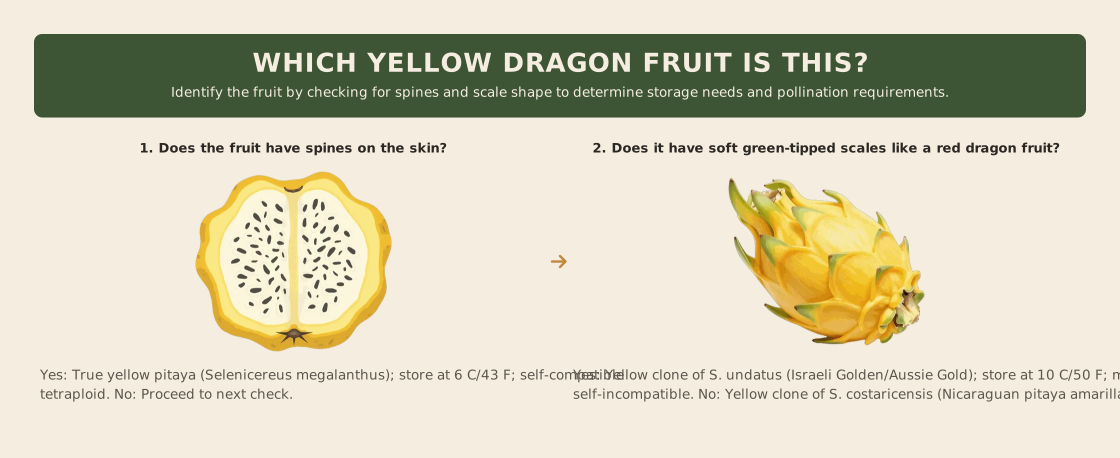
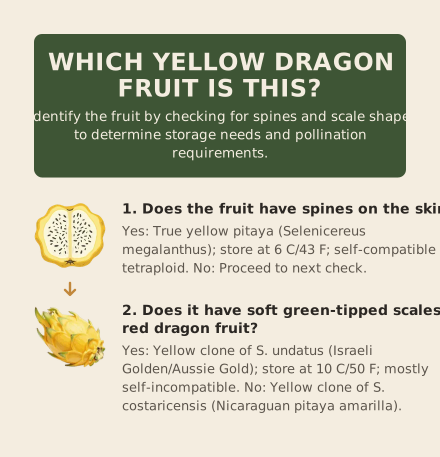
If you want the yellow dragon fruit with white flesh and a mild, sweet flavor, you likely want the cultivar 'Golden'. This variety is a yellow-fruited clone of *Selenicereus undatus* (formerly *Hylocereus undatus*), developed through decades of breeding at Ben-Gurion University of the Negev. It differs from the spiny South American *Selenicereus megalanthus*. While both appear yellow on the shelf, 'Golden' is spineless with soft, green-tipped scales, whereas *S. megalanthus* carries sharp spines and tiny scales. This difference dictates how the plant grows, how it handles cold storage, and its flavor profile. The Israeli 'Golden' type prefers warmer storage temperatures and offers a milder taste compared to the perfumed, subacidic *S. megalanthus*. At Sky Botanicals, we stock yellow-line dragon fruit plants and companion varieties to help you achieve better pollination and fruit set.
Two Fruits, One Name: Untangling the Yellow Dragon Fruit Market
Marketers use "yellow dragon fruit" as a shortcut that hides three distinct botanical realities. Produce markets, YouTube tutorials, and nurseries often use the label for any yellow-skinned pitaya, regardless of species. This confuses growers and buyers. The Israeli "Golden" is a yellow clone of *Selenicereus undatus*. The true yellow pitaya is *Selenicereus megalanthus*. A third group includes yellow clones of *Selenicereus costaricensis*, known in Nicaragua as "pitaya amarilla." These are not interchangeable. They differ in growth habits, spine structure, and storage needs.
In Australia, the same naming collision occurs with "Aussie Gold," which is also a yellow mutant of *S. undatus*, not a megalanthus variety.[8] Know the species to avoid costly mistakes in the garden and the warehouse.
*S. megalanthus* is slow to establish, taking about three years to produce, while *S. undatus* clones can fruit in one.[1] It is also far more sensitive to cold, requiring cooler storage temperatures than the Israeli type.[6] The Israeli Yellow ripens in summer, whereas *S. megalanthus* ripens from late winter into spring.[1] Selfing behavior is another key divider: *S. megalanthus* is tetraploid and sets fruit when selfed, while most *S. undatus* clones are diploid and require cross-pollination.[6]
How to Spot a Real Israeli Yellow at the Market
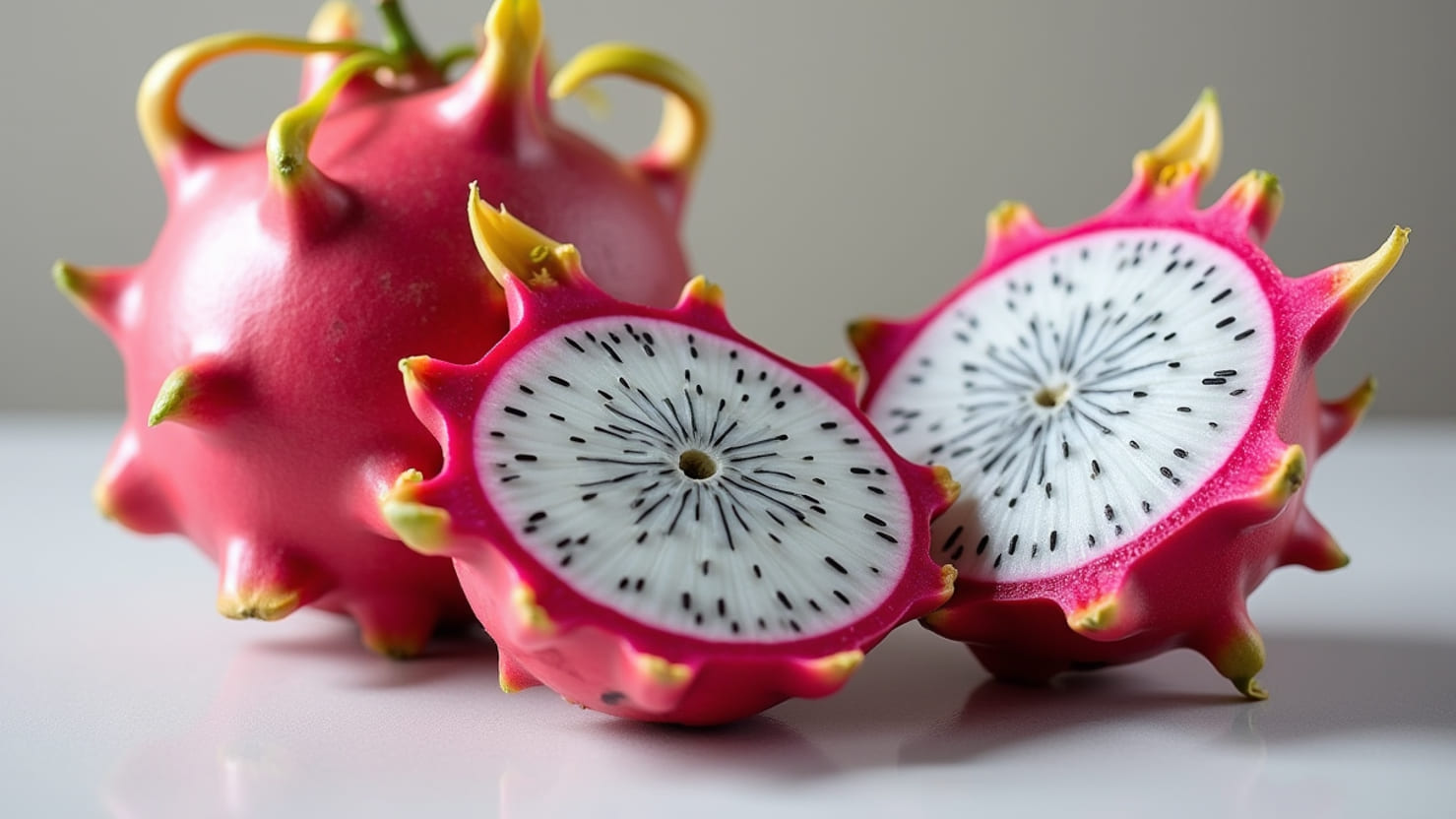
You already know the species difference. The Israeli "Golden" is a spineless clone of *Selenicereus undatus*, while the true yellow pitaya (*S. megalanthus*) carries sharp spines and tiny scales. But on the shelf, both can look yellow. To confirm you have the Israeli type, look for thick, spineless skin covered in soft, green-tipped scales. The fruit should measure roughly 9 to 12 cm long and 7 to 10 cm wide. Nicaraguan "pitaya amarilla" clones are smaller and more rounded, so size helps rule them out.[5]
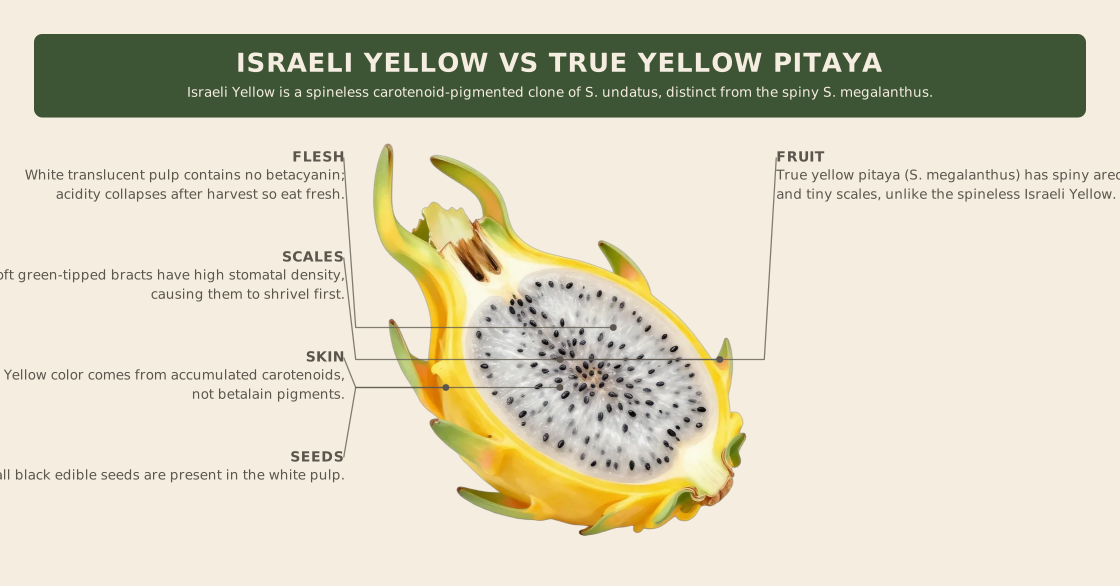
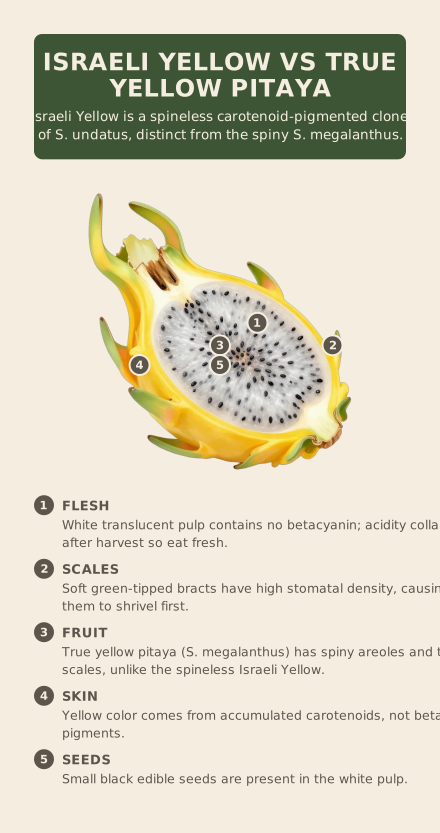
The scales are your best freshness test. Pitaya peels have active stomata, and the scales hold the highest concentration. *S. undatus* fruit has the highest peel stomatal density of the three traded species, meaning it loses moisture and shrivels faster than the others. If the scales look straw-dry or limp, the fruit has been sitting too long. Fresh Israeli Yellow should have turgid, plump scales.[1]
Timing matters. US imports of Israeli Yellow peak from mid-summer through fall. In the Israeli orchard, the species flowers in summer, but weekly pruning from early August to early September triggers new flower waves that stretch harvest into winter. This means you might see winter imports, but they are less common. If you see a yellow fruit in late winter or spring, check for spines. That is likely *S. megalanthus*, which ripens from end of winter into late spring. The Israeli type does not.[6]
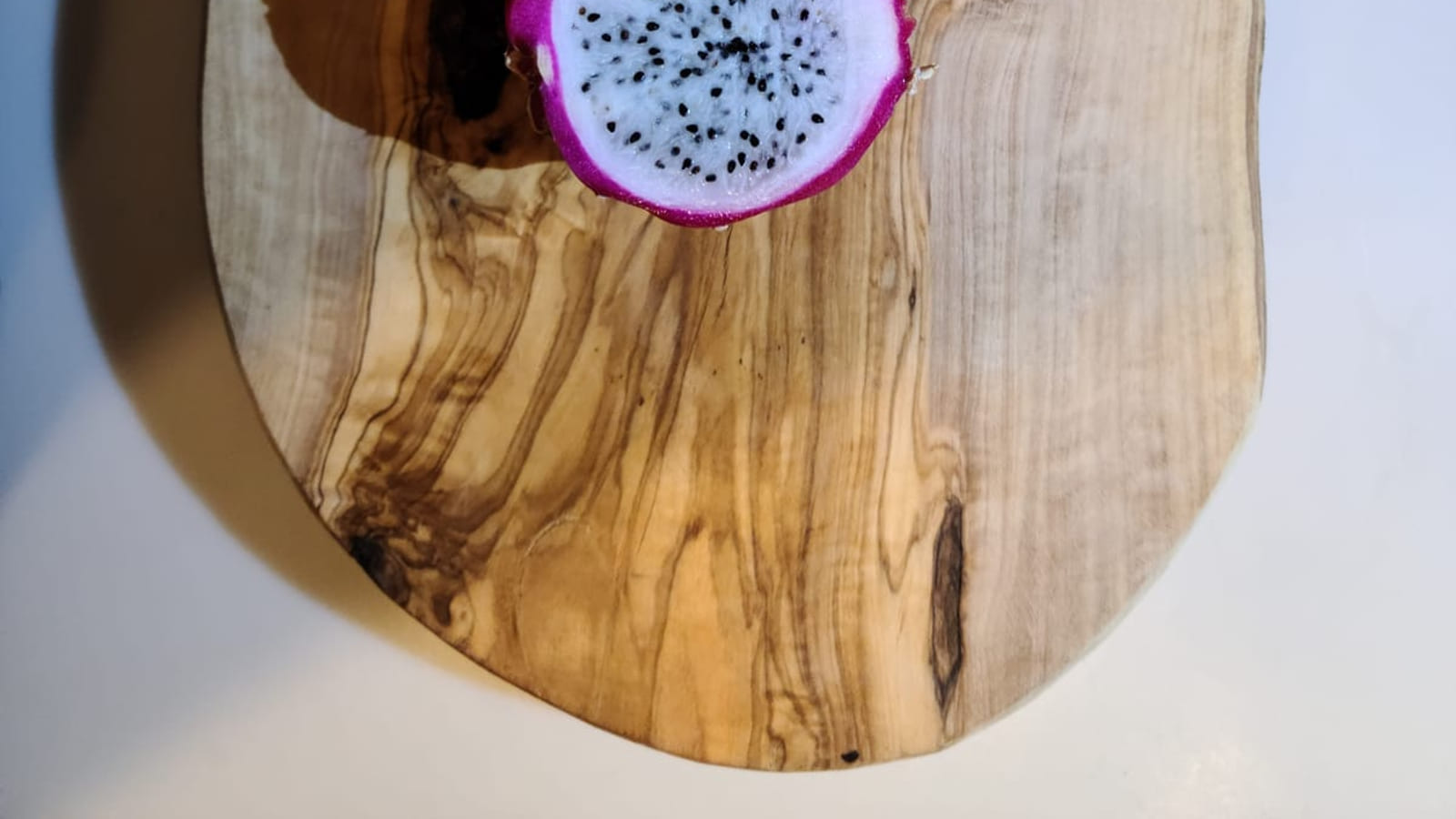
When you cut it open, the flesh should be white and seed-flecked. Both yellow species have white pulp because neither accumulates red betacyanins in the flesh. The difference is in the skin and the scales. Trust the scales.
Flavor, Measured
The Israeli Yellow is marketed for its juicy, sweet, and mild tropical profile.[5] This gentle flavor is a defining trait, distinct from the perfumed, subacidic notes of the true yellow pitaya. However, understanding how this sweetness develops requires looking at the fruit’s biology. Pitaya is non-climacteric, meaning ethylene has little effect on ripening and the fruit does not sweeten after cutting.[2] For this variety, ripeness for eating is exactly the same as ripeness for harvest. If you wait for it to "ripen on the counter," you are mostly waiting for it to decline.
Postharvest flavor fade has a measured cause: a sharp drop in acidity, primarily malic acid, which flattens the sweet-acid balance.[1] Published quality attributes that govern eating quality are total soluble solids (TSS), titratable acidity, and firmness. While ripening pitahaya typically rises to 12 to 15 Brix TSS, some cultivars reach about 20 Brix soon after harvest.[2] Yet, eating quality is determined by the ratio of sugar to acid, not just the Brix number alone. The ripening index (TSS/TA ratio) for the same species can span from 9 to 58 in published studies.[2] This massive variance explains why two fruits labeled identically can taste like different fruit, reconciling the conflicting reviews of "bland" versus "phenomenal."
A note on high-Brix claims: A UC San Diego trial recorded 20.90 and 21.15 Brix on yellow-fruited clones, the highest sugar in that study.[7] However, those specific clones (Colombiana and Yellow Dragon) are Selenicereus megalanthus, not the Israeli S. undatus clone. Do not expect the Israeli Yellow to match those specific trial numbers, as the species and growing conditions differ.
Nutrition: What the Yellow Skin Changes
The yellow skin on the Israeli 'Golden' clone is not just a cosmetic difference; it represents a fundamental shift in the plant's pigment chemistry. While red and pink dragon fruits rely on betalain pigments like betanin, phyllocactin, and hylocerenin, the yellow peel accumulates carotenoids instead.[2] This distinction affects nutrition, as peel color and flesh color are inherited separately. Both yellow varieties maintain white, seed-flecked pulp because they do not accumulate red betacyanins in the flesh.[2]
When you compare the peel directly, the yellow accession measured higher ascorbic acid than red-skinned peel, with values of 15.97 versus 11.33 mg/100 g fresh weight.[2] The phenolic profile also diverges. Yellow peel phenolics are dominated by kaempferol-O-rhamnoside hexoside pentoside, whereas red peel is richer in quercetin and betanin derivatives.[2] Generally, white-fleshed and yellow cultivars show lower total antioxidant activity and total phenolics than red-fleshed types, a direct consequence of their carotenoid-based coloration rather than betalain.[2]
Produce-trade profiles for Israeli Yellow describe the fruit as a good source of magnesium, phosphorus, and potassium, along with dietary fiber and protein.[5] These reports indicate higher calcium levels than red-skinned varieties, alongside small amounts of iron, vitamin A, niacin, and vitamin C.[5] The edible seeds are noted for being rich in omega-3 fatty acids.[5] Treat these figures as indicative trade reporting rather than a specific lab certificate for your backyard harvest.[5]
Pollination
Israeli Yellow pollination depends on cytology. The plant is a diploid (Selenicereus undatus), and in the Israeli collection survey, only about 10% of these genotypes were self-compatible.[3] The rest require a compatible pollen partner to set a crop. This stands in stark contrast to the tetraploid true yellow pitaya (S. megalanthus), which sets fruit when selfed. If you want a reliable harvest from the Israeli type, you cannot rely on a single clone.
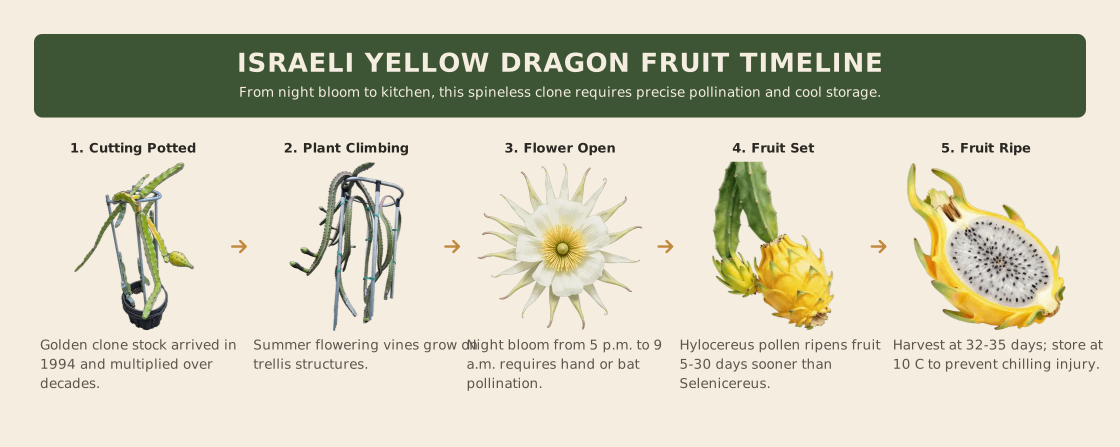
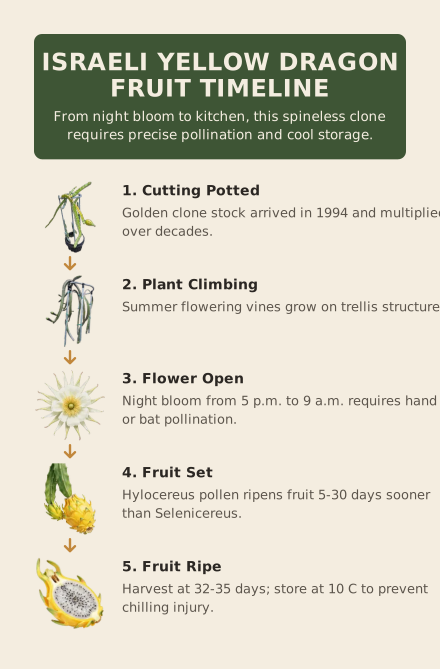
University of Florida recommendations are clear: plant two or three different genetic types, not just multiple cuttings of the same clone.[4] Cross-pollination improves both fruit set and size. The challenge is timing. Pitahaya flowers open once, in the evening around 5 p.m., and close by 9 a.m.[2] Bees are absent during this window. While moths and bats can help, hand-pollination is the surest method. Collect pollen or whole stamens from one flower and brush them onto the stigmas of another during the night or early morning.
Advanced lever: Metaxenia. The source of your pollen changes the calendar. Using Hylocereus pollen shortens the time from pollination to ripening by 5 to 30 days compared to Selenicereus pollen.[1] Israeli growers exploit this to stretch shipping seasons.
For planned pollination, you can bank pollen. Israeli researchers vacuum-desiccate fresh pollen to 5 to 10% humidity and store it at -20 C, keeping it viable for over 18 months.[1] This allows you to match bloom times between different clones. For a step-by-step walkthrough of the hand-pollination technique, see our complete pollination guide.
Growing Israeli Yellow: Climate, Trellis, Water
Temperature dictates both survival and yield. The sweet spot for vegetative growth and flower-bud induction is 20 to 30 C. Push the plant into the 30 to 40 C range and you risk tissue damage. Frost is the other killer; extended exposure to 31 F (-2 C) causes injury, though some clones recover from light freezing. Because this is a CAM plant, it sips water, using roughly 10% of what a conventional fruit tree drinks. But do not let that low volume fool you. The roots are hemi-epiphytic and shallow, rarely penetrating deeper than 40 cm. You cannot rely on deep, infrequent soaks. Small, frequent irrigation during dry spells is the only way to keep the root zone moist without drowning it. In arid regions like the Negev, about 120 mm per year is the target.[1]
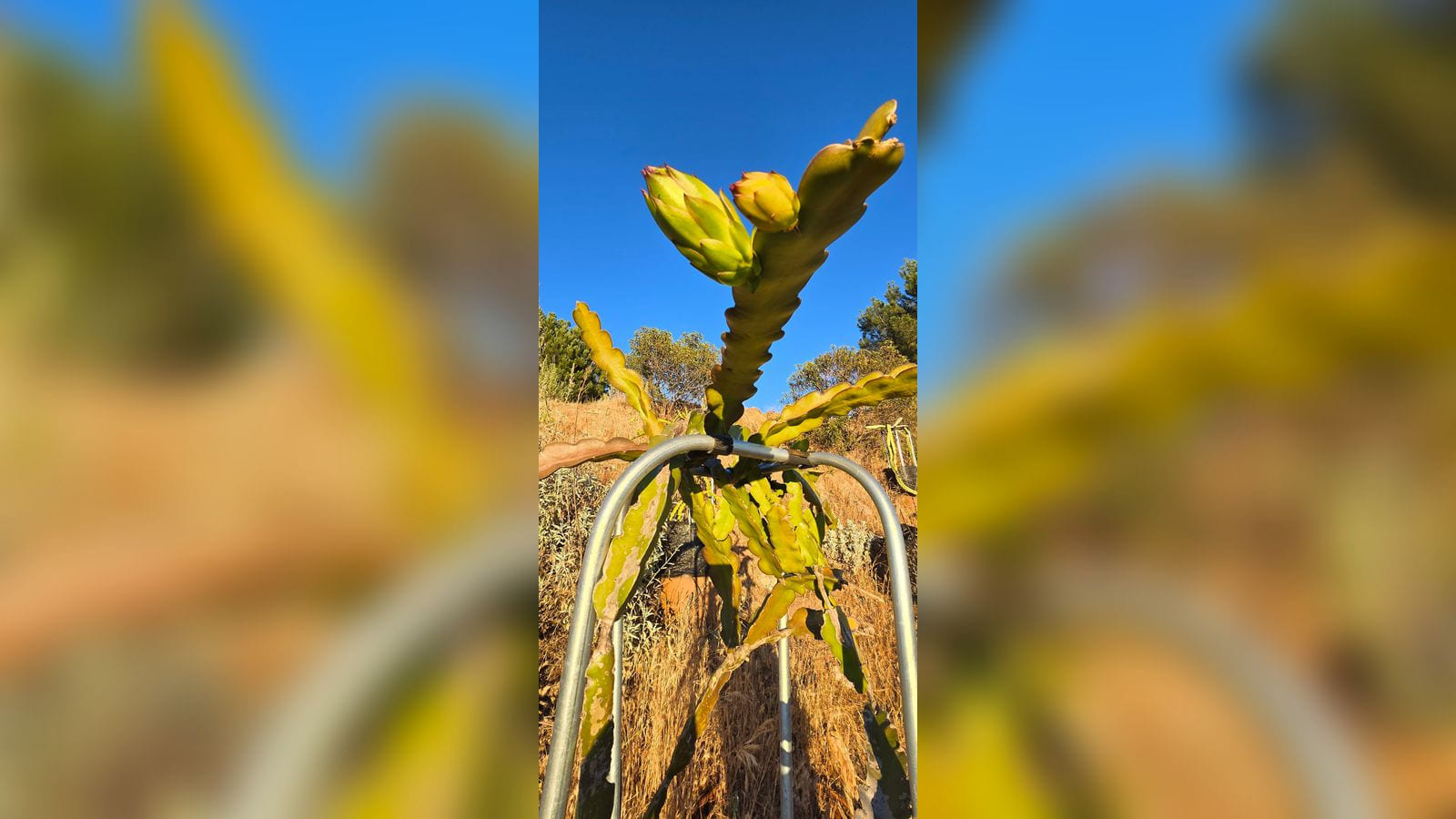
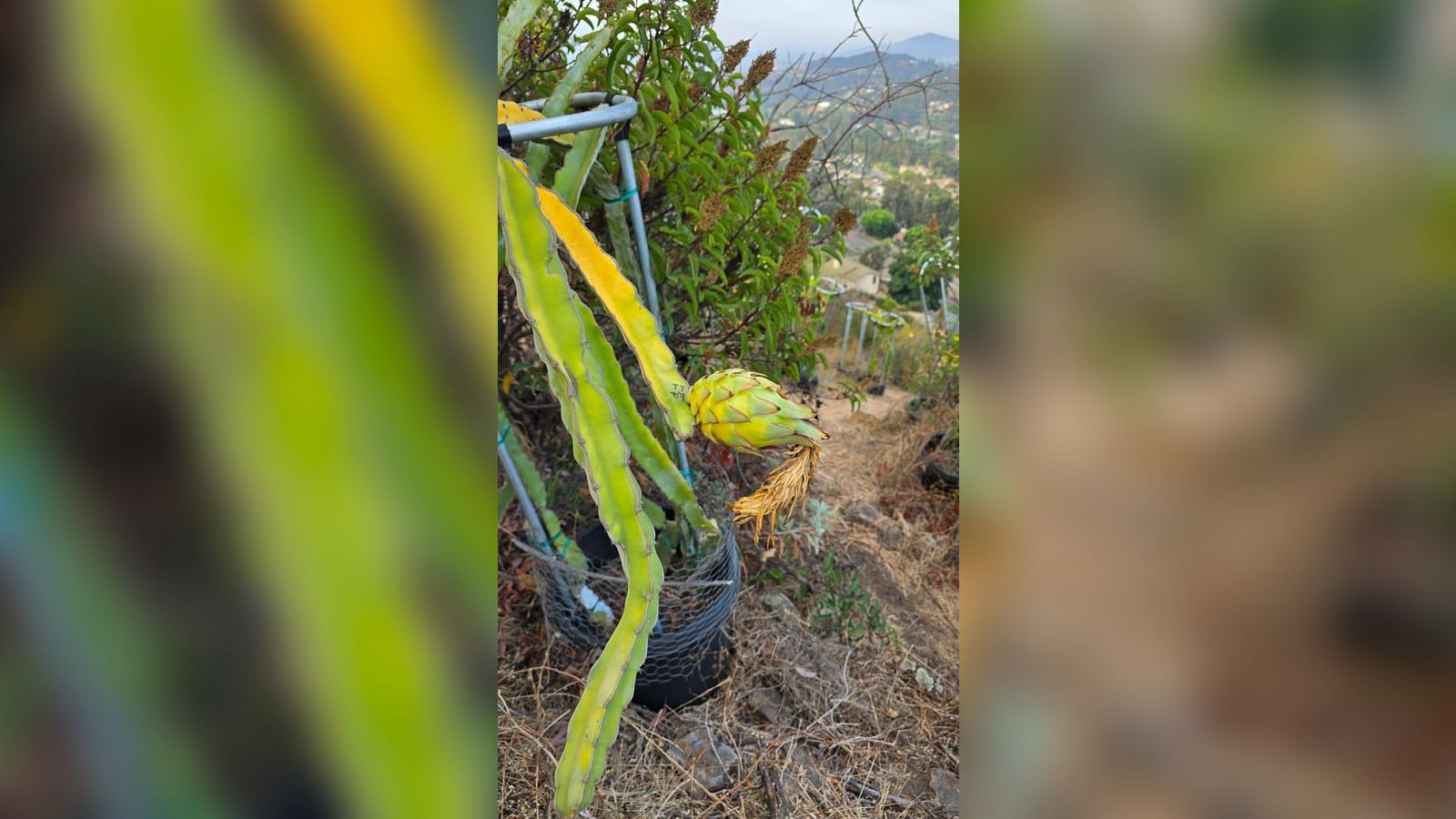
Light management is just as critical as water. Unshaded stems suffer severe photo-inhibition under intense summer radiation, turning yellow and then bleaching white before dying. Commercial growers in Israel use shade nets ranging from 20% on the coast to 60% inland. For home growers in hot climates, a light afternoon shade cloth is a practical substitute. Support structure matters too. A wire trellis with shoot curtains hung at or below 160 cm creates two accessible production walls, making pollination and harvest manageable.[1]
Flowering is not random; it is schedulable. Weekly pruning from August triggers consecutive flower waves. If you need to delay a wave, remove young buds. Chemical interventions like CPPU advance flowering, while GA3 delays it. Do not rely on day-length lighting alone, as the response is temperature-dependent.[1]
| Factor | Requirement | Home Grower Action |
|---|---|---|
| Temperature | 20-30 C optimal; 30-40 C damaging | Provide afternoon shade in heat; protect from frost |
| Water | ~120 mm/year; shallow roots (40 cm) | Small, frequent summer irrigation |
| Light | 20-60% shade net | Light shade cloth inland |
| Trellis | Wire trellis, curtains ≤160 cm | Keep shoots low for easy access |
| Soil/Pests | Nematode risk in sand | Use resistant rootstock if sandy |
One final note on soil. In sandy ground, root-knot nematodes can devastate plants. The workaround is grafting onto resistant rootstock. Be aware that while this boosts vigor, it can cost flavor, as own-rooted plants often taste better in blind panels.[1]
The California Reality Check
Before you commit your backyard to yellow dragon fruit, look at the data from the UC Cooperative Extension San Diego County field evaluation. The trial tested 19 cultivars, including two yellow-fruited clones identified as Colombiana and Yellow Dragon (confirmed by DNA work to be the same selection).[7]
The results were mixed. These yellow clones posted the highest sugar content of the entire trial, hitting 20.90 and 21.15 Brix.[7] Yet, they averaged under 200 g per fruit and produced zero marketable weight per plant.[7] They also took 150 to 180 days to harvest, compared to just 37 to 48 days for the red and white cultivars.[7] They also scored the bottom of the scale (1 out of 5) on both cold hardiness and heat tolerance.[7]
Takeaway: Yellow dragon fruit is a specialty flavor play, not an easy commercial crop, in Southern California. The trial fruit was the megalanthus-type yellow, which serves as the conservative bound for yellow-fruited pitayas generally. However, the Israeli Yellow is a clone of S. undatus, a faster, more vigorous plant. Israeli success depends on desert sun managed with shade nets and scheduled flowering, not just raw climate tolerance.
If you are growing the Israeli Yellow, do not expect the effortless productivity of red varieties. The high Brix is real, but the yield drag and stress sensitivity are too. In California, you are trading volume for flavor. If you want a reliable, high-yield crop, stick to red or white varieties. If you want the best-tasting fruit you can grow, and you are willing to manage shade, water, and pollination meticulously, the yellow clones are worth the effort. Just know that the plant will punish neglect faster than its red cousins.
Harvest to Shelf: The Rules That Protect the Fruit
Pitaya is non-climacteric. Ethylene does not drive ripening, and the fruit does not sweeten after cutting. Harvest at the right stage or lose the sugar forever. For this species, ripeness for eating is ripeness for harvest. The window is narrow, with fruit reaching eating quality 25 to 45 days after flowering, with 32 to 35 days widely recommended. Wait another 3 to 5 days after color break for peak flavor. Storage parameters differ by species. The Israeli Yellow type requires specific handling to avoid chilling injury.
| Parameter | Israeli Yellow (S. undatus clone) | True Yellow Pitaya (S. megalanthus) |
|---|---|---|
| Optimal Temp | 10 C (50 F) | 6 C (43 F) |
| Humidity | 85 to 90% RH | 85 to 90% RH |
| Min Safe Temp | 10 C minimum | 10 C minimum |
UC Davis lists 10 C for yellow H. undatus clones, while true yellow pitaya tolerates 6 C.[6] Israeli postharvest work sets 10 C as the minimum safe temperature for pitayas generally.[1] Chilling injury manifests as shriveled scales, watery pulp, and off-flavors. Commercial breeders selected clones that survive sea freight with a 26-day shelf life: 21 days at 10 C followed by 5 days at 20 C.[1]
The scales shrivel because pitaya peels carry active stomata, most concentrated in the scales. H. undatus fruit has the highest peel stomatal density of traded species, losing moisture fastest.[1] A produce bag over the fruit slows this water loss.
Expect flavor to flatten after about a week at home. Acidity, mainly malic acid, collapses sharply after picking, ruining the sweet-acid balance. Eat fresh.[1]
Buying, Eating, Storing
What does Israeli Yellow actually taste like? Expect a mild, sweet profile with juicy white flesh. Notes of kiwi and pear dominate, with far less tang and perfume than the spiny South American yellow pitaya. This difference is why many prefer it for fresh eating.[5]
Is it the same as yellow pitaya or 'Colombiana'? No. 'Colombiana' is a trade name for Selenicereus megalanthus, the spiny Andean species. Israeli Yellow is a spineless clone of Selenicereus undatus. They differ in growth speed, cold sensitivity, and flavor. Do not treat them as interchangeable in the garden or the kitchen.
Availability in the US is narrow. Imports of Israeli Yellow hit specialty shelves mainly from mid-summer through fall.[5] Outside that window, you are likely seeing a different yellow cultivar or a stored import that has lost its edge.
Do not buy it hard and wait. Pitaya is non-climacteric and does not sweeten after harvest. Buy fruit that is already colored and eat it within a week.[2] Store at 50°F (10°C). Colder temperatures cause chilling injury, leading to shriveled scales and off-flavors.[1] The scales hold the most stomata, so they dry out first. If they look limp, the fruit is past its prime.
Eating tip: Cut in half and scoop with a spoon. The flesh blends well into smoothies, yogurt bowls, and fruit salads. The mild sweetness pairs with citrus or mint without overpowering them.
Want to grow your own? We stock yellow-line dragon fruit plants and companion pollinators. Since Israeli Yellow is mostly self-incompatible, planting two different genetic types ensures better fruit set and bigger harvests.[4]
Key Takeaways
Ready to grow? Sky Botanicals stocks verified yellow-line plants and compatible pollinators to help you set fruit successfully.
References
- Thirty-one years of research and development in the vine cacti pitaya in Israel (Mizrahi, Y.; chapter in Improving Pitaya Production and Marketing, FFTC workshop proceedings, pp. 1-18), Food and Fertilizer Technology Center (FFTC) for the Asian and Pacific Region; author at Ben-Gurion University of the Negev (2015).
- Yellow Pitahaya (Selenicereus megalanthus Haw.): The Less Known of the Pitahayas (Valero, Erazo-Lara, Garcia-Pastor, Padilla-Gonzalez, Agullo, Badiche El-Hiali, Serrano; Foods 14(2):202), MDPI Foods (peer-reviewed; PMID 39856868) (2025).
- Cytology and mating systems in the climbing cacti Hylocereus and Selenicereus (Lichtenzveig, Bonos, Wisniewski, Mizrahi; Am. J. Bot. 87(7):1058-1065), American Journal of Botany (peer-reviewed) (2000).
- Pitaya (Dragonfruit) Growing in the Florida Home Landscape (HS303; Crane, Balerdi, Majid), UF/IFAS Extension, University of Florida (2019).
- Israeli Yellow Dragon Fruit - Description/Taste, Seasons/Availability, Current Facts, Nutritional Value, Specialty Produce (produce trade profile) (2024).
- Produce Facts Sheets: Dragon fruit, UC Davis Postharvest Quality (compendium of perishables) (2024).
- Pitahaya / Dragon Fruit Research - Results to Date: 19-cultivar San Diego field table (skin/flesh colour, cold-hardiness and heat-tolerance ratings, average fruit weight, Brix, marketable weight per plant, days to harvest) plus DNA confirmation of duplicated cultivar names. Lobo, Bender & Tanizaki, UC Small Farm Program / UCCE San Diego County, University of California Agriculture and Natural Resources / UC Cooperative Extension (2013 Pitahaya Production Seminar & Field Day) (2013).
- A review on the advances of dragon fruit (Li, Ma, Li, Yao, Lu, Hu, Ding; Tropical Plants 3:e041) - Hylocereus/Selenicereus genus merger, self-incompatibility mechanisms, thornless yellow mutants such as Aussie Gold, Tropical Plants (Max Press), peer-reviewed (2024).