Albino Ocamponis Dragon Fruit: Rare Clone Guide
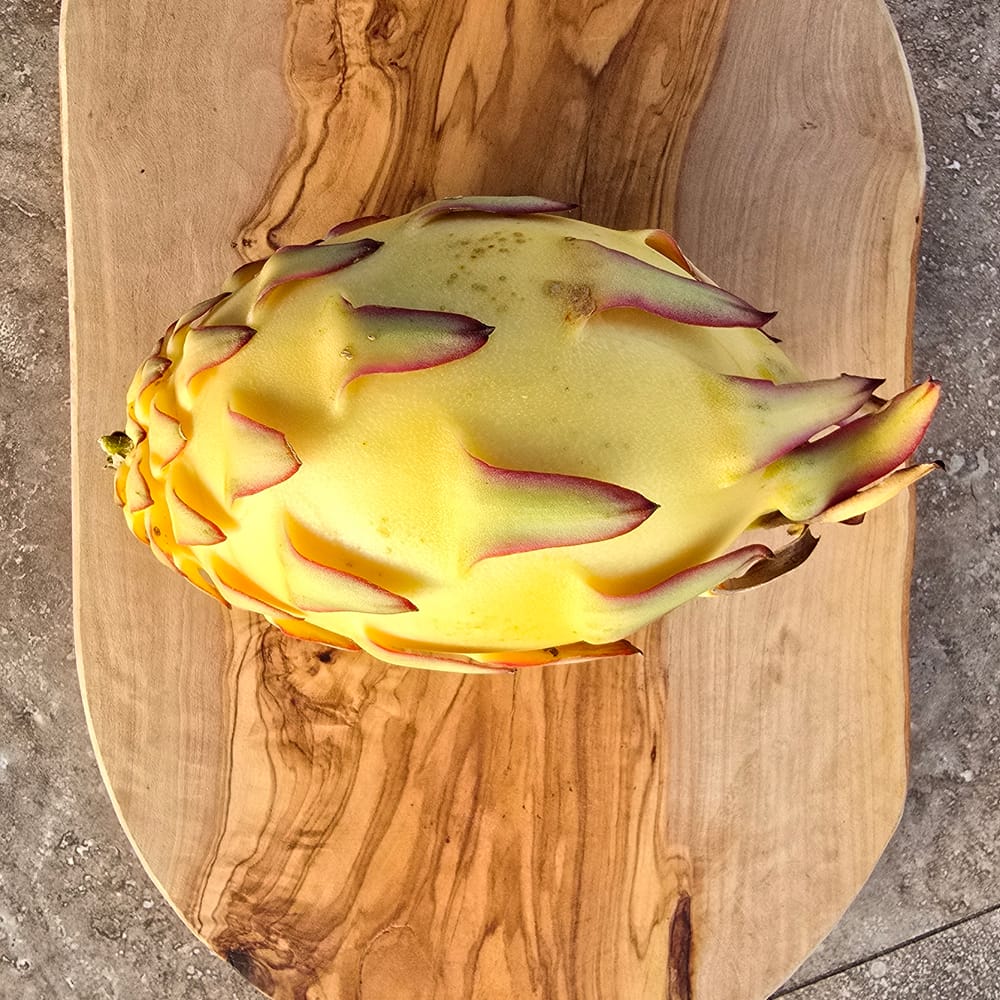
Albino Ocamponis is a rare clone of Selenicereus ocamponis with pale straw-yellow skin and firm white flesh. It offers a mild, low-acid sweetness that stands apart from standard commercial varieties. This plant requires a compatible pollinator to set fruit, so it is not a standalone purchase for most growers. Our nursery lists it as out of stock, but we recommend joining the waitlist if you have a partner plant ready. For more on managing these requirements, see our guide on [dragon fruit pollination basics].
Naming: Selenicereus vs Hylocereus, and why listings disagree
You will see this plant listed under two different scientific names depending on where you shop. Most nurseries still use Hylocereus ocamponis. Taxonomists now classify it as Selenicereus ocamponis. The shift happened in 2017, when botanist D.R. Hunt moved the species from the genus Hylocereus to Selenicereus.[1] This reclassification reflects genetic evidence that these night-blooming cacti belong in a different group than previously thought. The older name Cereus ocamponis dates back to 1850, and Hylocereus bronxensis appeared in 1920, but both are now considered synonyms for the same species.[1]
For practical growing purposes, the name change does not alter how you care for the plant. Regardless of the label, you are buying the same clone. The confusion arises because nursery catalogs and trade sites often lag behind academic updates. You might see "Albino Ocamponis" listed as Hylocereus ocamponis on one site and Selenicereus ocamponis on another. Both refer to the self-sterile cultivar with pale straw-yellow skin and white flesh. Do not let the naming discrepancy make you doubt the plant's identity or its specific pollination needs.
The wild species Selenicereus ocamponis is native to central Mexico, ranging from Nayarit south toward Guatemala.[5] It is not a common commercial fruit crop worldwide, unlike the dominant pitahaya species such as S. undatus or S. megalanthus.[5] Because it is less common in trade, you will encounter more variation in how it is labeled. Some listings may even use outdated or incorrect synonyms. Always verify the physical characteristics: pale stems, yellow skin, and white flesh confirm you have the Albino selection, regardless of the Latin name on the tag.
Where it came from: a wild Mexican species, not a breeding station
Albino Ocamponis is not a product of a laboratory or a commercial breeding program. It is a specific selection of Selenicereus ocamponis, a species native to the wild landscapes of central Mexico. Its range stretches from Nayarit south toward Guatemala, where it grows as a climbing cactus in the understory and along forest edges.[5] Unlike the dominant commercial pitahaya species you see in grocery stores, such as S. undatus or S. megalanthus, this species has never been widely adopted for industrial fruit production.[5] This lack of commercial pressure means the plant retains many of its wild characteristics, including its vigorous growth habit and its specific, often finicky, reproductive biology.
The genetic distance between this wild species and the commercial hybrids explains why it behaves differently in the garden. Research into crossability shows that S. ocamponis shares significant sequence composition with the allotetraploid yellow pitaya S. megalanthus and S. grandiflorus.[4] This genetic similarity is why you can successfully cross-pollinate Albino Ocamponis with a wide variety of other dragon fruit types. Reciprocal crosses between these species have yielded viable triploid, pentaploid, and hexaploid hybrids, proving that the pollen compatibility barriers are low.[4] You are not limited to a single pollinator partner; you have a broad palette of compatible species to work with, provided they are in bloom at the same time.
Why this matters for your garden: Because Albino Ocamponis is a wild species selection rather than a refined commercial cultivar, it does not have the self-fertility traits that breeders often select for in commercial lines. Its self-sterility is a natural trait, not a flaw. Understanding its wild origins helps you appreciate why it needs a partner to fruit and why it may show more variation in growth habits than a uniform commercial clone.
Why it is called Albino when sellers call it yellow
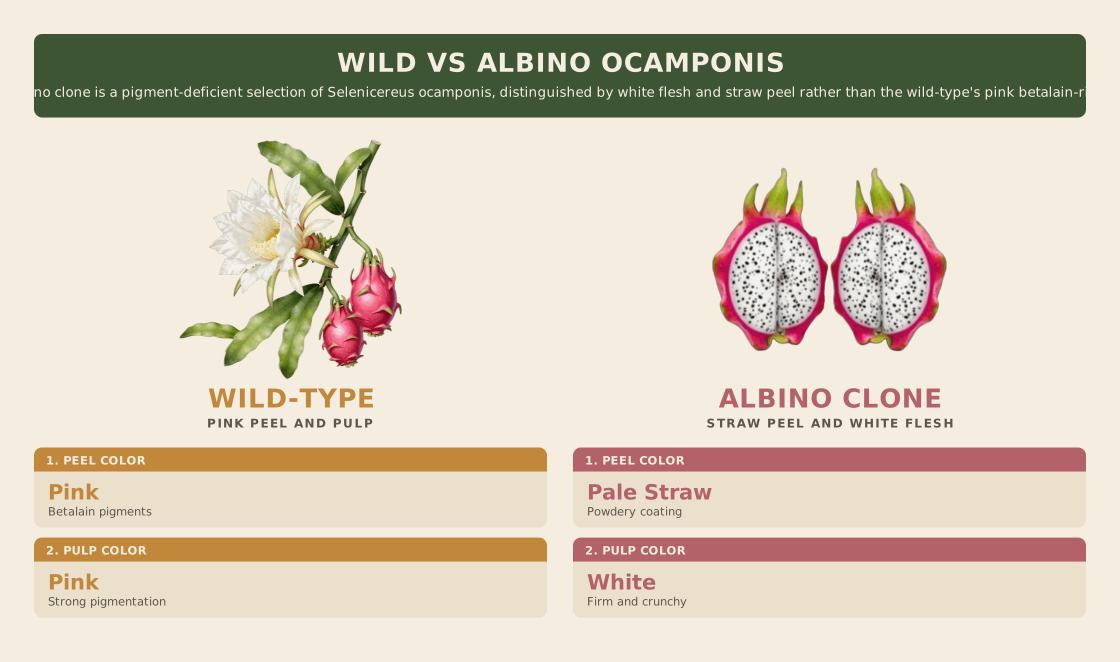
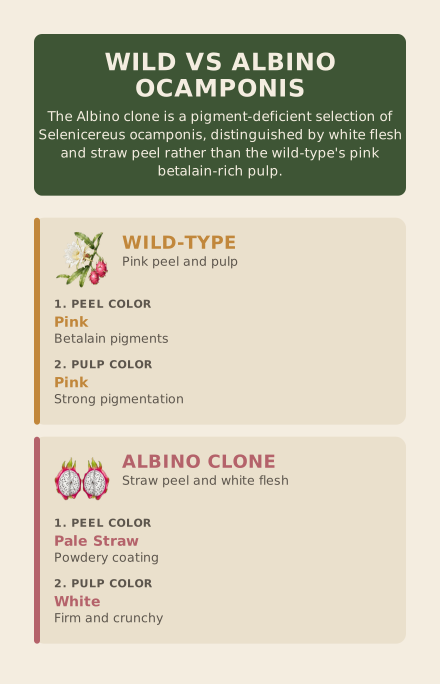
The name "Albino" is not a marketing gimmick. It is a literal description of a genetic loss. The wild species Selenicereus ocamponis produces fruit with strong pink coloration in both the peel and the pulp, driven by betalain pigments like betacyanins and betaxanthins.[5] The Albino selection has lost the ability to produce these pigments. Instead of pink, you get pale straw-yellow skin and white flesh. The stems also lack the deep green saturation of typical dragon fruit, often appearing bleached or coated in a powdery, weather-resistant epicuticular layer.[8]
Sellers often describe the fruit as "yellow" because that is what you see on the vine. But "yellow" is an incomplete label. It fails to distinguish this clone from other yellow-skinned varieties like Selenicereus megalanthus (often sold as Yellow Palora). The difference is the origin of the color. In S. megalanthus, yellow is the natural, pigmented state. In Albino Ocamponis, yellow is the result of missing pink pigment. The flesh remains white, not yellow, which further separates it from true yellow-fleshed cultivars.
Albino Ocamponis vs. Yellow Palora
| Feature | Albino Ocamponis | Yellow Palora |
|---|---|---|
| Species | Selenicereus ocamponis | Selenicereus megalanthus |
| Skin Color | Pale straw-yellow (loss of pink) | Bright yellow (natural pigment) |
| Flesh Color | White | White |
| Flavor Profile | Mild, cantaloupe-like, low acidity | Intense, floral, high sweetness |
| Pollination | Self-sterile (needs cross) | Check pollination requirements |
Do not confuse the pale skin with poor ripeness. The yellow hue is stable and final. The fruit does not turn pink or red as it matures. If you are expecting the vibrant magenta of a standard S. undatus, you will be disappointed. If you are expecting a subtle, clean appearance that signals a specific flavor profile, you are on the right track. The lack of pigment also means the peel lacks the antioxidant betalains found in wild-type ocamponis, though the flesh remains crisp and firm.[5]
Flavor context: The "albino" label might suggest a bland or watery fruit, but trade descriptions consistently note a mild, delicately sweet flavor with a floral character and notably low acidity.[8] One farm specifically compares the sweetness to cantaloupe. This is a distinct culinary profile that appeals to those who find standard red-fleshed varieties too earthy or acidic.
Flavour: what mild and low-acid actually means on the palate
When growers describe Albino Ocamponis as mild, they are describing a specific sensory profile that differs sharply from the intense, sometimes metallic notes found in red-fleshed pitayas. The flesh is firm and crunchy, offering a delicate sweetness that many tasters identify as cantaloupe-like or reminiscent of honeydew[8]. This is the defining characteristic of the selection. The acidity is notably low, which removes the sharp tang that can mask subtle floral notes in other varieties. The result is a clean, refreshing taste that lacks the earthy undertones common in many commercial white-fleshed cultivars[8].
Understanding the sugar content helps set realistic expectations. A mild flavor score does not mean the fruit is bland or watery. Yellow and white pitahaya types typically reach 12 to 15 Brix at harvest, with some cultivars pushing higher depending on growing conditions[3]. While this is lower than the peak sweetness of some red-fleshed hybrids, it is well within the range of a high-quality eating fruit. The low acidity plays a crucial role here. Acid often amplifies the perception of sweetness, so a low-acid fruit can taste sweeter than its Brix reading suggests. The floral character mentioned in trade descriptions emerges precisely because there is no acid to compete with the delicate sugars[8].
Why the flesh is white: Wild-type Selenicereus ocamponis fruit typically has pink peel and pulp due to betalain pigments[5]. The Albino selection has lost this pigmentation, resulting in the straw-yellow skin and white flesh you see today[8]. This genetic shift affects color, not necessarily sugar production, but it does change the visual cue for ripeness. You cannot rely on a blush of red to tell you when the fruit is ready.
Harvest timing is critical because pitahaya is a non-climacteric fruit. This means the fruit accumulates sugars while attached to the plant but does not sweeten further after cutting[3]. If you pick an Albino Ocamponis too early, it will remain mild and potentially bland. If you wait until the peel shows the full straw-yellow color and the fruit has reached its typical size, you will capture the maximum available sweetness. The fruit may continue to gain weight on the vine for up to 50 days after ripening, but the sugar content stabilizes once the peel color is fully developed[3].
| Sensory Trait | Albino Ocamponis Profile | Comparison to Red-Fleshed Types |
|---|---|---|
| Sweetness | Mild, cantaloupe-like, 12-15 Brix typical[3] | Often higher Brix, but masked by stronger flavors |
| Acidity | Notably low[8] | Often higher, providing a tangy contrast |
| Texture | Firm, crunchy[8] | Can be softer or more gelatinous depending on variety |
| Aftertaste | Floral, clean, less earthy[8] | Can have metallic or earthy notes |
For gardeners who prefer subtlety over intensity, this profile is a feature, not a bug. The lack of earthiness makes it a versatile ingredient for salads and smoothies where you want the fruit to blend without dominating. The firm texture holds up well to cutting and serving. If you are accustomed to the punchy sweetness of red-fleshed pitayas, Albino Ocamponis may seem understated at first bite. But give it a chance to ripen fully on the vine, and the floral, melon-like notes will emerge clearly. It is a fruit that rewards patience and careful harvest timing.
The one non-negotiable: pollination
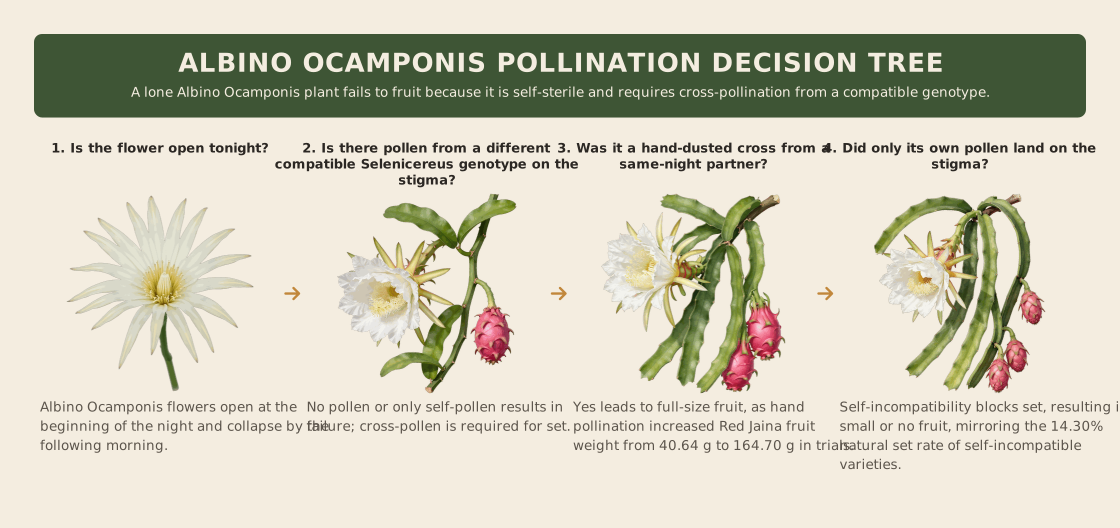
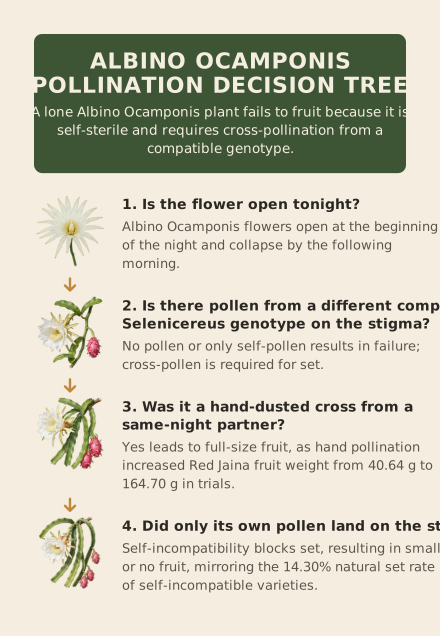
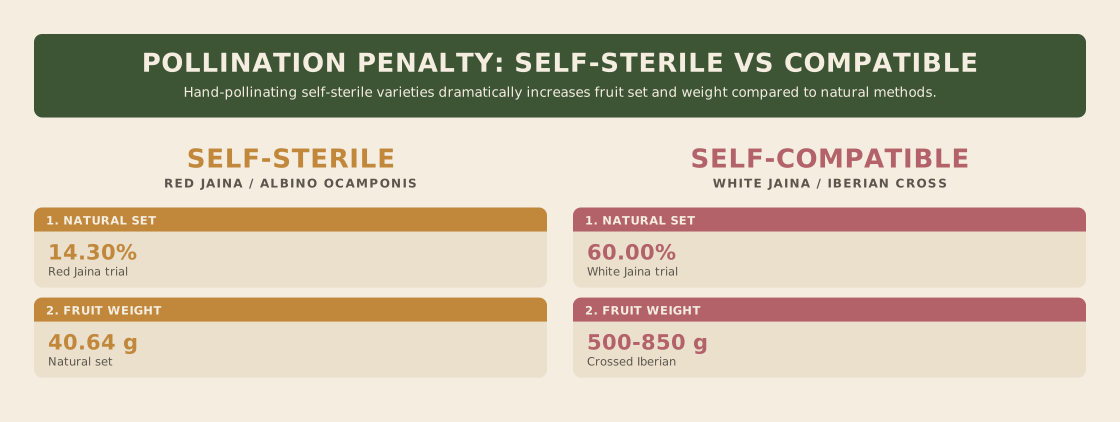
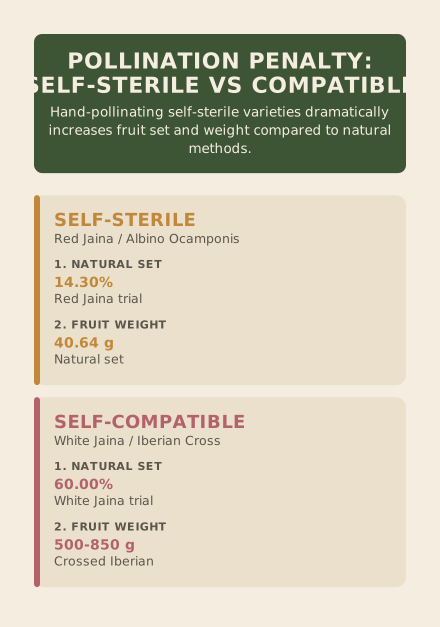
Albino Ocamponis is self-sterile. This is a genetic mechanism, not a sign of poor care or a weak plant. The flower produces pollen, but it cannot fertilize itself to set fruit. You must introduce pollen from a compatible variety. If you skip this step, the flower will drop without producing a berry. The penalty for relying on nature alone is severe. In a recent field trial, a self-incompatible cultivar set only 14.30% of its flowers under natural conditions. Hand-pollination raised that success rate to 77.40%.[6] The difference in fruit weight was equally stark. Naturally pollinated fruits averaged 40.64 g, while hand-pollinated fruits reached 164.70 g.[6] Small, underdeveloped fruits are the hallmark of poor pollination.
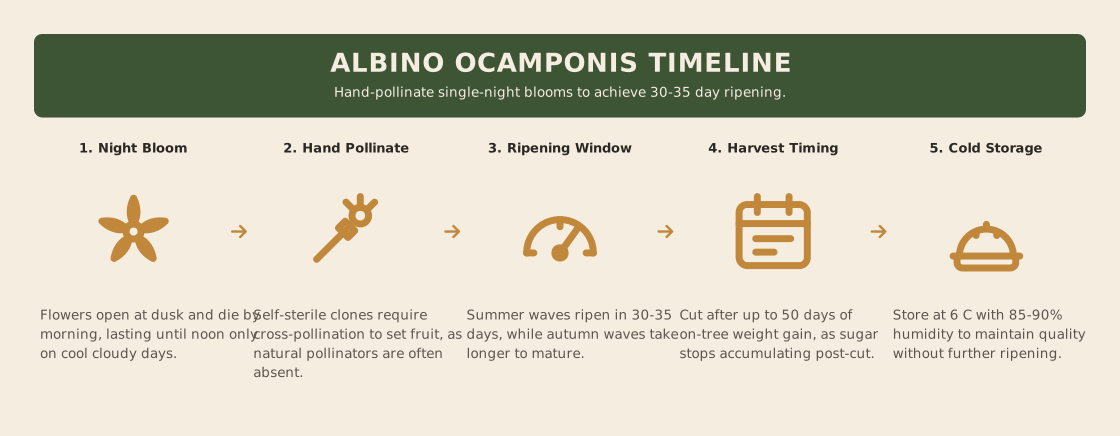
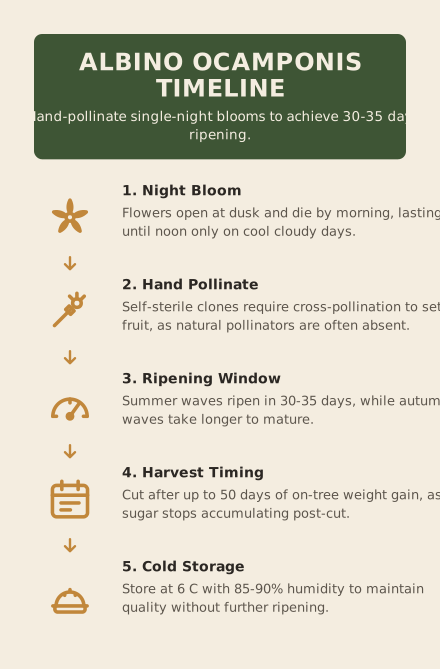
Outside the native range of pitaya, natural pollinators are largely absent. In Mexico, moths and bats do the work. In a backyard in the US or Europe, you are the pollinator. The window for action is narrow. Albino Ocamponis flowers open at the beginning of the night. They remain receptive only until the following morning.[2] On a cool, cloudy day, they may stay open until noon. On a hot night, they close much earlier. You must collect pollen from a compatible donor and apply it to the Albino stigma while the flower is fresh. Waiting until sunrise often means the stigma is no longer receptive. For a detailed breakdown of timing and technique, see our guide on dragon fruit pollination.
Why hand-pollination matters for yield size
Partial self-compatibility in other varieties can produce small fruit, but self-sterile clones like Albino Ocamponis produce almost nothing without a cross. The difference between a 40 g failure and a 165 g success is entirely in the pollen source. Do not assume a flower that stays open for a day has been pollinated. It has likely just not dropped yet.
Compatibility is based on genetics, not labels. You can use pollen from other Selenicereus or Hylocereus species. Research shows that the allotetraploid yellow pitaya S. megalanthus shares sequence composition with H. ocamponis.[4] Reciprocal crosses between these groups yield viable hybrids.[4] This means a common commercial variety like Yellow Palora can serve as a pollinator for Albino Ocamponis. Note that Yellow Palora itself takes about 120 days, roughly 17 weeks, from pollination to ripe fruit. Plan your harvest timeline accordingly. If you are growing Albino Ocamponis alone, you will see flowers but no fruit. Plant a compatible partner nearby, or be prepared to collect pollen from a neighbor’s plants. The effort is minimal compared to the reward of a harvest.
Growing Albino Ocamponis: climate, water, trellis
Albino Ocamponis thrives in a specific thermal window. The plant grows best when temperatures sit between 18 and 26 degrees Celsius. It can survive average temperatures ranging from 14 to 32 degrees, but heat stress becomes a real issue as you push higher. Once temperatures exceed 28 degrees, the plant loses roughly one degree's worth of photosynthesis for every degree above that optimum. If you live in a hot climate, you must provide adequate water to help the plant tolerate heat up to 40 degrees. However, keep in mind that temperatures above 38 degrees inhibit flowering entirely. Frost is the other major constraint. The plant withstands a minimum of about -2 degrees, but -4 degrees will kill it. You need a site with near-zero frost probability to avoid severe damage.[2]
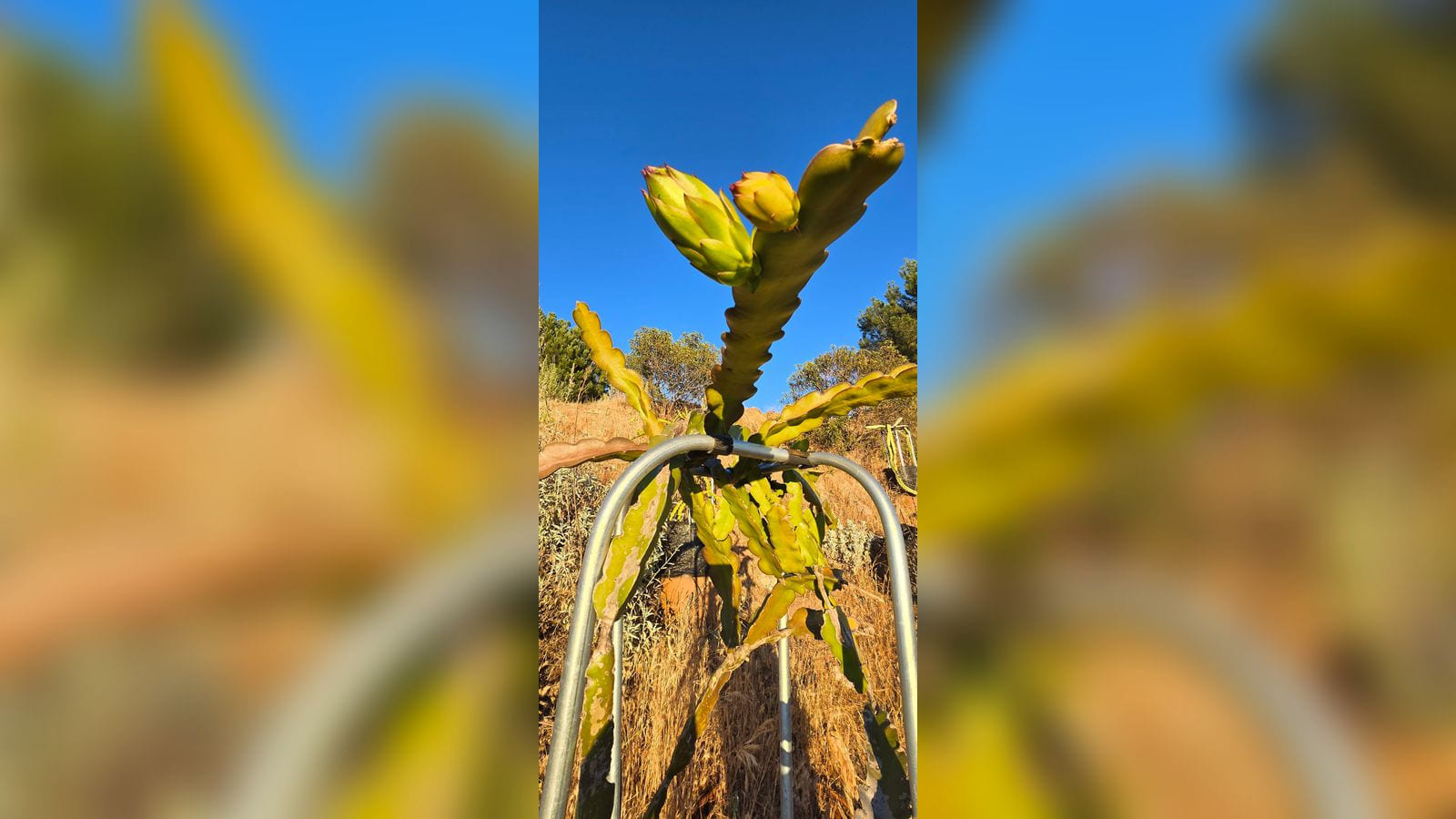
Flowering happens in waves when days are longer than nights and temperatures stay above 18 degrees. This photoperiod sensitivity means you cannot force fruit out of season simply by watering more. The plant waits for the right light and heat combination. Because Albino Ocamponis is a CAM plant, it opens its stomata at night to take in carbon dioxide. This adaptation helps it survive in dry conditions, but it also makes the plant vulnerable to prolonged drought. The genus originates in regions that receive 1730 to 2540 mm of rain per year, though it can tolerate as little as 500 to 700 mm. A ten-day drought cuts net CO2 uptake by 57%. This drop in carbon fixation costs flower buds before they ever open. Consistent moisture is not just about survival; it is about yield.
Watch the heat spikes. If your area regularly hits 38 degrees or higher, flowering will stall. You cannot compensate for this with extra fertilizer. Shade cloth during peak summer heat can help keep the canopy within the productive range.
Watering strategy should mimic the plant's native understory environment. It needs deep, infrequent watering rather than constant surface moisture. Allow the top inch of soil to dry out between waterings. In hotter months, you may need to water more frequently to prevent the ten-day drought threshold from being crossed. Mulching heavily around the base helps retain soil moisture and keeps the root zone cooler. This is critical because the plant sheds flower buds quickly when stressed. A heavy support structure is necessary for the vigorous climbing habit of this wild selection. The stems are robust, but they need a sturdy trellis to bear the weight of fruiting branches. Ensure the trellis allows for good air circulation to prevent fungal issues in humid conditions.
| Condition | Impact on Albino Ocamponis | Action |
|---|---|---|
| Temp > 28°C | Reduced photosynthesis | Increase shade and water |
| Temp > 38°C | Flowering inhibited | Accept seasonal pause |
| Drought > 10 days | 57% CO2 uptake loss | Deep water immediately |
| Temp < -2°C | Plant damage | Protect or move indoors |
Bud to harvest, and when to cut
Once you have successfully hand-pollinated a flower, the clock starts on fruit development. In summer conditions, expect the fruit to reach maturity in 30 to 35 days[2]. Cooler autumn or early winter waves will extend this timeline, so adjust your expectations based on the season.
Dragon fruit is a non-climacteric crop. This means it accumulates sugars while attached to the plant but does not sweeten further after you cut it. Harvest timing is critical for eating quality. You must judge ripeness by peel color and total soluble solids, not by softness or aroma[3].
Leaving the fruit on the vine allows it to continue gaining weight for up to 50 days after it appears ripe[3]. However, this extra weight is primarily water, not sugar. If you wait too long, you risk losing the firm texture that defines this cultivar. The goal is to cut when the skin has fully transitioned to its pale straw-yellow hue and the flesh has reached its peak sugar content.
Harvest Tip: Use a clean, sharp knife to cut the stem about an inch from the fruit. Handle the fruit gently to avoid bruising the delicate white flesh.
For context on flavor benchmarks, yellow and white pitahayas typically reach 12 to 15 Brix when fully ripe on the vine[3]. Some cultivars hit 20 Brix, but Albino Ocamponis is prized for its mild, low-acid profile rather than intense sweetness. A fruit in the 300 to 500 gram range is typical for this species and indicates a healthy, well-pollinated set[3].
Yield reality and who should buy this clone
Albino Ocamponis is not a high-volume commercial producer. Our internal variety profile scores its fruit yield at 3 out of 5, placing it in the moderate range for dragon fruit. This score reflects the biological reality of self-sterility. Without a compatible pollinator nearby, or diligent hand-pollination, the plant will produce vegetative growth but very few fruits. Even with perfect pollination, the harvest is modest compared to vigorous commercial hybrids like White Jaina or Red Jaina.
Growers should expect fruit in the 300 to 500 gram range. This size is typical for the species and indicates a healthy, well-pollinated flower. It is not undersized. While some pitahaya varieties can reach nearly 640 grams, Albino Ocamponis generally settles into this mid-weight bracket. The flesh is firm and crunchy, with a mild sweetness that our tasting notes describe as cantaloupe and honeydew. The flavor profile is clean and low-acid, scoring a solid 4 out of 5 on our taste scale. It lacks the intense sugar punch of high-Brix yellow varieties, but it offers a refreshing, subtle complexity that many collectors prefer.
Who should buy this clone? This plant is for the collector, the breeder, or the gardener who already has a compatible pollinator. It is not for the beginner looking for a single plant to feed a family. If you do not have another night-blooming cactus nearby, you must be willing to hand-pollinate every flower. If you are not prepared to do that, choose a self-compatible variety instead.
However, if you are a breeder, this clone is valuable. It has been used as a parent in breeding selections like Lady Diana and Fiona. Its genetic contribution offers unique traits, including its pale skin and specific flavor profile. For the serious hybridizer, the moderate yield is a fair trade for the genetic diversity it adds to a program. For the casual fruit grower, the effort required to set fruit may outweigh the reward. Know your goal before you buy.
Availability and next steps
Our nursery lists this rare clone as out of stock, but we recommend joining the waitlist if you have a compatible pollinator ready. Because the plant is self-sterile, securing a pollinator is the first step, not an afterthought. You need a partner plant before you even consider buying the cutting. Check your pollinator inventory. You do not need another Albino Ocamponis. You need a genetically compatible partner.
Check your pollinator inventory first. If you do not have a compatible variety, wait until you do. Buying a self-sterile plant without a partner guarantees a vegetative-only harvest. Our catalog record for this cultivar (SKU AO) is currently out of stock with a back-in-stock waitlist open[10]. Join the list only if you can commit to hand-pollinating its night-opening flowers.
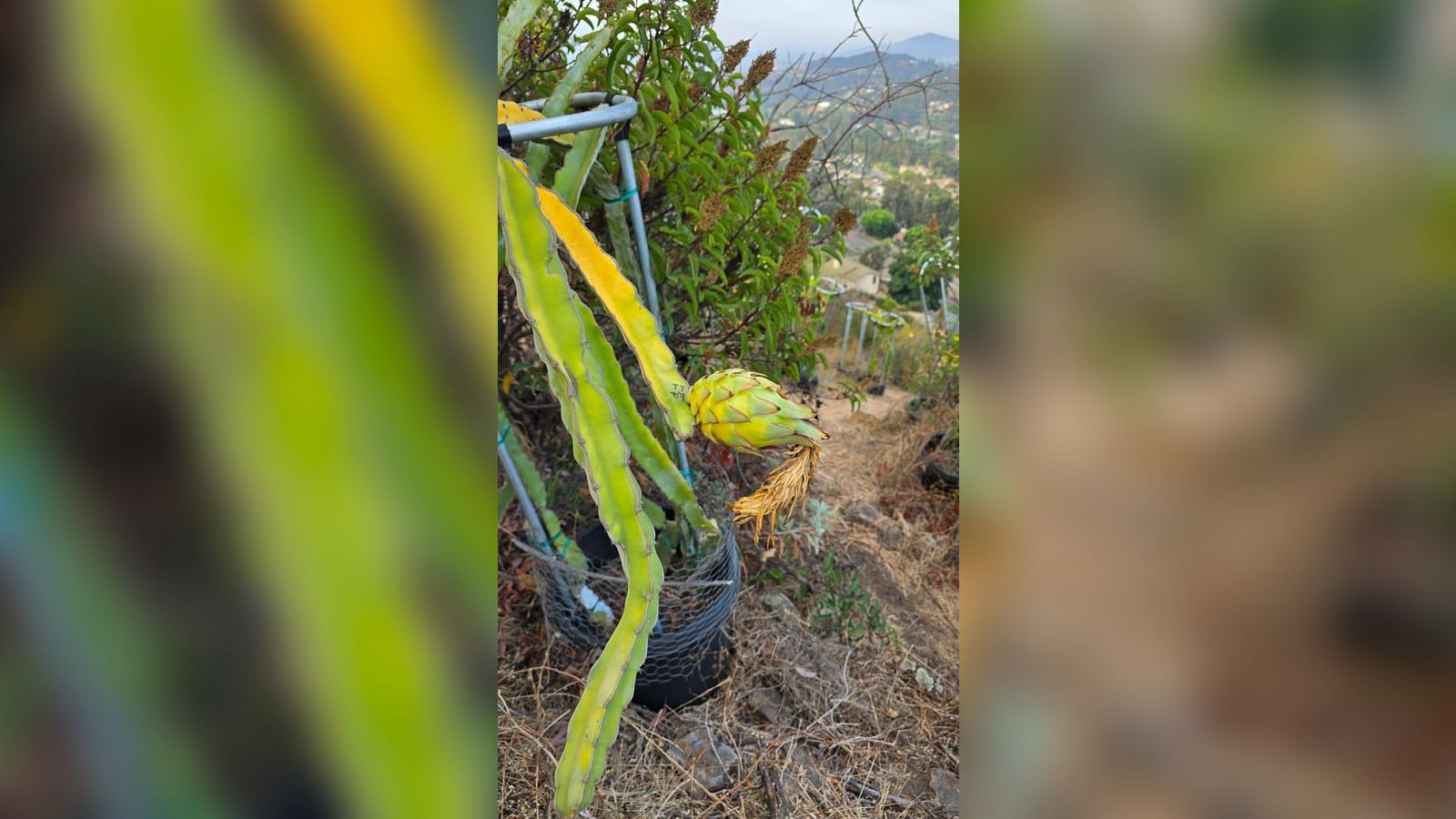
Once you have a pollinator, plan for the labor. Flowers emerge from axillary buds on the cladode edges where the spines sit, open at the beginning of the night, and remain open only until the following morning[2]. They stay open until roughly 11:00 to 12:00 on a cool cloudy day, and much earlier if the night and morning stay hot, whether or not they are fertilized[2]. This narrow window means you must be present. Outside the native range, natural nocturnal pollinators such as moths and bats are largely absent, so manual pollination is the only reliable method[2]. The penalty for skipping this step is measured, not anecdotal. In a 2026 subtropical field trial, a self-incompatible red-fleshed cultivar set only 14.30% of flowers under natural pollination versus 77.40% with hand pollination, and average fruit weight rose from 40.64 g to 164.70 g[6]. Self-sterility is a genetic mechanism, not grower error, and self-incompatible varieties characteristically show low fruit-setting rates under natural conditions[7].
Consider the plant's role beyond your own harvest. Albino Ocamponis is used as a breeding parent, not just a collector plant. A cultivar directory records it as a parent of Paul Trejo-Tinoco/'Antonio' breeding selections Lady Diana and Fiona, and files it among a family of ocamponis selections that includes El Grullo, Kennerson Ocamponis, Ocamponis Cristal, Ocamponis La Catrina and Ocamponis Tapatia[9]. Growing it connects you to a broader genetic lineage. If you are a hobbyist, this adds depth to your collection. If you are a breeder, it offers a stable base for new crosses. The plant’s wild characteristics, including its vigorous growth habit, make it a resilient parent despite its reproductive quirks.
Finally, manage expectations on yield. Our variety profile scores fruit yield at 3/5, reflecting the labor-intensive pollination requirement[10]. Pitaya flowers in waves when days are longer than nights and temperatures exceed 18 C, but temperatures above 38 C inhibit flowering[2]. Frost is the binding limit for US outdoor culture rather than heat; the minimum temperature pitaya withstands is about -2 C, and -4 C kills the plant[2]. Site selection must confirm near-zero frost probability. If you can meet these conditions and commit to hand-pollination, the waitlist is worth joining. If you cannot, wait until you can. The plant will be there.
References
- Selenicereus ocamponis (Salm-Dyck) D.R.Hunt - Taxonomy browser record 867400, NCBI / National Library of Medicine (US NIH) (2026).
- Pitaya as a New Alternative Crop for Iberian Peninsula: Biology and Edaphoclimatic Requirements, Plants 12(18):3212, MDPI (Univ. do Algarve); PMC10537634 (2023).
- Yellow Pitahaya (Selenicereus megalanthus Haw.): The Less Known of the Pitahayas, Foods 14(2):202, MDPI (Univ. Miguel Hernandez); PMC11765378 (2025).
- Genetic relationships among Hylocereus and Selenicereus vine cacti (Cactaceae): evidence from hybridization and cytological studies, Annals of Botany 94(4):527-534; PMC4242237 (2004).
- Pitahaya (Hylocereus ocamponis)-Peel and -Flesh Flour Obtained from Fruit Co-Products - Assessment of Chemical, Techno-Functional and In Vitro Antioxidant Properties, Molecules 29(10):2241, MDPI (TecNM Tlaxcala / Univ. Miguel Hernandez); PMC11124103 (2024).
- Determination of the effects of bumblebee (Bombus terrestris), hand, and natural pollination on fruit set, yield, and quality in pitaya (Hylocereus spp.) cultivation under subtropical conditions, BMC Plant Biology 26(1):999 (Akdeniz Univ.); PMC13251243 (2026).
- The Pitaya Flower Tissue's Gene Differential Expression Analysis between Self-Incompatible and Self-Compatible Varieties for the Identification of Genes Involved in Self-Incompatibility Regulation, Int. J. Molecular Sciences 24(14):11406, MDPI (Hainan Univ.); PMC10379629 (2023).
- Ocamponis Albino Dragon Fruit Cutting 15-17 inch (Oax Dragon Fruit Farm, Somis CA), MyDragonPlug / OAX Dragon Fruit Farm (2026).
- Albino Ocamponis Dragon Fruit Cultivar (directory entry, lineage and related selections), Dragon Fruit Plants cultivar directory (2026).
- Albino Ocamponis Dragon Fruit Cutting (own listing, SKU AO), Sky Botanicals (2026).