Great Red Dragon Fruit: Deep Crimson, Sweet, and Crunchy
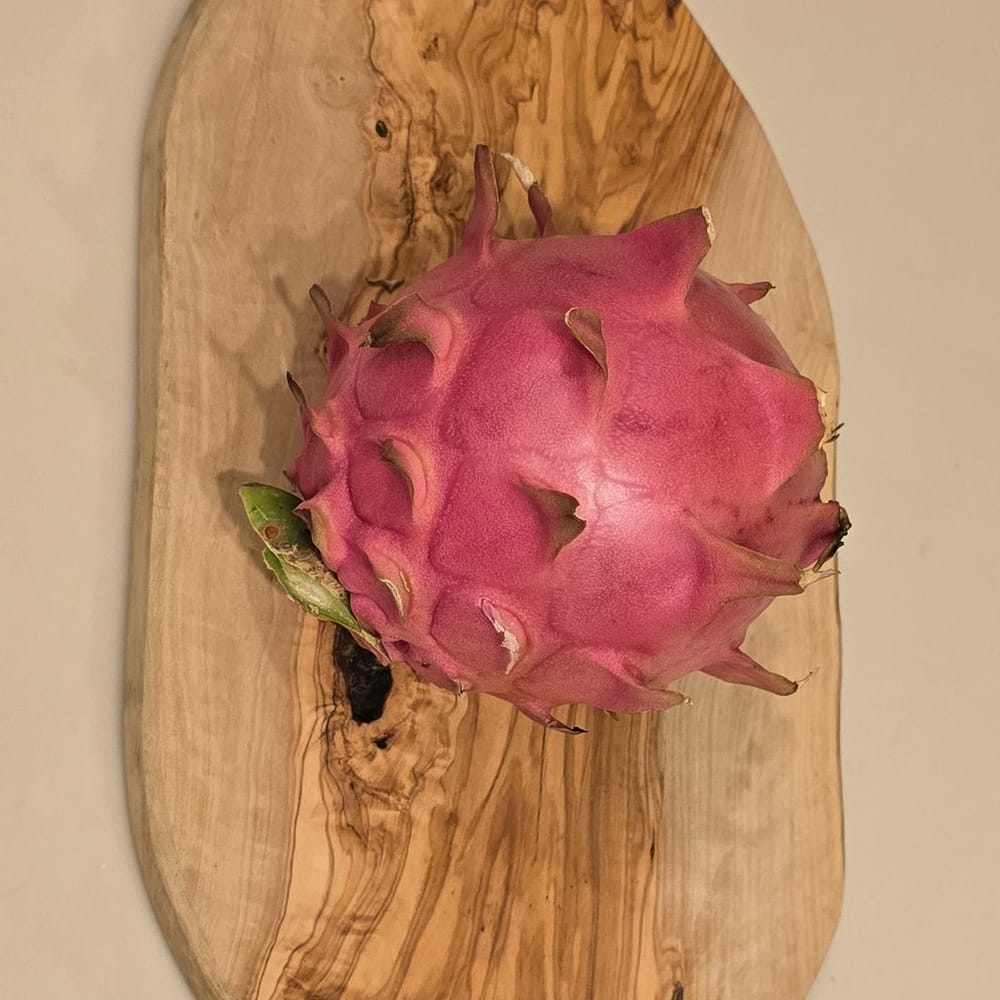
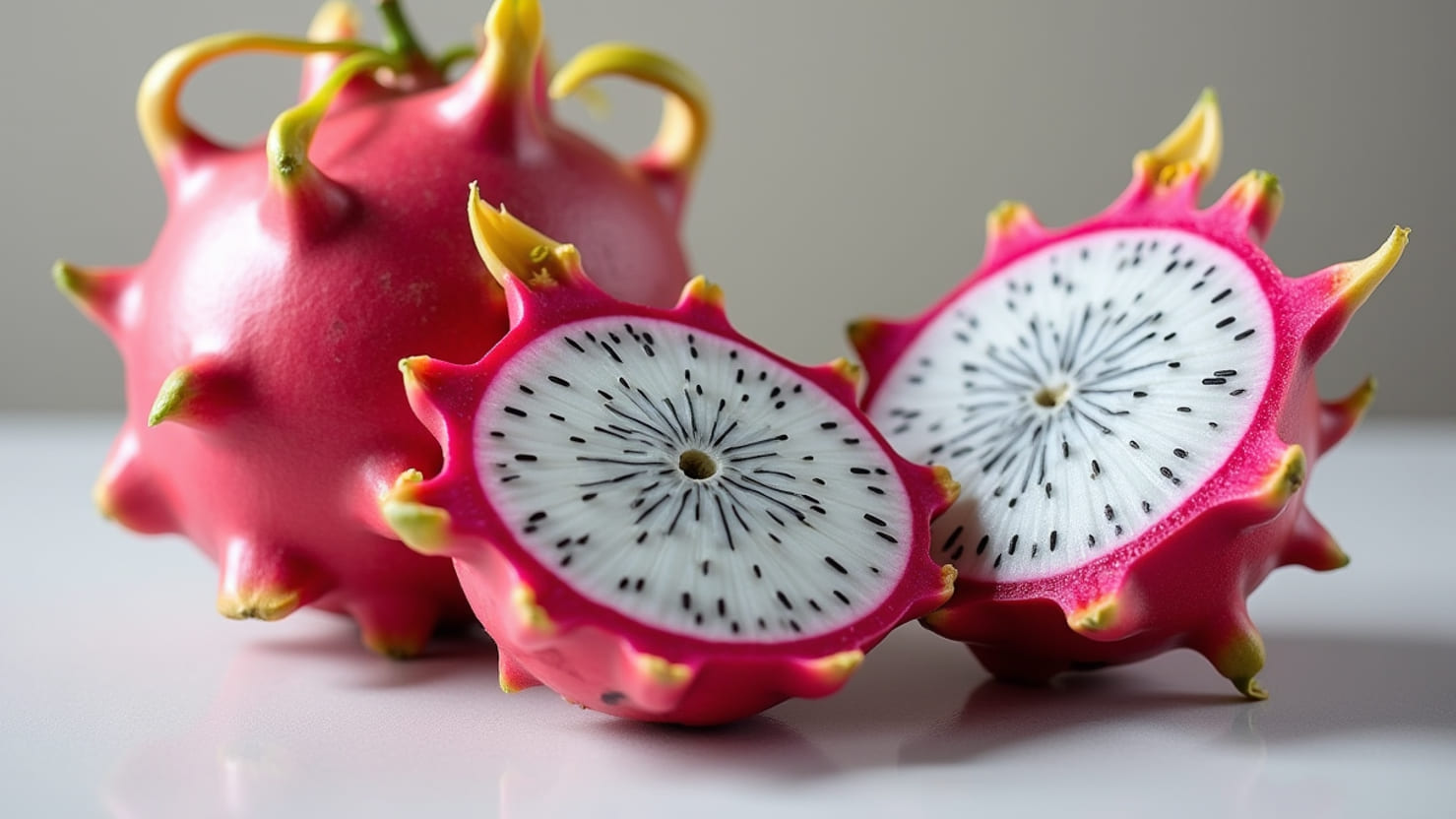
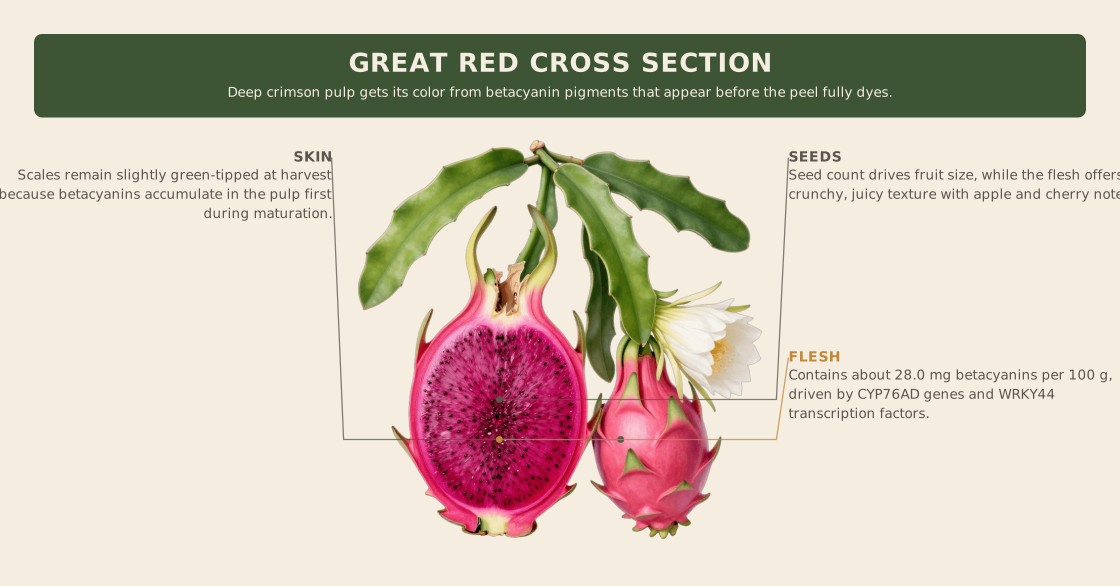
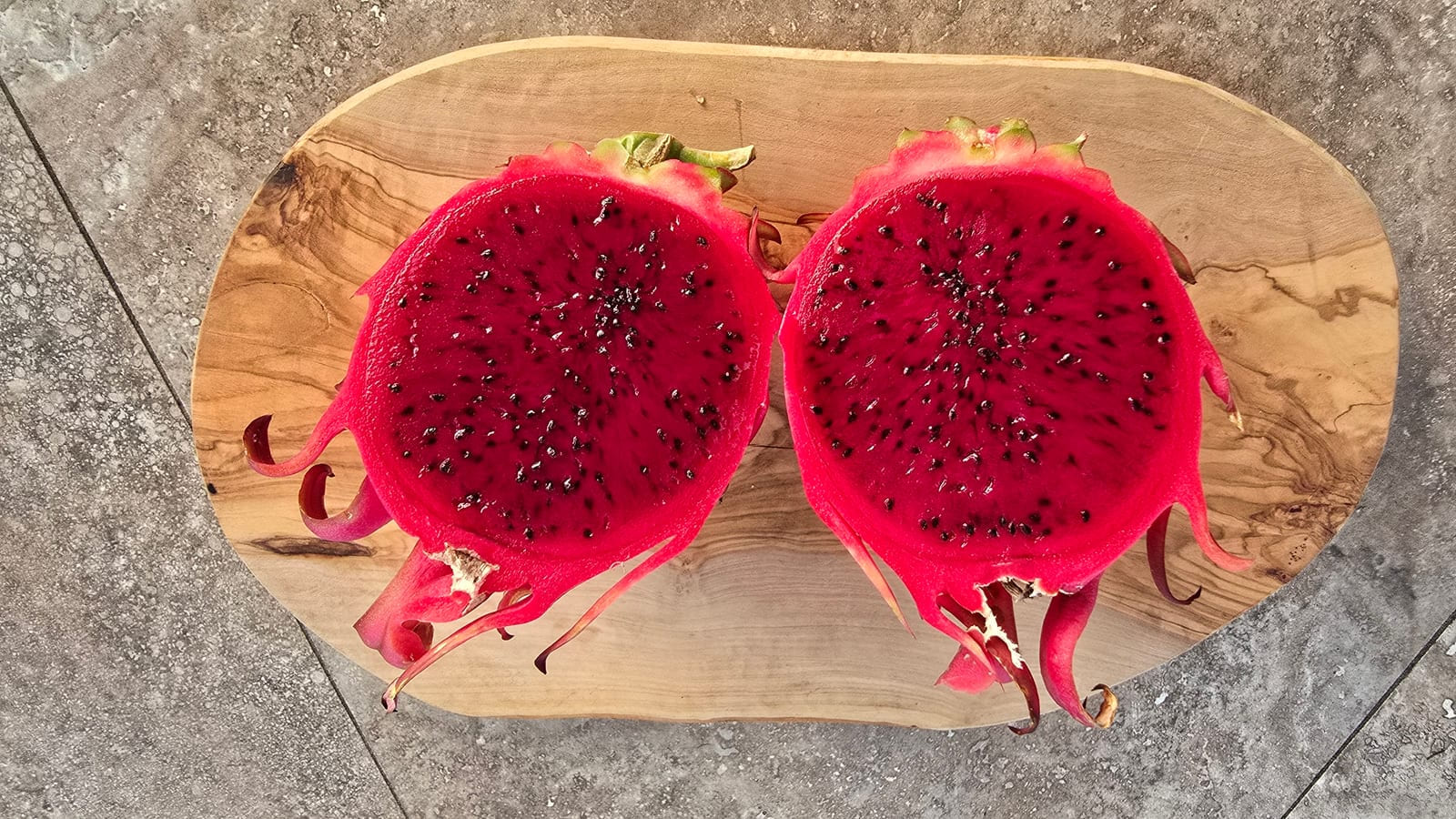
Great Red is a top-tier red-fleshed dragon fruit clone with a juicy, slightly crunchy texture. The deep crimson pulp comes from betalain pigments, specifically betacyanins, rather than the anthocyanins found in many other red fruits. This variety traces its genetics to the Selenicereus costaricensis and Selenicereus polyrhizus gene pool. At Sky Botanicals, we sell this clone under SKU GRR for $25 for small cuttings and $35 for large ones. If you are looking for reliable red-fleshed options, check our full variety guide for available stock and growth details.
Where the Red Comes From
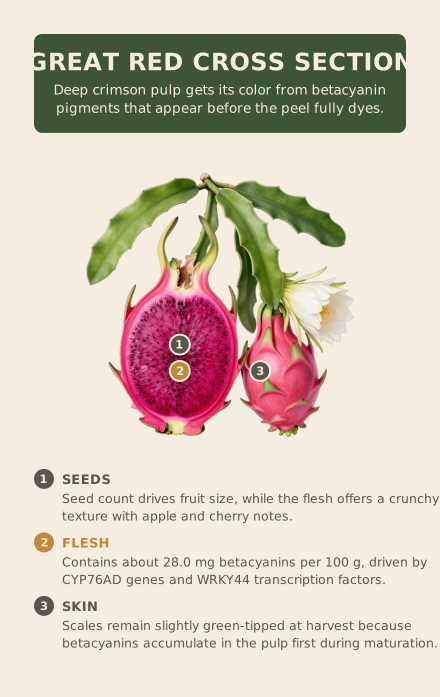
The crimson hue in Great Red pulp is not a trick of the light or a simple dye. Betacyanins, a type of betalain pigment, drive the color. While many red fruits rely on anthocyanins, dragon fruit uses a different chemical toolkit. Transcriptome and metabolome studies reveal that the switch to red flesh occurs when CYP76AD genes are upregulated. The WRKY44 transcription factor controls this switch[1].
For a grower, the practical implication is that deeper red coloration correlates with higher tyrosine availability. Tyrosine is the amino acid precursor that feeds the betalain pathway. The more efficiently the plant converts tyrosine into betacyanins, the more intense the red. Interestingly, anthocyanins do coexist with betalains in red-fleshed varieties, contributing to the final visual complexity and the specific shade of crimson you see when you cut the fruit open[1].
This pigment density does more than look good. It changes the nutritional and sensory profile of the fruit. Red-fleshed pulp is significantly richer in antioxidants and minerals than its white-fleshed counterparts. The high concentration of betacyanins is linked to greater phenolic content, which contributes to the complex flavor notes and the slight tartness that balances the sweetness.
| Nutrient | Amount per 100 g |
|---|---|
| Betacyanins | ~28.0 mg |
| Potassium | 158.29 mg |
| Magnesium | 33.2 mg |
| Calcium | 31.2 mg |
| Vitamin C | 3.40 mg |
| Total Sugar | 5.60 g |
Nutritional breakdown of red-fleshed pulp. Source: [2]
These numbers highlight why red-fleshed dragon fruit tastes different from white. The presence of ~28 mg of betacyanins per 100 g is just one part of a broader chemical profile. Red-fleshed varieties generally exhibit higher antioxidant activity compared to white-fleshed types, although some purple-fleshed hybrids may edge them out in specific phenolic measures. The combination of sugars, acids, and these pigment-related compounds creates the robust, layered flavor that makes Great Red a standout in the nursery trade.
The Name Problem: How Dragon Fruit Clones Get Renamed
When you buy a cutting labeled Great Red, you are buying a name. In the dragon fruit world, names are fluid. There is no official registry that locks a specific genetic profile to a specific label. Instead, the trade relies on lineage and reputation.
Scientific analysis confirms this chaos. An AFLP fingerprinting study of 230 pitaya accessions, scored with 51 markers, identified 126 putative clones across seven clades.[5] The results were messy, with some accessions with completely different names proving genetically identical. Others, sharing a single name, contained hidden genotypic diversity.[5]
Growers often cause this confusion by assigning their own names to existing varieties.[5] One nursery might call a clone "Great Red," while another calls the exact same plant "Red Beauty" or "Crimson King." Conversely, a nursery might sell a different red-fleshed clone under the name "Great Red." A label alone does not guarantee the plant's genetics.
Why Lineage Matters More Than Labels
Because names are unreliable, the warranty of a dragon fruit clone is the nursery’s track record. At Sky Botanicals, we sell our Great Red under SKU GRR. We do not just trust the name on the tag. We verify the plant’s performance in our own fields. Our evaluation sheet rates this specific clone 5/5 for taste, 4/5 for growth rate, and 4/5 for yield, placing it in our top tier.[9] When you buy from us, you are buying the plant we grew, not just the name on the label.
This distinction is critical for red-fleshed varieties. Many red clones are self-incompatible and require cross-pollination to set fruit.[4] If you buy a clone labeled "Great Red" from an unknown source, you might get a plant that is genetically identical to ours, or you might get a different red clone that requires a specific pollen partner you do not have. Understanding self-fertile vs cross-pollinating dragon fruit varieties is essential, but knowing the exact genetic identity of your plant is even more important.
When you see a variety listed as out of stock, like our Great Red (SKU GRR), it is often because we are waiting for the next batch of verified cuttings to root and harden off. We do not substitute a similar-looking red clone just to fill an order. The name "Great Red" is only as reliable as the nursery line it came from.[5] Always ask about the source of the cutting. If a seller cannot tell you where the plant originated, you are gambling on the name.
Flavor and Sweetness in Context
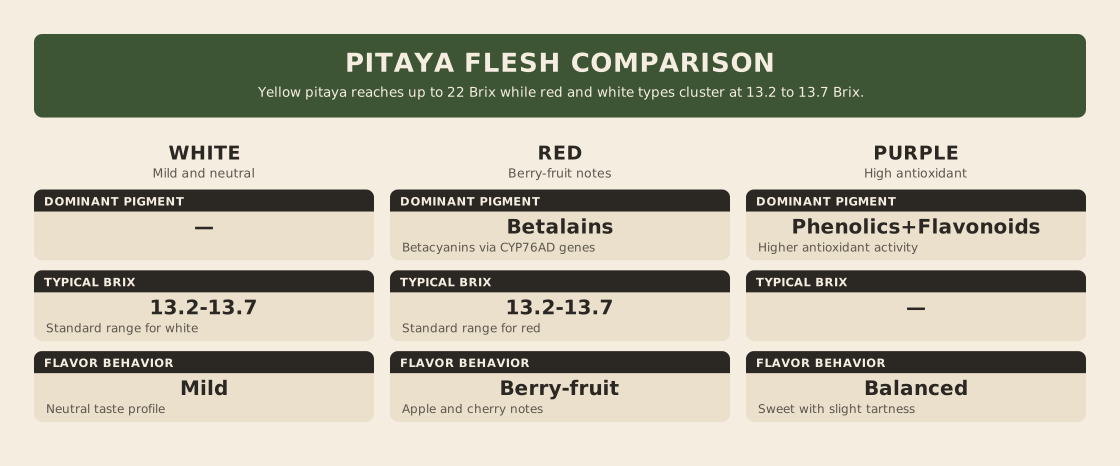
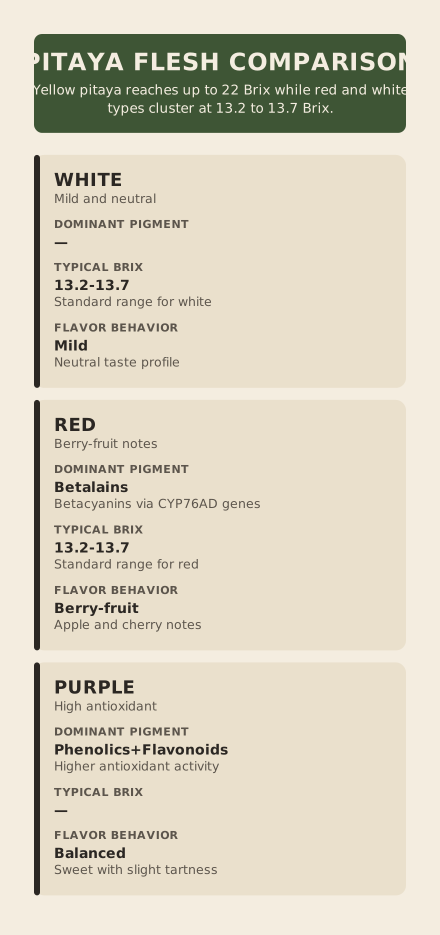
Great Red’s 5/5 taste rating comes from a specific balance of sugars and acids that distinguishes it from other flesh-color classes. While yellow-skinned dragon fruit often wins on raw sweetness, red-fleshed varieties like Great Red offer a more complex profile. The data below compares typical sugar levels and acidity across the main categories. Use this to understand why Great Red tastes like apple and cherry rather than just plain sweet.
Red and white pitayas typically test between 13.2 and 13.7 Brix, while yellow-skinned S. megalanthus can reach up to 22 Brix.[7] The highest red or purple variety in Brazilian trials hit 14.4 Brix.[7] Pulp pH across all these varieties clusters tightly between 4.8 and 5.4.[7] This narrow pH range explains why red and white fruits taste similar in acidity, even if their sugar levels differ slightly. The difference lies in the pigment-driven flavor compounds.
Why Great Red Tastes Different: The betacyanins in Great Red do more than color the pulp. They interact with the fruit’s natural acids to create the apple-cherry notes we rate 5/5. Yellow varieties lack these pigments, resulting in a simpler, purely sweet taste despite higher Brix.
Great Red sits in the red-fleshed category, which means its sugar content is moderate compared to yellow types. However, the presence of betalains adds depth that white-fleshed fruits lack. The balanced sweet-with-slight-tartness profile described in our tasting notes is a direct result of this pigment-acid interaction. You get complexity without the cloying sweetness of a 22 Brix yellow fruit.
How to Grow Great Red
Great Red is a vigorous vine cactus that rewards consistent care with heavy yields. The plant thrives in warm, humid conditions and requires a sturdy support structure to manage its sprawling growth. While it shares the general hardiness of the species, specific attention to temperature, moisture, and pruning ensures the deep red pulp develops fully. The following specifications outline the environmental and cultural requirements for this clone.
| Factor | Requirement | Notes |
|---|---|---|
| Temperature | 18-27 °C optimal | 39 °C is unsuitable. Tolerates brief frost but not sustained freezing. |
| Hardiness Zones | USDA 10-11 | Survives in 9a/9b with protection. |
| Water | 25-50 inches/year | Or twice-weekly irrigation. Keep soil evenly moist to prevent fruit splitting. |
| Light | Full sun | Off-season blooms can be forced with 4-6 hours of night light from a 15-watt LED hung 1-2 ft above the canopy. |
Uneven soil moisture during fruit development is the primary cause of splitting. Excess water leads to root rot, fungal disease, and flower or fruit drop. Consistency is key. If you are growing in a container, ensure the pot has adequate drainage and water deeply but infrequently to encourage root depth.
Fertilization Schedule
Nutrient demands shift as the plant matures. A published program for pitaya provides a clear roadmap for maintaining vigor and fruit quality. Adjust rates based on your soil test results and local conditions.
| Plant Age | Inorganic Fertilizer | Organic Amendment |
|---|---|---|
| Year 1 | 4 oz of 6-6-6 or 8-3-9 from early spring to winter | 4 lb of manure or compost in summer |
| Years 2-3 | 5-6 oz | 6 lb compost |
| Year 4+ | 8-12 oz | Compost in spring and mid-summer |
Floral bud induction requires specific thermal cues. Days of 29-32 °C combined with nights of 19-22 °C under long-day conditions trigger flowering. If you are in a cooler climate, supplemental lighting can help manage photoperiod, but temperature control is the dominant factor.
Training and Pruning
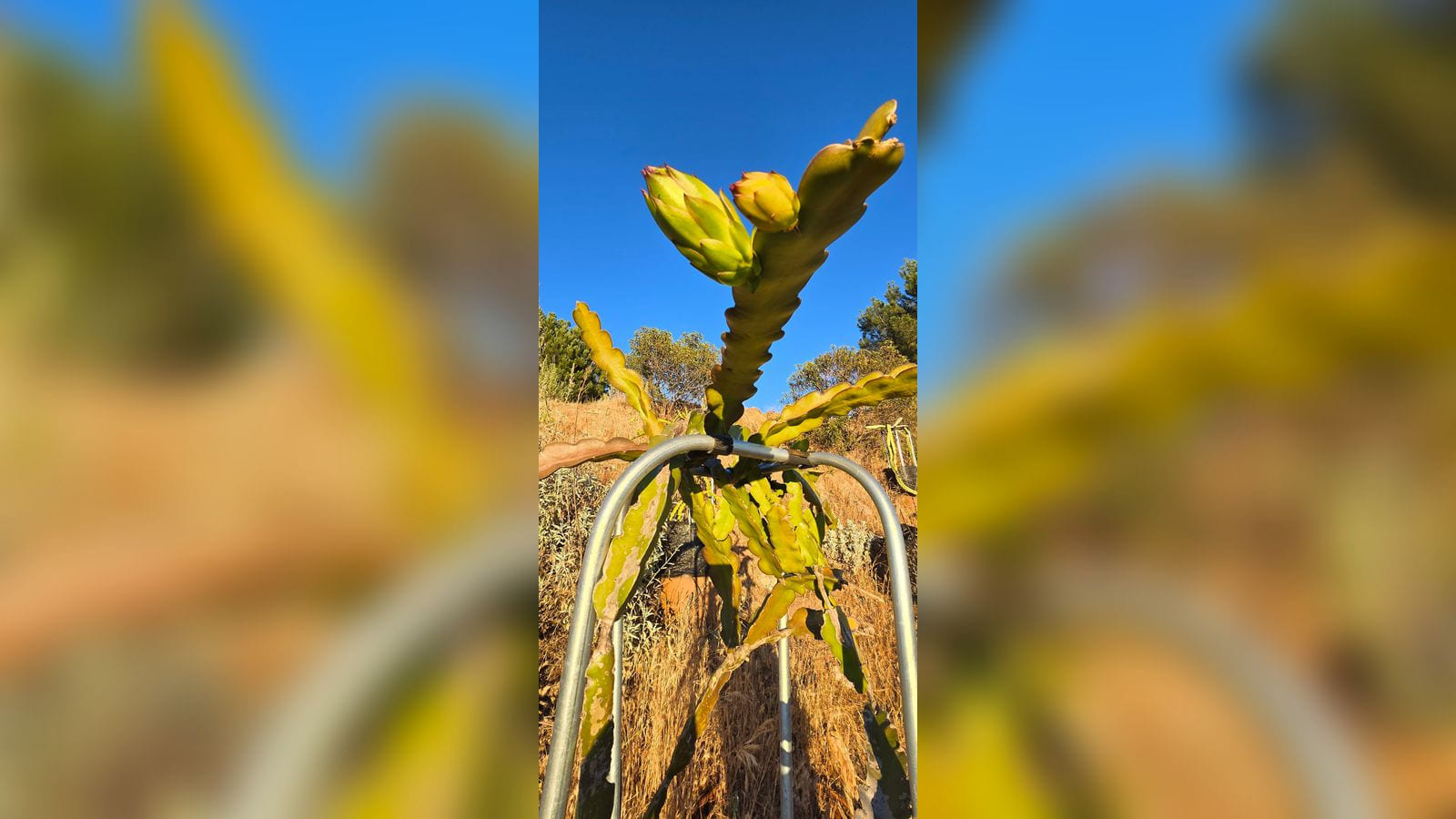
Great Red grows as a climbing vine. Train a single stem up a sturdy post until it reaches the top of the trellis. Allow the stem to drape over the support to encourage lateral branching. This structure supports the weight of the fruit and improves air circulation.
Cane pruning is essential for maintaining yield. Trials show that leaving 12 to 15 cladodes per meter of trellis improves production. Remove old, woody, or diseased stems to direct energy toward new growth. This practice also reduces the risk of fungal issues by opening up the canopy.
Propagation Note: Rooted cuttings of 20 to 70 cm are the standard way to propagate named clones like Great Red. A cutting typically flowers in 1 to 2 years. A seedling takes 2 to 3 years. Always start with a healthy, disease-free cutting to ensure a strong foundation.
Pollination: The Make-or-Break Part of Red-Fleshed Dragon Fruit
Red-fleshed clones are notoriously difficult to set fruit without human intervention. Unlike many white-fleshed varieties that can self-pollinate, red-fleshed genetics often exhibit strict self-incompatibility. In a two-year commercial trial, the red-fleshed clone NDFR-1 failed to set fruit on its own and required cross-pollen, while a white-fleshed variety in the same trial set fruit naturally[4]. Without cross-pollen, a single Great Red plant may drop its flowers.
A Turkish pollination trial involving the red-fleshed 'Red Jaina' (H. polyrhizus) demonstrated that natural pollination yielded only a 14.3% fruit set. When researchers switched to hand-pollination, the fruit set jumped to 77.4%[3]. The difference in fruit quality was equally stark. Hand-pollinated fruits averaged 164.7 g, while those relying on natural pollination weighed just 40.6 g[3]. Successful pollination determines final fruit size. It drives ovule fertilization and seed formation, which directly determines final fruit size and weight[7].
Night insects are unreliable pollinators for these clones. Even with 'Royal Red', a cultivar known to be self-compatible, brush or duster pollination produced significantly more pollen adhesion, larger fruit, and more seeds than open pollination[6]. In that same study, insect visits performed no better than bagged, unvisited flowers, proving that natural vectors are often ineffective for these specific clones[6].
The Pollination Window
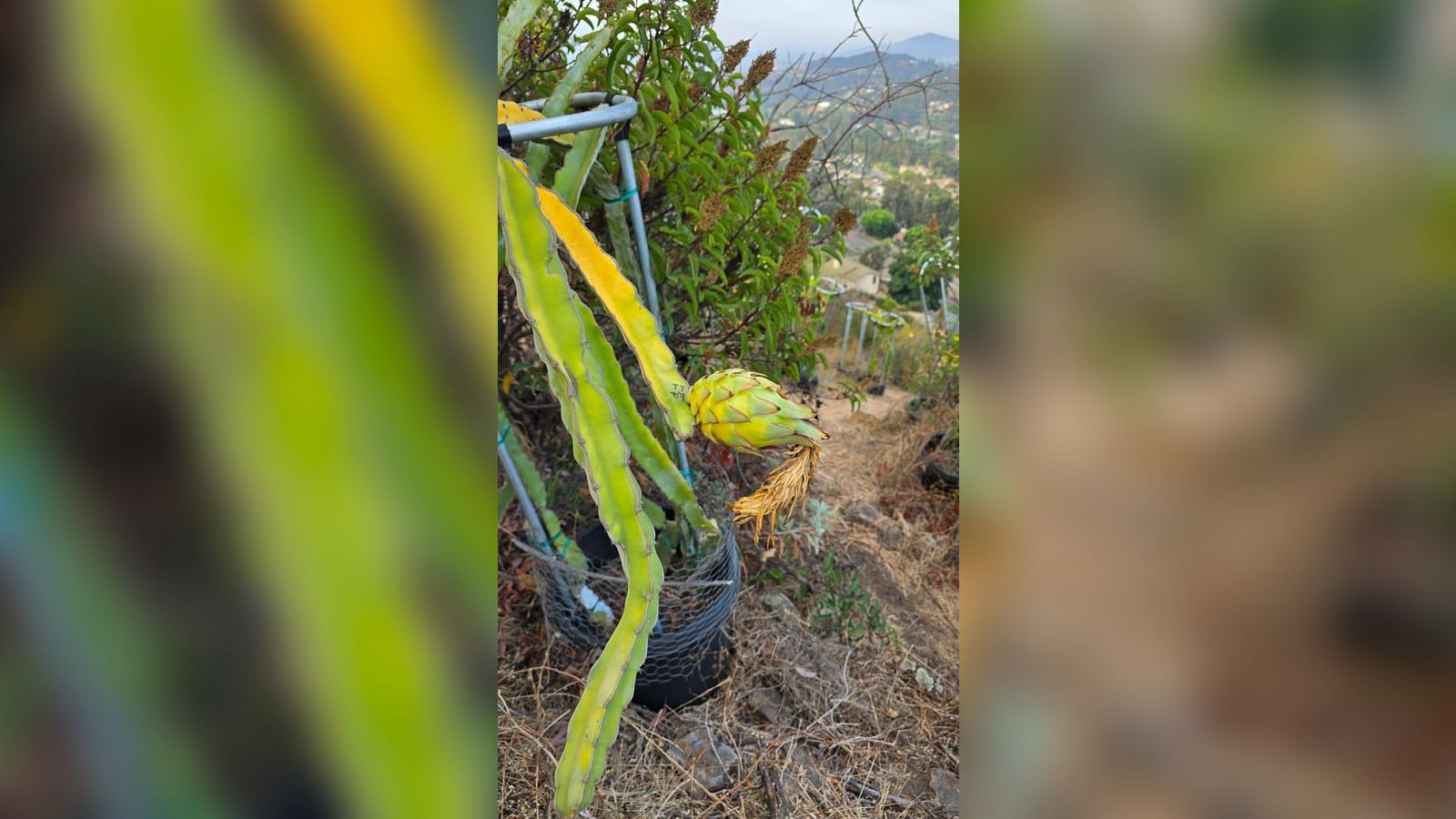
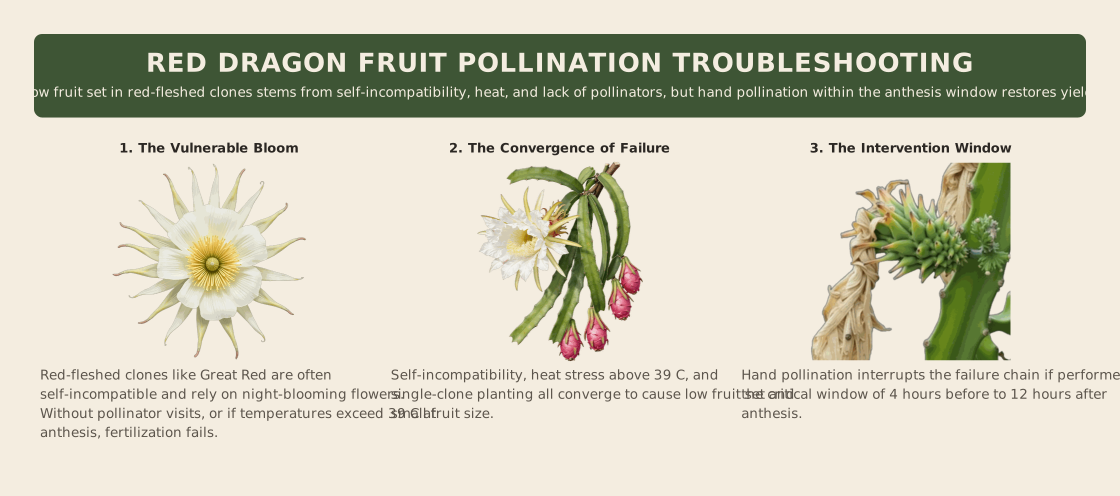
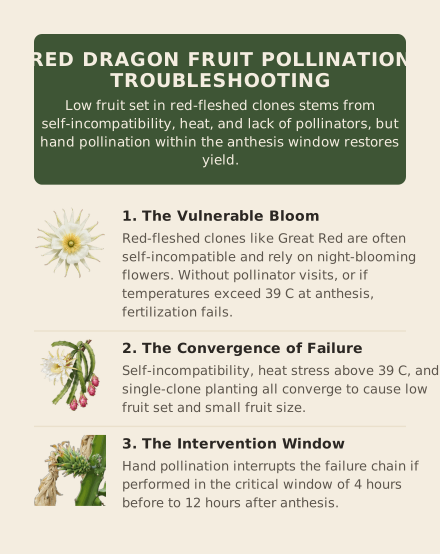
Timing is critical. Pollen viability and stigma receptivity overlap from about 4 hours before to 12 hours after anthesis[4]. Since dragon fruit flowers typically open around 8 p.m. in summer, the optimal window for hand-pollination is at or shortly after night opening[4]. Morning pollination misses peak receptivity.
Several factors can contribute to poor fruit set and small fruit, as illustrated in the relationship diagram below. Heat stress at anthesis, unthinned blooms competing for resources, and the absence of night pollinators can all compound the inherent self-incompatibility of red-fleshed genetics.
| Cause | Effect on Fruit | Solution |
|---|---|---|
| Self-incompatibility | Flower drop or tiny fruit | Hand-pollinate with compatible pollen |
| No night pollinator visit | Low fruit set | Manual pollination at night |
| Heat at anthesis | Poor pollen viability | Shade during peak heat; pollinate early evening |
| Unthinned blooms | Small, underdeveloped fruit | Thin clusters to allow resource allocation |
Flower to Table: Timing, Harvest and Storage
Color develops slowly in the final weeks. Betacyanins, phenolics, and flavonoids accumulate gradually as the fruit matures, meaning color is a slow build rather than a sudden switch. Watch the pulp, not just the skin. Pigmentation appears earlier in the flesh than in the peel, so a fruit with fully dyed red pulp and a slightly green-tipped peel is ready to pick[8]. Waiting for the peel to turn completely red often means you have missed the window for peak flavor and texture.
Harvest timing varies by season and clone. For red-fleshed types like Great Red, harvest begins 30 to 35 days after anthesis during summer months[2]. Cooler temperatures slow development. Mark your calendar at pollination to track these windows accurately.
Do not wait for sweetness. Dragon fruit is non-climacteric, which means it does not ripen further or develop more sugar after you cut it from the vine. If it is not sweet on the plant, it will not become sweet on your counter. Harvest at the first sign of full pulp color.
Storage requires a delicate balance. Commercially, pitaya keeps for about 14 days in perforated bags at 14 C[2]. This cool, breathable environment maintains texture without freezing the tissue. Home refrigerators are often too cold for this fruit. Two weeks at 6 C causes chilling injury, resulting in translucent flesh, wilting, softening, darkened scales, and a flat, dull flavor[2].
| Condition | Outcome |
|---|---|
| 14 C, perforated bag | Keeps ~14 days, good texture |
| 6 C, standard fridge | Chilling injury, flat flavor, dark scales |
| Room temperature | Short shelf life, no sugar gain |
If you cannot eat the fruit within a few days, keep it in the warmest part of your refrigerator or a cool pantry. The goal is to slow decay without shocking the cells. Once cut, the vibrant red pulp oxidizes quickly, so consume it fresh or store it in an airtight container for short-term use.
Should You Grow Great Red?
Great Red is a high-effort, high-reward choice for growers who prioritize flavor over convenience. If you live in USDA zones 10 to 11, or if you can keep a potted plant in a greenhouse with controlled temperatures, this clone is worth the space. Expect your first harvest one to two years after planting a rooted cutting.[2] The payoff is a complex flavor with a juicy, slightly crunchy texture that we rate a perfect 5/5 for taste.
The main hurdle is pollination. Red-fleshed clones often skew self-incompatible, meaning they need cross-pollen to set fruit reliably.[4] You cannot rely on insects or natural weather patterns. In trials, hand-pollination raised fruit set from roughly 14% to over 77% and significantly increased fruit weight. Because flowers open around 8 p.m. in summer, you must be willing to work at night, brushing pollen onto the stigma shortly after the bloom opens.[4] This variety requires evening work.
Stock Status: Great Red (SKU GRR) is currently out of stock. We do not have a confirmed restock date. If you want a red-fleshed vine now, browse our full variety guide for other red-fleshed options that are ready to ship. For those ready to commit to the night-shift pollination routine, read our pollination guide to learn the exact technique.
Great Red demands attention. It requires care during the flowering window and consistent maintenance to support heavy yields. But for the grower who wants the deepest crimson pulp and the most balanced sweet-tart profile in the red-fleshed category, Great Red delivers.
Key Takeaways
References
- Combined Transcriptome and Metabolome analysis of Pitaya fruit unveiled the mechanisms underlying Peel and pulp color formation (BMC Genomics 21:734, doi:10.1186/s12864-020-07133-5), BMC Genomics (peer-reviewed) (2020).
- Pitaya Nutrition, Biology, and Biotechnology: A Review (Int J Mol Sci 24:13986, doi:10.3390/ijms241813986), MDPI, International Journal of Molecular Sciences (peer-reviewed) (2023).
- Determination of the effects of bumblebee (Bombus terrestris), hand, and natural pollination on fruit set, yield, and quality in pitaya (Hylocereus spp.) cultivation under subtropical conditions (BMC Plant Biology), BMC Plant Biology (peer-reviewed) (2026).
- Floral and pollination biology of dragon fruit reveals strategies for enhancing productivity through pollination management and reproductive window extension (Scientific Reports, doi:10.1038/s41598-025-21168-2), Nature Portfolio, Scientific Reports (peer-reviewed) (2025).
- Genetic Characterization of Pitahaya Accessions Based on Amplified Fragment Length Polymorphism Analysis (HortScience 50:332-336, doi:10.21273/hortsci.50.3.332), ASHS, HortScience (peer-reviewed) (2015).
- Evaluation of Different Procedures to Pollinate Self-Compatible 'Royal Red' Pitaya Under Protected Cultivation (Plants, PMC12526123), MDPI, Plants (peer-reviewed) (2025).
- Bioactive Compounds, Antioxidant Capacity and Mineral Profile of Pulp and Peel from Diverse Selenicereus (Pitaya) Varieties in Brazil (Plant Foods for Human Nutrition, doi:10.1007/s11130-026-01553-6), Springer, Plant Foods for Human Nutrition (peer-reviewed) (2026).
- Maturation Process, Nutritional Profile, Bioactivities and Utilisation in Food Products of Red Pitaya Fruits: A Review (Foods, PMC8618204), MDPI, Foods (peer-reviewed) (2021).
- Great Red Dragon Fruit Cutting (SKU GRR) product listing, Sky Botanicals (2026).
- Dragon fruit (Selenicereus) overview, citing Morton (1987) and USDA zone data, Wikipedia (tertiary) (2026).