Maria Rosa Dragon Fruit: Sweet Red Hybrid
Maria Rosa is an Italian-bred hybrid of Selenicereus undatus and Selenicereus guatemalensis that produces one-pound fruits with hot red skin, green fins, and rose-pink flesh measuring 15-17 Brix[1]. It grows as a sturdy plant in USDA zones 10 and 11, flowering from May through September[4]. We stock Maria Rosa cuttings, which root easily and grow true-to-type.
What It Looks Like: Fruit, Flowers, and Stems
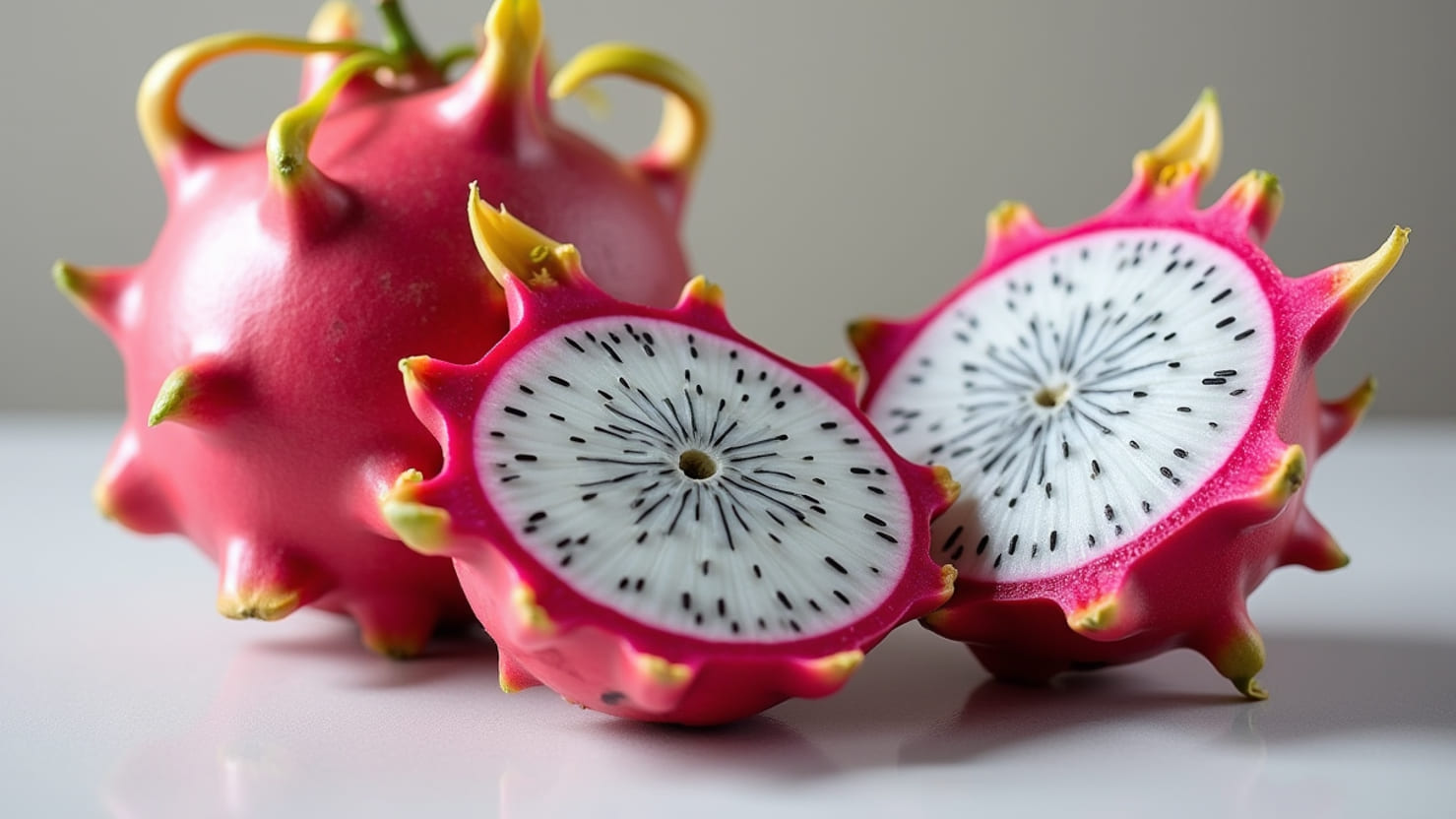
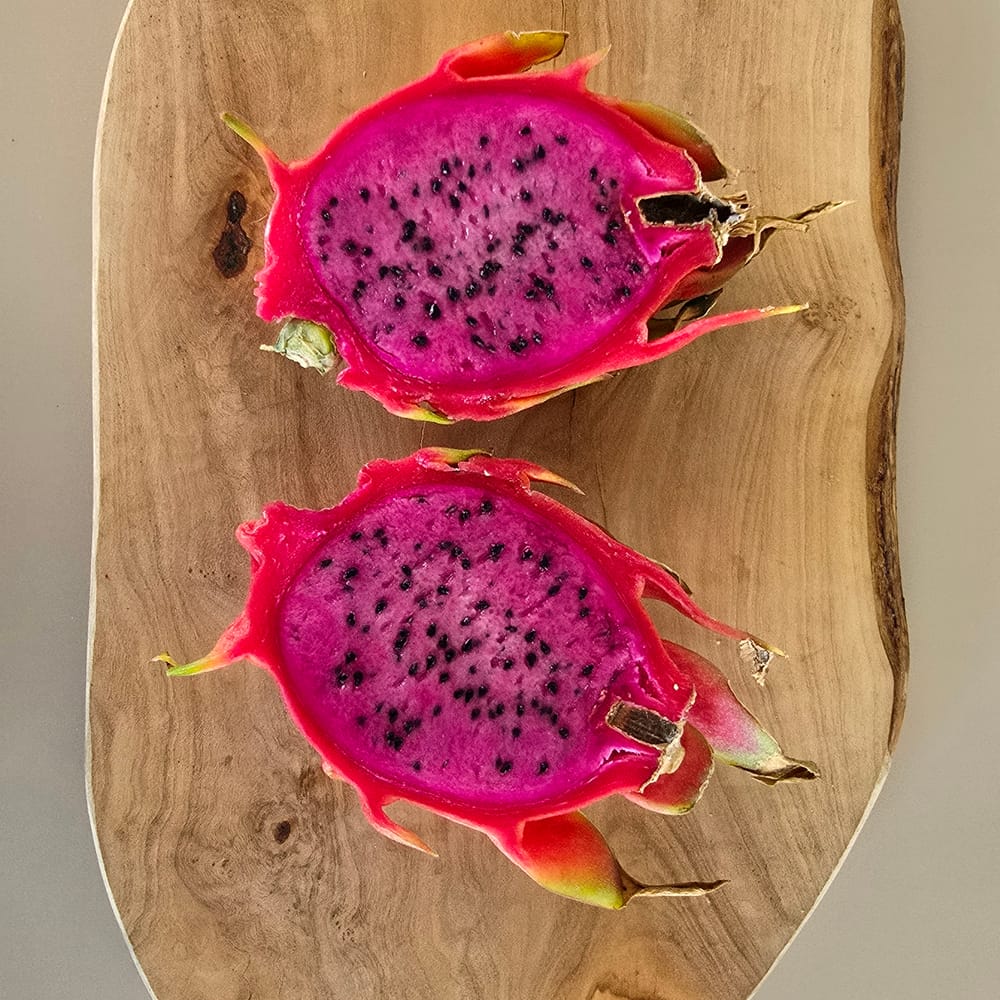
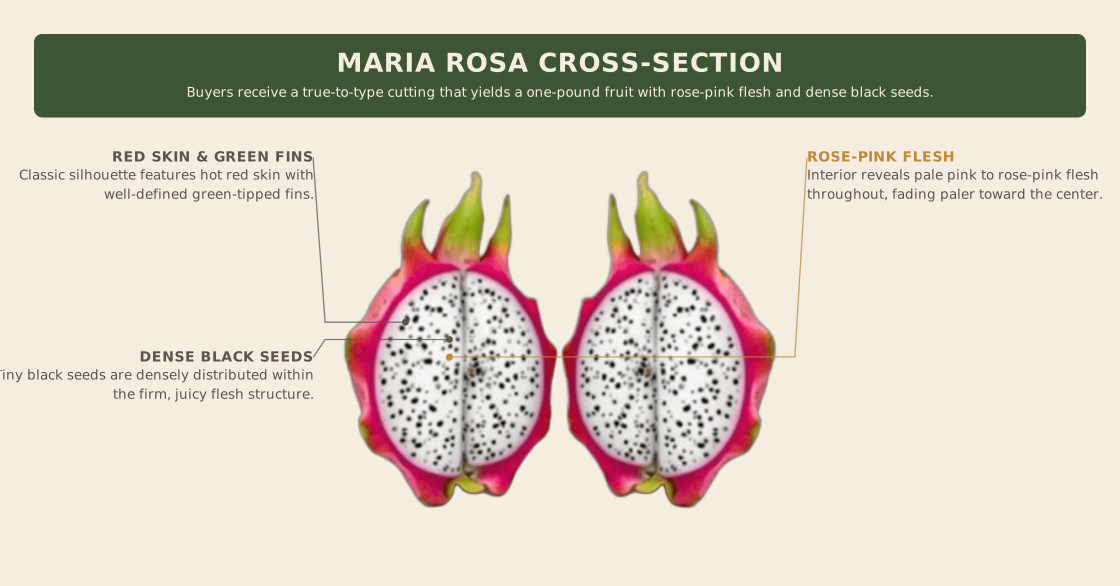
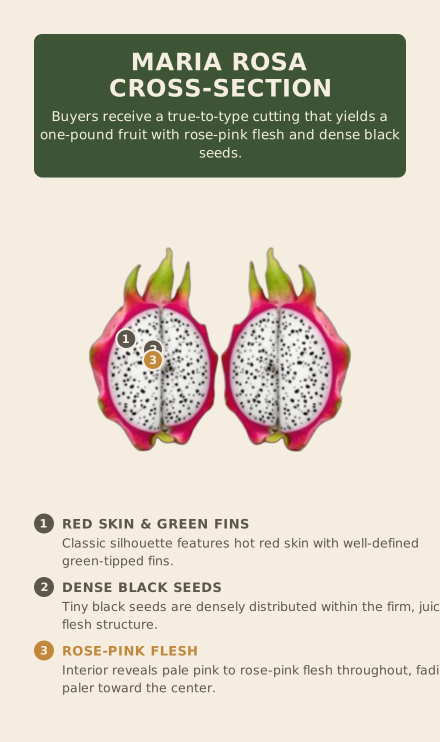
Maria Rosa presents the classic dragon fruit silhouette with distinct coloration. The fruit develops a hot red skin marked by well-defined green fins, typically weighing about one pound[2]. When you slice into it, the interior reveals pale pink to rose-pink flesh throughout[2].
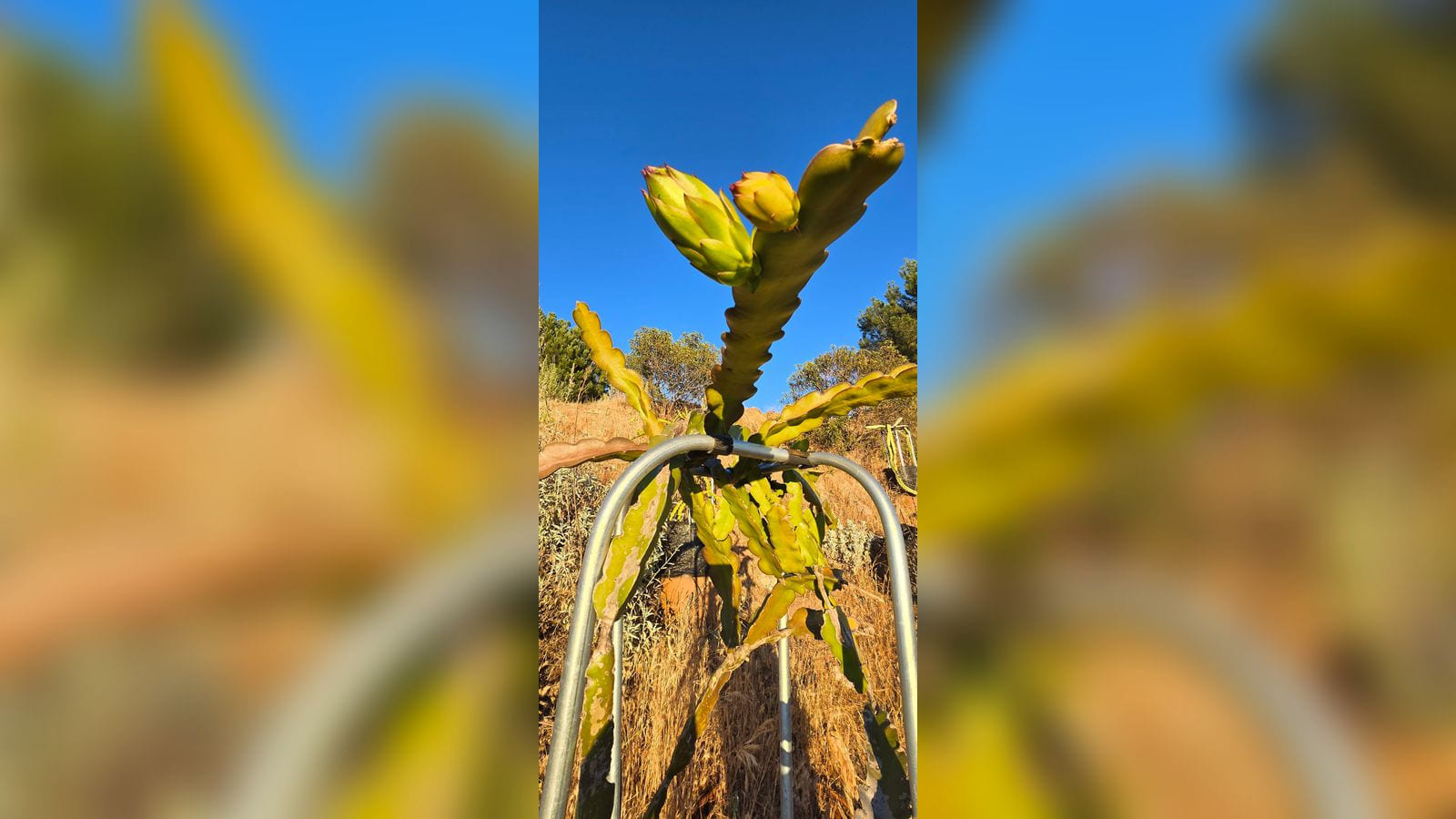
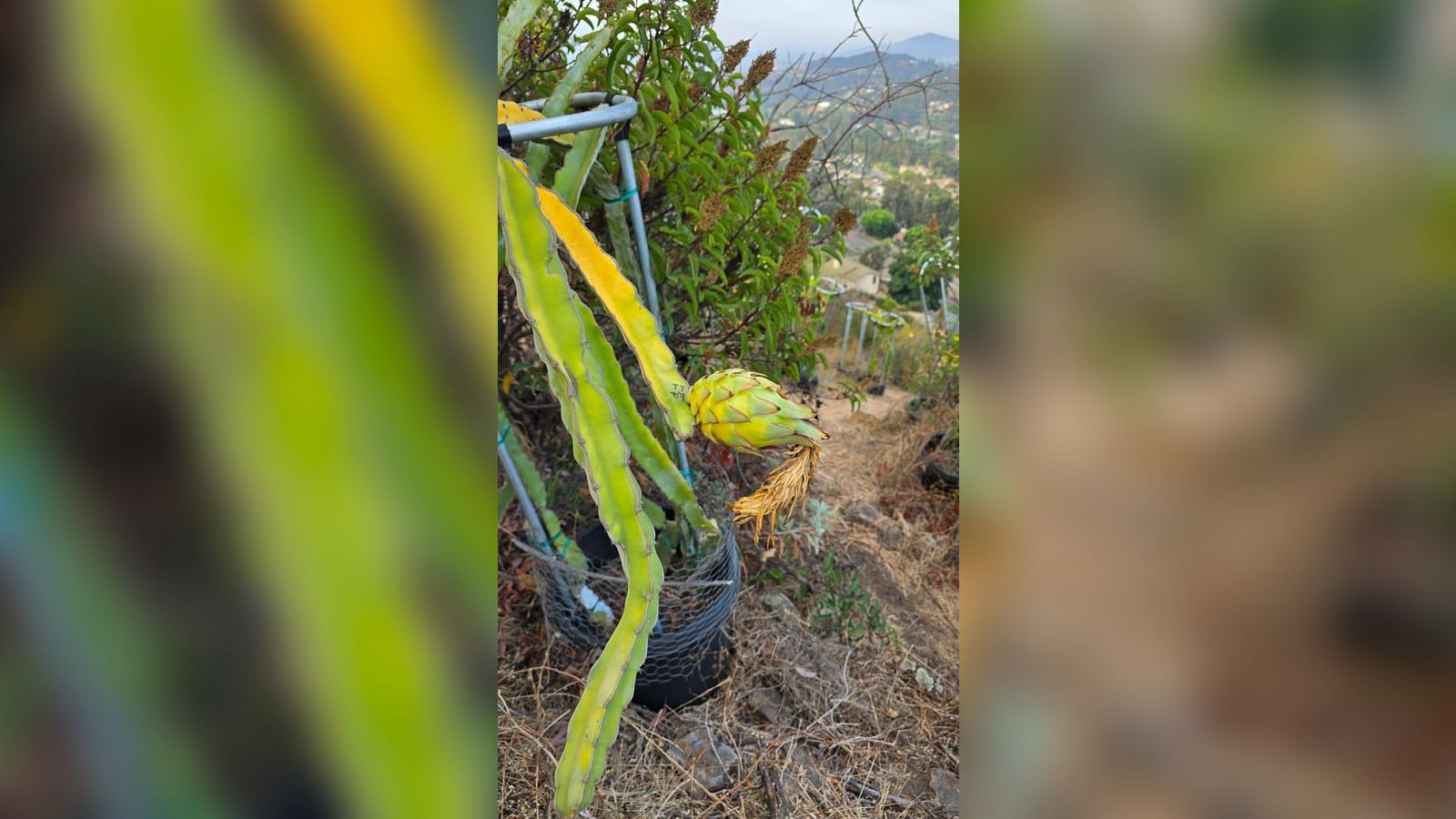
Maria Rosa grows as a strong, sturdy plant with long, thick, three-sided stem segments[2]. The spines along these stems are small, making handling less painful than with some wilder relatives, though gloves are still recommended for pruning. Because the stems are thick and rigid, the plant requires minimal support compared to thinner, floppy varieties[2]. It thrives in full sun and typically shows minimal sun damage, even in intense heat[2].
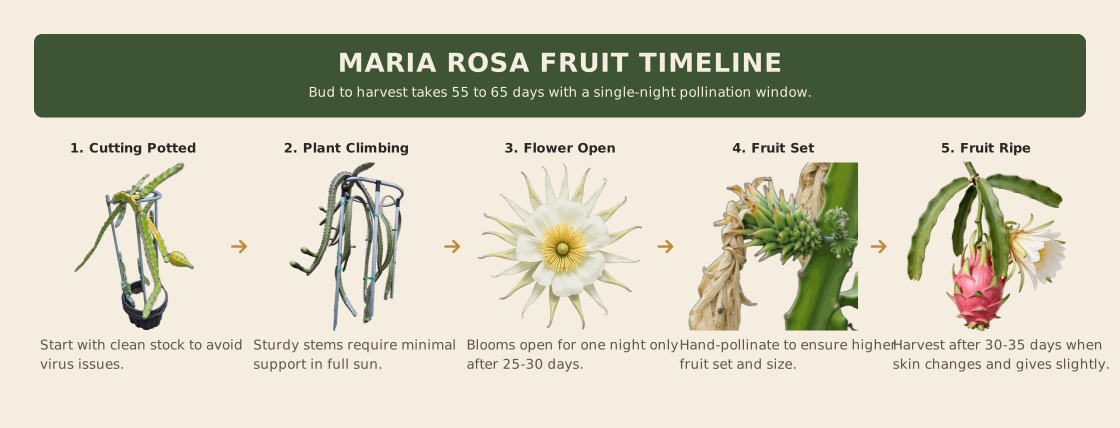
The flowers are large, white, and trumpet-shaped, opening only at night[4]. Each flower opens once and lasts for a single night. If pollination is successful, the fruit develops over the next 4 to 8 weeks, depending on ambient temperatures[4].
| Feature | Appearance | Grower Note |
|---|---|---|
| Skin | Hot red with green fins | Color deepens as fruit ripens. |
| Flesh | Pale rose to pink throughout | Uniform color indicates maturity. |
| Stems | Thick, three-sided, small spines | Sturdy; resists sun scorch. |
| Flowers | Large, white, night-blooming | Open once; rely on nocturnal pollinators. |
In commercial settings, this structural vigor supports high-density planting. Growers typically set 1,100 to 1,350 plants per hectare[4]. While it takes time to reach full production, mature plants can flower three to six times per year depending on conditions[4]. For home gardeners, this translates to a plant that fills out quickly and holds its shape well on a trellis, provided it receives adequate sunlight and water during the growing season.
Taste: How Sweet Is Maria Rosa, Really?
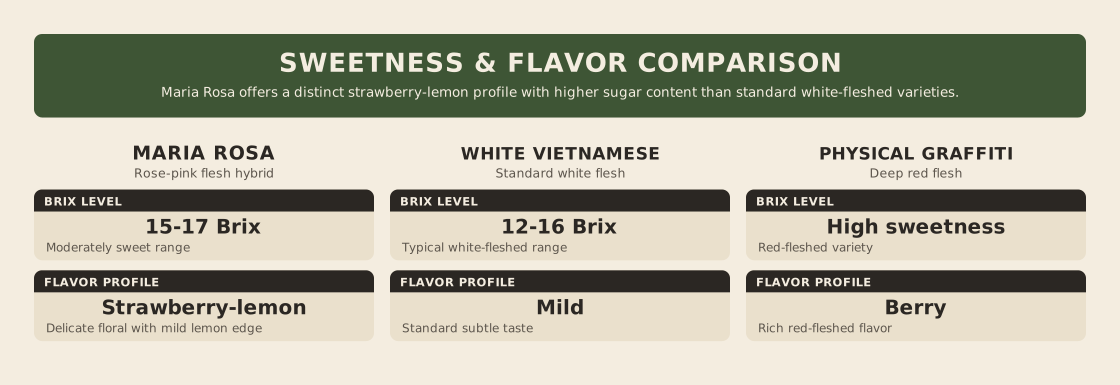
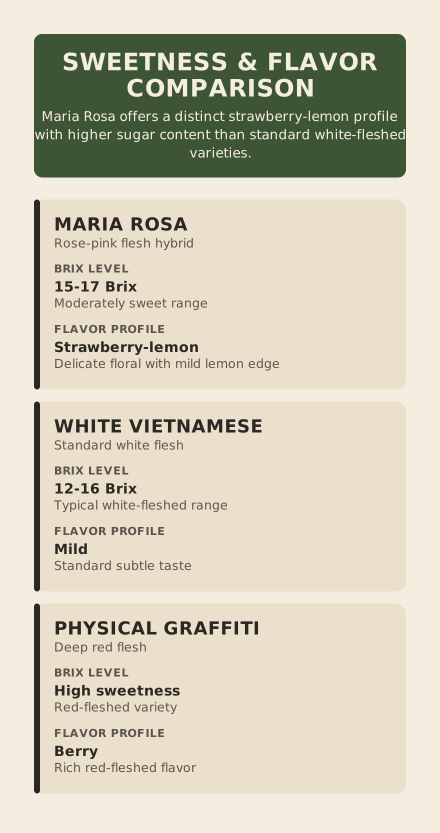
Maria Rosa measures 15-17 Brix[1]. The flavor profile features delicate floral sweetness with a mild lemon edge[3]. Growers frequently compare the fresh taste to strawberry-lemon, noting a firm, juicy flesh structure that holds up well when sliced[3].
| Variety Type | Typical Brix Range | Flavor Profile |
|---|---|---|
| Maria Rosa | 15-17 | Floral, lemon, strawberry notes |
Maria Rosa shines in fresh applications where the fruit’s character isn’t masked by heavy syrups or dairy. It works well in salads, paired with yogurt, or sliced into smoothies where the lemon note brightens the blend. The firm texture also makes it suitable for fruit leather or dehydrated snacks, as the flesh doesn’t collapse during processing.
Serving Tip: Chill the fruit thoroughly before cutting. The floral and citrus notes become more pronounced when the flesh is cold, while the firm texture remains intact for clean slices.
Pollination: Self-Fertile or Not?
If you ask different growers whether Maria Rosa needs a partner, you will get different answers. The Dragon Fruit Directory lists it as requiring cross-pollination from a different variety[1]. Spicy Exotics, however, lists it as self-fertile[1]. A third perspective comes from Dragon Fruit Cutting, which states the flowers are self-pollinating but notes that hand-pollination produces more and larger fruit[1]. These conflicting reports point to a practical truth about dragon fruit biology.
Even when a variety is technically self-fertile, cross-pollinating with a second genetically distinct plant generally increases fruit set and overall fruit quality[4]. This is why hand-pollination is recommended for almost all dragon fruit, including those that can set fruit alone. A single plant may produce some fruit on its own, but introducing pollen from another variety often results in heavier yields and better-developed berries. For a deeper look at how to manage this process, see our ecom__dragon fruit pollination guide self fertile vs cross pollinating varieties.
Self-Pollination Only
Convenient if you have space for just one plant. Expect variable fruit set and potentially smaller berries.
Cross-Pollination
Requires a second variety or hand-pollination effort. Results in higher fruit set and larger, better-formed fruit.
Flowering to Harvest: The Season
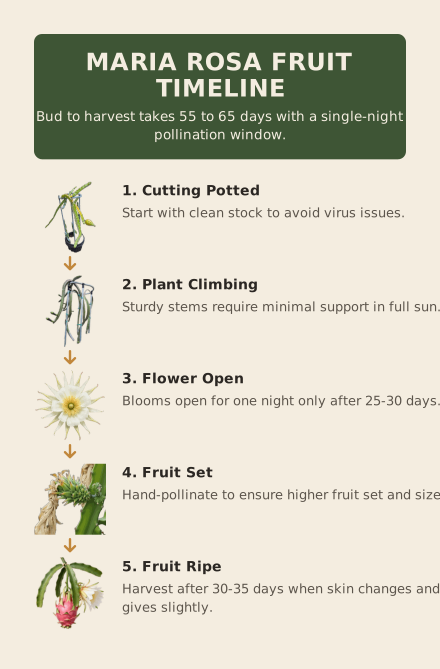
Maria Rosa produces flowers from May through September, offering a long window for fruit set if conditions align[1]. The transition from bud to open flower takes roughly 25 to 30 days[1]. Once the large white blooms open, they remain viable for a single night, relying on nocturnal pollinators like moths and bats or your hand-pollination efforts[4]. After successful pollination, the fruit requires 30 to 35 days to ripen[1]. While this specific timeline is tight, the broader species range for pollination to harvest spans 4 to 8 weeks depending on ambient temperature[4].
Watch the clock, not just the calendar. Maria Rosa’s 30 to 35 day post-flowering window is faster than the general 4 to 8 week species average[1]. Mark your trellis with the date each flower opens to predict harvest accurately.
| Stage | Duration | Visual Cue |
|---|---|---|
| Bud to Flower | 25-30 days | Large white trumpet opens at night |
| Flower to Ripe | 30-35 days | Skin turns hot red |
| General Species | 4-8 weeks | Highly variable based on heat |
Determining the exact moment to pick requires more than counting days. Harvest ripe dragon fruit when the skin color changes fully and the fruit gives slightly to pressure[1]. For Maria Rosa, look for the hot red skin to deepen uniformly, with no remaining green patches on the main body. A gentle squeeze should reveal a subtle give, rather than the hard resistance of an immature fruit. If the skin is fully colored but the fruit feels rock hard, wait a few more days. If it feels mushy, you have missed the peak window.
Growing Maria Rosa
Maria Rosa is a resilient plant that fits well into USDA zones 10 and 11. It handles intense heat, tolerating temperatures up to 40 C (104 F), and survives short frosts without lasting damage. Long freezing exposure will kill the stems back to the ground, so protect plants in marginal climates during extended cold snaps. The variety thrives in full sun and shows minimal sunscald, even in harsh light. Its thick, three-sided stems are rigid enough to stand with minimal trellis support, though a sturdy post helps manage the vigorous growth habit.
Propagation is straightforward. Like other cacti, healthy broken stem segments root easily. However, you must start with clean stock. Cactus virus X has been found in a large share of tested US plantings, with one California survey showing positive results in the majority of samples screened by ELISA[5]. Disinfect tools between plants to prevent spreading this virus.
Disease management requires attention to timing. Dragon fruit canker, caused by the fungus Neoscytalidium dimidiatum, is the most important disease in south Florida plantings[6]. Prune off-season from November to March to remove diseased stems. This practice greatly reduces canker pressure in the following growing season[6].
Sanitation matters. Because virus prevalence is high in existing stock, always source cuttings from reputable nurseries that screen for pathogens. Wipe pruning shears with isopropyl alcohol between every plant.
| Care Factor | Requirement |
|---|---|
| Hardiness Zones | 10-11; tolerates short frost |
| Heat Tolerance | Up to 40 C (104 F) |
| Light | Full sun; minimal sunscald |
| Support | Minimal; rigid stems |
| Water | Less than traditional crops |
| Pruning Window | Nov-Mar (off-season) |
Why the Flesh Is Pink
The rose-pink interior of Maria Rosa is the result of betacyanins, a specific class of pigments that also colors beets and Swiss chard[4]. In red-fleshed dragon fruit, these pigments are concentrated throughout the pulp, creating the uniform coloration you see when you slice the fruit open. This pigment family is distinct from the anthocyanins found in blueberries or red cabbage, though both groups serve similar protective roles for the plant.
The peel often holds a higher concentration of these pigments than the edible flesh. Research into red pitaya indicates that the skin contains more total betacyanins and anthocyanins than the pulp does[7]. When tested in laboratory settings, extracts from the peel showed a stronger protective effect against oxidative stress compared to extracts from the flesh alone[7]. This suggests that the plant invests heavily in shielding the fruit’s exterior, likely to protect the developing seeds from intense sunlight and environmental stress.
Lab Note: In controlled assays, betanin (a primary betacyanin) demonstrated higher free-radical scavenging activity than ascorbic acid[7]. This is a measure of chemical reactivity in a test tube, not a direct claim about health benefits in the human body.
Raw dragon fruit flesh is approximately 84% water and provides about 57 calories per 100 grams[4]. It contains 3.1 grams of dietary fiber and 116 mg of potassium per 100 grams[4]. While the pink color signals the presence of these antioxidant compounds, the primary value of Maria Rosa remains its flavor and texture rather than any potent medicinal effect.
Maria Rosa vs. Other Pink and Red-Fleshed Varieties
Maria Rosa offers the visual appeal and antioxidant-rich flesh of red-fleshed hybrids without the extreme sweetness of some top-tier dessert cultivars. With a Brix range of 15-17, it provides a balanced profile that is approachable for new growers and satisfying for experienced ones[1].
Compared to standard white-fleshed Vietnamese types, Maria Rosa is a clear upgrade in taste. The pink flesh indicates a higher concentration of betacyanins, pigments also found in beets and Swiss chard[4].
| Variety | Flesh Color | Flavor Profile | Best For |
|---|---|---|---|
| Maria Rosa | Pale rose to pink | Delicate floral, strawberry-lemon, 15-17 Brix | Beginners wanting flavor + ease |
| White-Fleshed Types | White | Mild, watery | Low-maintenance, neutral taste |
For those new to dragon fruit cultivation, Maria Rosa serves as an excellent starter. Its sturdy stems require minimal support, and it tolerates full sun well, reducing the risk of sun scorch that can plague thinner-stemmed varieties[2]. While pollination reports vary, with some sources suggesting self-fertility and others recommending cross-pollination, the consensus is that hand-pollinating with a second variety improves fruit set and size[4]. This flexibility allows growers to start with a single plant and expand their collection later if desired.
Tip: If you are deciding between Maria Rosa and a red-fleshed variety like Physical Graffiti, consider your local climate and pollinator availability. Maria Rosa’s moderate sweetness and robust growth make it a safer bet for regions with less predictable pollination activity, as it can still produce decent fruit even if natural pollinators are scarce.
Maria Rosa fits into the garden as a bridge between the mundane and the exceptional. It offers the visual and nutritional benefits of red-fleshed hybrids without the complexity of managing ultra-sweet, high-maintenance cultivars. For a deeper look into selecting the right variety for your specific growing conditions, consult our comprehensive variety guide.
Where to Buy Maria Rosa Cuttings
You can find Maria Rosa cuttings in stock at our nursery, ready to ship. Because this variety is a hybrid, all commercial stock is propagated from cuttings to ensure the plants grow true-to-type. Like other cacti, a healthy broken stem segment can root and become a new plant, which is how growers maintain genetic consistency across the market[4].
The variety circulates through specialty nurseries in both the US and Europe. For context on how stock moves, Spicy Exotics acquired their initial inventory from a California grower, while the Dutch seller Dragon Fruit Cutting obtained their cuttings from growers in Greece and Belgium[2]. This international trade helps keep the lineage clear, but you should still inspect your new plants carefully upon arrival.
Inspection Checklist: When your cuttings arrive, check for firm segments and clean stems. Avoid plants with soft spots or visible canker lesions, as these indicate disease or poor storage. If you ordered a potted plant, verify that roots are present and healthy before planting.
FAQ
Growers often ask if Maria Rosa can set fruit on its own. The answer is nuanced because sources disagree. Some nurseries list it as self-fertile, while others specify that it requires cross-pollination from a different variety to set fruit reliably[1]. Even if a plant is self-fertile, introducing pollen from a genetically distinct second variety typically increases fruit set and improves fruit quality[4]. For the best harvest, hand-pollinate the night-blooming flowers using a brush or cotton swab. This ensures you get the large, well-formed fruit the variety is capable of producing, rather than relying on nocturnal pollinators like moths or bats[4].
Regarding sweetness, Maria Rosa sits in the moderately sweet range. It measures 15 to 17 Brix[1]. The flavor profile is defined by delicate floral notes with a mild lemon edge, often compared to strawberry-lemon[3]. The flesh is firm and juicy, holding its structure well when sliced. If you prefer a fruit that is intensely sugary without acidity, this might not be your top choice, but if you enjoy a balanced, complex flavor, Maria Rosa delivers.
Timing is critical for harvest planning. Maria Rosa flowers from May through September[1]. Once a flower is pollinated, the fruit ripens in 30 to 35 days[1]. This is faster than the general 4 to 8 week window seen in other varieties, so check your plants closely after the first month post-bloom. Harvest when the skin color is fully developed and the fruit gives slightly to gentle pressure[1].
Frost Tolerance: Maria Rosa is hardy in USDA zones 10 and 11. It can endure short frosts and high heat up to 104°F (40°C), but prolonged freezing will kill the plant back to the roots[4]. In marginal climates, cover plants during cold snaps or grow them in containers that can be moved indoors.
Propagation is straightforward. Like other cacti, Maria Rosa is propagated from stem cuttings. A healthy, broken segment can be dried, planted, and will root to become a new plant[4]. This method ensures the new plant is true-to-type, meaning it will produce the same pink-fleshed fruit as the parent[4]. Always start with clean stock to avoid introducing viruses like Cactus Virus X, which is prevalent in many US plantings[5]. Disinfect your pruning tools between plants to prevent the spread of fungal diseases like canker[6].
References
- Maria Rosa Cultivar — The Dragon Fruit Directory, The Dragon Fruit Directory (Tendra) (2026).
- Maria Rosa – H. undatus X H. guatemalensis (product page), Spicy Exotics (2026).
- Maria Rosa – Dragon Fruit Cuttings (product page), Dragon Fruit Cutting (2026).
- Dragon fruit, Wikipedia (citing CABI and Morton) (2026).
- Pitahaya or Dragon Fruit (Hylocereus spp.): A New Water Efficient Crop for Southern California, University of California Agriculture and Natural Resources (2017).
- Off-Season Pruning Effectively Reduces Dragon Fruit Canker (PP390), UF/IFAS Extension (2025).
- Betacyanins and Anthocyanins in Pulp and Peel of Red Pitaya (Hylocereus polyrhizus cv. Jindu), Inhibition of Oxidative Stress, Lipid Reducing, and Cytotoxic Effects, PMC / Molecules (MDPI) (2022).